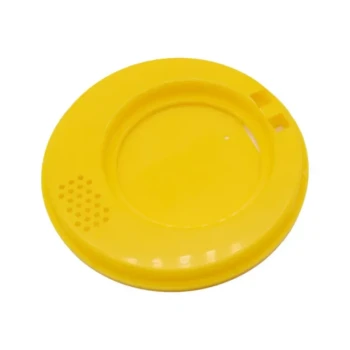
Cuboid entry devices offer superior protection because they fundamentally alter the geometry of the battlefield between honeybees and predators. While simple flat queen excluder fragments force worker bees to congregate at a single, predictable plane, cuboid devices introduce defensive depth and multi-directional exit points. This spatial complexity prevents hornets from dominating the entrance, significantly reducing their success rate in capturing bees.
By transforming a flat entrance into a volumetric structure, cuboid devices create a buffer zone that disperses predator pressure. This prevents hornets from establishing a single "kill zone," thereby substantially lowering colony loss rates compared to flat barriers.
The Vulnerability of Flat Defense
The Bottleneck Effect
Simple flat queen excluder fragments provide basic closure, but they lack defensive depth. Because the barrier is two-dimensional, worker bees are forced to funnel through a limited exit point directly into the open air.
Easy Targets for Predators
This lack of depth creates a "bottleneck" where bees must congregate before taking flight. Hornets exploit this by positioning themselves directly in front of the flat barrier. With no physical complexity to navigate, the predator can easily wait at this single interface to capture bees as they emerge.
How Volumetric Defense Works
Multi-Directional Traffic Flow
Cuboid devices utilize a three-dimensional spatial design. Unlike a flat sheet, a cuboid structure allows worker bees to enter and exit through multiple faces—the front, sides, and potentially the top.
Dispersing Predator Pressure
Because bee traffic is spread across a larger surface area, hornets cannot effectively guard the entire exit. This disperses predator pressure, preventing the hornet from establishing a dominant hunting position over a specific cluster of bees.
Creating a Retreat Buffer
The physical volume of the device creates a safe retreat area between the hive interior and the external environment. This buffer space allows bees to observe threats and maneuver safely behind the grid before committing to flight, a luxury not afforded by flat barriers.
Understanding the Trade-offs
Physical Footprint
While superior in defense, cuboid devices require more physical space at the hive entrance than a flat fragment. You must ensure your hive stand or landing board can accommodate the volumetric structure without obstructing other maintenance tasks.
Dependence on Grid Precision
The efficacy of the cuboid relies entirely on precise grid spacing. As noted in the principles of exclusion, the grid must be exact enough to physically block larger hornets while allowing seamless passage for workers; if the spacing is incorrect, the 3D advantage is nullified.
Making the Right Choice for Your Goal
To select the most effective entrance modification, consider the intensity of the threat:
- If your primary focus is basic closure during low-threat periods: A simple flat excluder fragment may suffice to narrow the entrance, provided predator pressure is minimal.
- If your primary focus is maximum survival during hornet season: A cuboid entry device is essential to break the predator's siege capability and provide your bees with a defensive buffer.
The shift from flat to cuboid defense is a shift from a simple gate to a complex fortress, giving your colony the geometric advantage it needs to survive.
Summary Table:
| Feature | Flat Excluder Fragments | Cuboid Entry Devices |
|---|---|---|
| Defensive Geometry | 2D / Single Plane | 3D / Volumetric Structure |
| Exit Strategy | Single Bottleneck | Multi-Directional (Front/Sides) |
| Predator Pressure | High (Concentrated Kill Zone) | Low (Dispersed Traffic) |
| Safety Buffer | None | Internal Retreat Zone |
| Best Use Case | Low-threat periods | Peak Hornet/Predator Season |
Secure Your Apiary with Advanced Defensive Solutions
Protecting your colony requires more than just a barrier; it requires precision-engineered equipment designed for survival. At HONESTBEE, we specialize in supporting commercial apiaries and distributors with high-performance beekeeping tools and machinery.
Whether you need specialized hardware like hive-making machines or a reliable supply of wholesale beekeeping consumables, our comprehensive portfolio is built to scale your operations. From entry modifications to honey-filling systems, we deliver the quality your business demands.
Ready to upgrade your wholesale supply? Contact us today to discuss your requirements and let HONESTBEE strengthen your honey production infrastructure.
References
- M. A. Abd Al-Fattah, Wael Mahmoud Marzouk. New applications for protecting honeybee, Apis mellifera L., colonies from attacking the oriental hornet (Vespa orientalis Fab.). DOI: 10.21608/eajbsa.2014.13201
This article is also based on technical information from HonestBee Knowledge Base .
Related Products
- Beehive Entrance Discs Plastic Bee Entrance Disc for Bee Hives
- Steel Round Disc Entrance Reducer for Flexzion Bee Hive Nuc Box Gate
- Multi-Functional Sliding Hive Entrance for Beekeeping
- Professional Reversible Beehive Hive Entrance
- Professional Hive Front Entrance Bee Feeder
People Also Ask
- What is the best entrance for a bee hive? Maximize Colony Health & Honey Production
- What happens if you block the entrance to a bee hive? Avoid This Dangerous Mistake
- How does entrance configuration vary seasonally for beekeepers? A Guide to Year-Round Hive Health
- Why adjust beehive entrance size for humidity? Boost Honey Ripening and Varroa Control in Commercial Apiaries
- How big should a beehive entrance be? Optimize for Colony Health & Honey Production