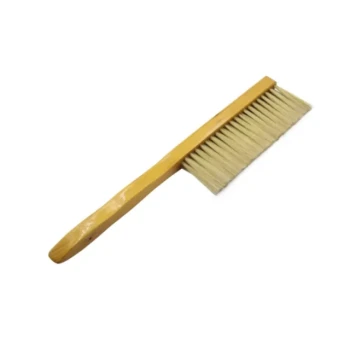
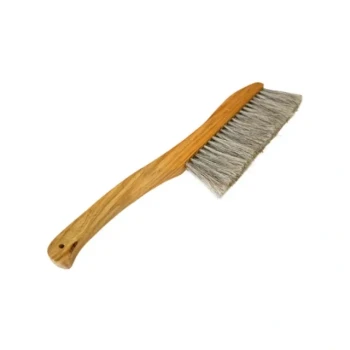
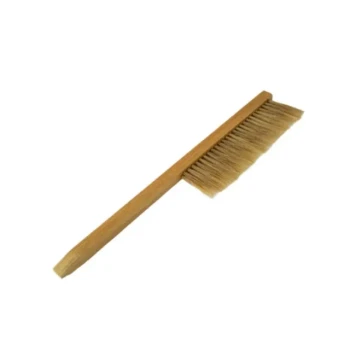
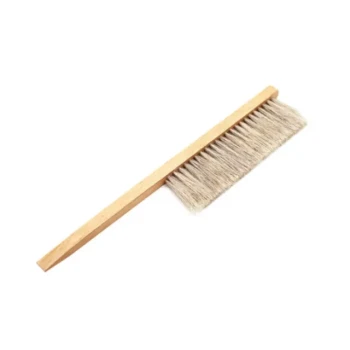
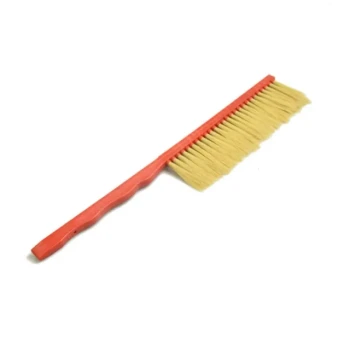
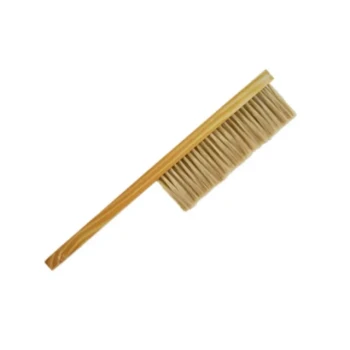
A fine brush acts as a vital precision instrument for the manual transfer of delicate parasites in laboratory settings. In the context of Varroa destructor inoculation, it is essential because its soft bristles allow researchers to pick up and place individual mites onto honey bees without inflicting physical trauma on the parasite’s fragile structure.
The structural fragility of the Varroa mite demands a transfer method that virtually eliminates mechanical stress. A fine brush provides the necessary tactile gentleness to ensure mites remain physically intact, thereby guaranteeing the integrity and validity of subsequent experimental data.
Preserving the Biological Integrity of the Mite
The Challenge of Physical Fragility
Varroa destructor mites possess a delicate physical structure that is highly susceptible to crushing or deformation.
Conventional forceps or rigid tools often exert too much pressure, resulting in immediate injury or death to the specimen.
The Mechanics of Soft Bristles
The bristles of a fine brush yield upon contact with the mite's body.
This flexibility allows the researcher to manipulate the mite using friction and gentle leverage rather than compression.
This prevents the microscopic trauma that typically occurs when harder materials interact with the mite's exoskeleton.
Ensuring Data Reliability
Preventing False Mortality
The primary goal of using a fine brush is to ensure the mite arrives on the host in a healthy state.
If a mite is injured during the transfer, it may die shortly after inoculation due to handling trauma rather than the experimental variable being tested.
Using a fine brush eliminates this variable, ensuring that mortality rates reflect true experimental conditions.
Maintaining Reproductive and Behavioral Rates
Physical injury does not always result in immediate death; it often impairs behavior or reproduction.
A damaged mite may fail to reproduce or exhibit lethargic behavior on the colony.
Gentle handling ensures that the data collected regarding reproductive rates and colony behavioral responses is accurate and not an artifact of poor handling.
Operational Precision
Targeted Placement
Research often requires mites to be placed on specific areas of the worker bee.
A fine brush gives the operator the control needed to navigate the bee's surface.
This allows for the accurate deposit of the parasite without agitating the bee or displacing the mite.
Understanding the Trade-offs
The Human Element
While a fine brush is the correct tool, its effectiveness is entirely dependent on the steadiness of the human hand.
Even with soft bristles, a lack of dexterity or patience can still result in damage to the specimen.
Efficiency vs. Integrity
Using a fine brush is a manual, time-consuming process.
It limits the number of inoculations that can be performed in a given timeframe compared to bulk methods.
However, this lack of speed is the necessary cost for maintaining the high survival rate of the transferred mites.
Ensuring Success in Experimental Design
To maximize the reliability of your study, consider your primary objectives when selecting your tools.
- If your primary focus is Data Accuracy: Prioritize the use of the finest available natural or synthetic bristles to minimize the variable of handling trauma.
- If your primary focus is Specimen Viability: Ensure operators are trained to use the brush to lift, rather than pinch, the mites to preserve their reproductive capabilities.
The choice of a fine brush is not merely a preference; it is a critical control measure for rigorous scientific inquiry.
Summary Table:
| Feature | Benefit for Inoculation | Impact on Research |
|---|---|---|
| Soft Bristles | Prevents crushing or physical trauma | Guarantees specimen viability |
| Tactile Control | High-precision placement on bees | Reduces experimental variables |
| Gentle Leverage | Uses friction instead of compression | Minimizes false mortality rates |
| Manual Precision | Navigates bee surfaces without agitation | Maintains natural behavior/reproduction |
Elevate Your Apiary Operations with HONESTBEE
At HONESTBEE, we understand that precision in the lab translates to success in the field. As a leading provider for commercial apiaries and distributors, we offer a comprehensive wholesale range of professional-grade beekeeping tools, specialized machinery, and essential consumables.
Whether you need delicate research instruments or industrial-scale honey-filling machines, our portfolio is designed to support every facet of your business. Contact us today to discover how our premium equipment can optimize your production and help you achieve superior results.
References
- Miguel E. Arechavaleta-Velasco, Ernesto Guzmán‐Novoa. Relative effect of four characteristics that restrainthe population growth of the mite <i>Varroa destructor</i>in honey bee (<i>Apis mellifera</i>) colonies. DOI: 10.1051/apido:2001121
This article is also based on technical information from HonestBee Knowledge Base .
Related Products
- Wooden Bee Brush with Triple Row Artificial Fiber for Beekeeping
- Premium Triple-Row Horsehair Bee Brush
- Classic Wooden Bee Brush with Double-Row Boar Bristles
- Wooden Bee Brush with Double-Row Horsehair Bristles
- Plastic Handle Single Row Artificial Fiber Bee Brush
People Also Ask
- What is the specific function of a bee brush? Ensure Pure Harvests and Colony Welfare During Honey Extraction
- What are the key characteristics of the bristles on a bee brush? Master Gentle and Efficient Bee Removal
- What is the purpose of using a bee brush during the inspection of hive components? Safe & Precise Hive Management
- What problem does a bee brush solve? Protect Your Colony with Gentle Precision Tools
- Why is a bee brush necessary when extracting honeybee hive frames that contain larvae? Protect Your Brood and Colony