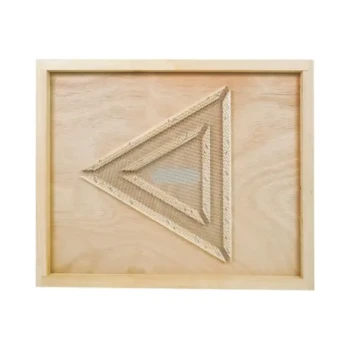
The necessity of a Varroa collection board with a grid-lined record sheet lies in its ability to transform visual observations into standardized, actionable data. By utilizing high-contrast, black-and-white grid divisions, this tool allows you to precisely count fallen mites and calculate the average daily drop count. This metric provides the quantitative standard needed to determine if chemical intervention is necessary or to verify the success of biological controls.
Core Takeaway
Visual estimation is insufficient for managing Varroa destructor mites; you need precise metrics. A grid-lined collection board standardizes the counting process, allowing you to calculate a daily mortality rate that objectively dictates whether your colony requires treatment or if current strategies are effective.
Transforming Observation into Data
The primary purpose of the grid-lined sheet is to convert a chaotic mix of hive debris into a structured dataset. Without this tool, assessing infestation levels is largely a guessing game.
The Power of Visual Contrast
The collection sheet, often made of white monitoring paper, provides a critical high-contrast background.
This white surface makes it significantly easier to identify the deep-red Varroa destructor mites against the debris. This visual clarity is the first step in ensuring accurate detection.
Standardizing the Count
The grid divisions are essential for breaking down the counting process.
Rather than attempting to scan the entire bottom board at once, the grid forces you to review the board in standardized sections. This prevents counting errors and ensures that the final tally reflects the actual number of fallen mites.
Calculating the Daily Drop Rate
The raw number of mites on a board is meaningless without time as a variable. The grid-lined sheet enables the calculation of rate-over-time.
Establishing a Quantitative Standard
The ultimate goal of using the board is to determine the average daily drop count.
By recording the total mite drop over a specific timeframe and dividing by the number of days, you generate a reliable metric. This number acts as a threshold to objectively decide if the infestation level warrants immediate chemical intervention.
Continuous, Non-Invasive Monitoring
Unlike invasive inspections that disrupt the colony, the collection board facilitates passive data collection.
It records natural mite mortality dynamics continuously. This allows you to monitor the colony's health trends without frequent hive openings, which can stress the bees and disrupt their productivity.
Verifying Treatment Efficacy
Beyond initial diagnosis, the grid-lined board is the primary tool for validation.
Measuring Biological and Chemical Success
You cannot assume a treatment has worked; you must measure the results.
The board serves as the verification method for various interventions, from powder treatments to thermal processes. By comparing drop counts before and after application, you can quantitatively evaluate the "mite-killing efficiency" of your chosen method.
Real-Time Feedback
Because the board captures mites as they fall, it offers a near real-time reflection of treatment impact.
If a treatment is effective, you will see a spike in the drop count on the grid sheet, providing immediate visual confirmation that the mite population density is decreasing.
Understanding the Trade-offs
While the grid-lined board is the industry standard for manual monitoring, it is important to understand its limitations and requirements for accuracy.
The Requirement for Physical Isolation
A record sheet alone is susceptible to data loss because bees naturally clean their hive.
To ensure the count is accurate, the system must use a protected bottom board with a grid screen. This physically isolates the bees from the fallen mites, preventing them from removing the evidence before you can count it.
Manual Labor vs. Automated Precision
The grid-lined sheet relies on manual visual inspection, which can be labor-intensive and subject to human error.
Newer technologies, such as computing platforms with camera sensors and deep learning, offer automated counting. While the manual board is a low-cost, reliable standard, it lacks the frequency and automated precision of these emerging optical sensor methods.
Making the Right Choice for Your Goal
To get the most out of your monitoring efforts, apply the data according to your specific objective.
- If your primary focus is determining when to treat: Calculate the average daily drop over a 3-day period to compare against regional infestation thresholds.
- If your primary focus is validating a treatment: Monitor the board immediately following chemical or thermal application to confirm a significant spike in mite mortality.
The grid-lined record sheet is not just a piece of paper; it is the difference between guessing the health of your hive and knowing it with scientific certainty.
Summary Table:
| Feature | Benefit for Beekeepers | Impact on Hive Management |
|---|---|---|
| High-Contrast Surface | Easy identification of deep-red mites against debris | Increases detection accuracy |
| Grid-Lined Divisions | Systematic, section-by-section counting | Reduces human error and tally mistakes |
| Daily Drop Calculation | Provides a standardized mortality rate | Objectively dictates when to treat |
| Passive Collection | Non-invasive monitoring of natural mite fall | Reduces colony stress and disruption |
| Treatment Verification | Quantitative comparison of pre/post-treatment counts | Confirms efficacy of chemical or biological controls |
Maximize Your Apiary Productivity with HONESTBEE
Don't leave your colony's health to guesswork. HONESTBEE provides commercial apiaries and distributors with professional-grade monitoring tools and hive-making machinery designed for precision and scale. Whether you need comprehensive wholesale supplies, honey-filling machines, or specialized beekeeping hardware, we offer the full spectrum of equipment to optimize your operations.
Take control of your Varroa management today. Contact us to explore our wholesale catalog and customized equipment solutions!
References
- Rukhkyan, Oganesyan. REPELLENT EFFECT OF PLANTS ON MITES VARROA JACOBSONI (OUD., 1904) IN ARMENIA. DOI: 10.31016/978-5-9902341-5-4.2020.21.341-345
This article is also based on technical information from HonestBee Knowledge Base .
Related Products
- Langstroth Screen Bottom Board for Beekeeping Wholesale
- HONESTBEE Wooden Bee Escape Board with Triangle Mesh Design for Beekeeping
People Also Ask
- What is the primary function of a standard screen bottom board when assessing honeybee grooming behavior? - Key Mite Data
- What role do screen bottom boards and monitoring inserts play in assessing Varroa mite mortality and maintaining hive hygiene in Langstroth hives?
- What is the primary function of a screen bottom board? Achieve Accurate Varroa Mite Assessment in Your Apiary
- Why is the combination of a screen bottom board and a sticky trap board essential for monitoring Varroa mite? Guide
- Why might a screen bottom board be less effective for pest control? Understanding the 'Mixed Sunlight' Complication