An automated temperature control system is essential because monofloral honey possesses an extreme sensitivity to thermal fluctuations, which can cause a rapid and irreversible decline in Invertase levels. These systems are necessary to execute precise heat treatment curves via feedback control, ensuring that sterilization standards are met without compromising the honey's biological integrity.
Honey processing is a conflict between necessary heat and biological fragility. Automated control solves this by eliminating the minor temperature spikes that destroy quality indicators, allowing you to achieve commercial stability while retaining the product's natural value.
The Critical Role of Invertase Preservation
The Sensitivity of Monofloral Honey
Monofloral honey is not a static product; it is biologically active and highly reactive to its environment. Even minor deviations in temperature can trigger chemical changes that alter its composition.
Invertase is the primary casualty of these fluctuations. It serves as a core quality indicator, and its degradation signals that the honey has been thermally abused, rendering it lower quality.
Precision Through Feedback Control
Manual regulation is insufficient for maintaining the strict parameters required for this type of honey. Automated systems utilize feedback control loops to monitor the product in real-time.
This allows the system to simulate and execute specific heat treatment curves. The automation adjusts instantly to changes, preventing the "overshoot" inherent in manual heating that destroys enzymes.
Optimizing Processing Efficiency
Reducing Viscosity for Filtration
Beyond enzyme preservation, precise temperature control is mechanically necessary for the filtration stage. Heating the honey reduces its viscosity, allowing it to flow effectively through high-density filters.
This step removes physical impurities such as fine wax debris and pollen grains. However, without automated limits, the heat required to lower viscosity could easily exceed the threshold that Invertase can withstand.
Delaying Crystallization
Automated heating serves a dual purpose in shelf-life management. By holding the temperature at a precise setpoint, the system dissolves small sugar crystal nuclei.
This process significantly delays crystallization in the finished product. The result is a honey that maintains visual clarity and shelf stability without requiring excessive heat that would damage its biological properties.
Understanding the Trade-offs
The Tension Between Sterilization and Biology
The central challenge in honey processing is the inverse relationship between sterilization and enzyme retention. High temperatures are excellent for sterilization and filtration but disastrous for biological activity.
The Risks of Imperfect Control
If the temperature is too low, the honey remains viscous, causing filtration bottlenecks and leaving crystal nuclei that shorten shelf life.
Conversely, if the temperature drifts even slightly too high, you achieve excellent filtration but destroy the Invertase. Automated systems are the only reliable way to navigate this narrow margin of error effectively.
Making the Right Choice for Your Goal
To determine how to configure your temperature control system, consider your end-product requirements.
- If your primary focus is Premium/Raw Certification: Prioritize strict upper-limit temperature caps to maximize Invertase retention, accepting slightly slower filtration rates.
- If your primary focus is Commercial Shelf Life: Focus on the precise dissolution of sugar crystal nuclei to delay crystallization and enhance visual clarity.
Automated precision is not a luxury; it is the only mechanism that allows for sanitary processing while respecting the biological complexity of the honey.
Summary Table:
| Feature | Automated Control | Manual Processing |
|---|---|---|
| Invertase Preservation | High (Precise feedback loops) | Low (Prone to heat spikes) |
| Temperature Stability | Constant (Real-time adjustments) | Fluctuating (High overshoot risk) |
| Filtration Efficiency | Optimized (Reduced viscosity) | Inconsistent (Flow bottlenecks) |
| Crystallization Control | Effective (Dissolves nuclei) | Poor (Unpredictable shelf life) |
| Product Integrity | Premium/Bio-active Grade | Standard/Commercial Grade |
Elevate Your Honey Quality with HONESTBEE Precision Engineering
At HONESTBEE, we understand that for commercial apiaries and distributors, the difference between premium and standard honey lies in precise temperature management. As a leading global supplier of professional beekeeping machinery, we provide the advanced honey-filling and processing equipment needed to safeguard biological indicators like Invertase while maximizing shelf stability.
Whether you are a large-scale distributor or an industrial producer, our comprehensive wholesale offering—from specialized hive-making hardware to honey-themed cultural merchandise—is designed to grow your business. Ready to optimize your production line? Contact us today to discover how our automated solutions can protect your honey's natural value.
References
- O. V. Serebryakova, T M Rusakova. Improvements in monofloral honey quality control. DOI: 10.1088/1755-1315/624/1/012149
This article is also based on technical information from HonestBee Knowledge Base .
Related Products
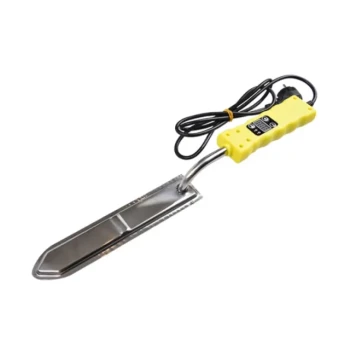
- Professional Electric Honey Uncapping Knife with Heated Digital Temperature Control for Beekeeping
- Fully Automatic Honey Filling Packaging Machine for Processing Line
- Automatic Honey Filling and Filtering Machine for Beekeeping Bottle Filling
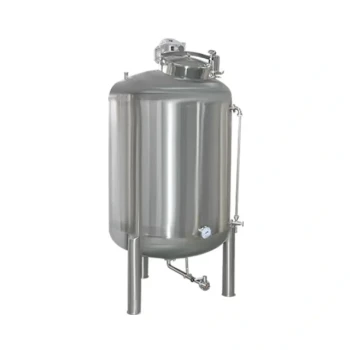
- Professional Honey Storage Tank with Agitation System
- Professional Thermostatic Conical Honey Melter
People Also Ask
- Why are electric honey uncapping knives essential? Boost Efficiency & Preserve Comb for Professional Honey Extraction
- What is an electric uncapping knife and how is it used? Master Faster Honey Extraction with Heat
- What are the advantages and disadvantages of using an electric knife for uncapping honey frames? Boost Extraction Speed
- What are the drawbacks of using an electric knife for uncapping honey frames? Cost and Power Constraints Explained
- How should an electric uncapping knife be utilized? Master Efficient Honey Extraction with Heated Precision