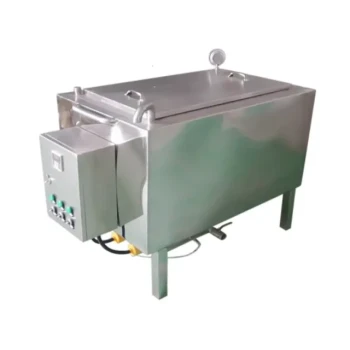
The primary role of an industrial forced-air oven in bee pollen processing is to rapidly reduce moisture content through consistent hot air circulation. This process must be strictly controlled to maintain temperatures below 43°C, a critical threshold that ensures the pollen dries effectively without destroying heat-sensitive nutrients or allowing microbial spoilage.
Core Insight: Effective pollen processing is a balancing act between dehydration and preservation. The goal is not just to dry the product, but to arrest microbial activity while maintaining the enzymatic integrity that gives bee pollen its nutritional value.
The Mechanics of Moisture Reduction
Addressing High Initial Moisture
Freshly harvested bee pollen is surprisingly damp, typically containing 18% to 34% moisture.
If this moisture is left unchecked, the pollen becomes an ideal breeding ground for bacteria and mold.
The Function of Forced Air
An industrial forced-air oven does not simply heat the product; it actively circulates air.
This circulation is essential for rapid and uniform drying, ensuring that no pockets of moisture remain trapped within the pollen granules.
Why Temperature Control is Non-Negotiable
The 43°C Threshold
The specific temperature limit of 43°C is not arbitrary; it is a biological safety line.
Exceeding this temperature shifts the process from drying to cooking, which fundamentally alters the product's chemical structure.
Preserving Nutritional Bio-Activity
Bee pollen is valued for its complex profile of enzymes and vitamins.
These components are highly heat-sensitive; subjecting them to temperatures above the 43°C threshold denatures the enzymes and degrades the vitamins, rendering the final product nutritionally inferior.
Inhibiting Microbial Growth
The combination of heat and airflow serves a dual purpose: removing water and stopping biological activity.
By keeping the temperature controlled yet effective, the process inhibits microbial growth, significantly extending the shelf life of the final product.
Understanding the Trade-offs
Processing Speed vs. Product Quality
There is often a temptation to increase temperatures to shorten drying times and increase throughput.
However, raising the temperature above 43°C sacrifices nutritional quality for speed, resulting in a product that looks correct but lacks therapeutic value.
Equipment Precision Requirements
Using a forced-air system requires strict calibration.
If the oven's internal thermostat fluctuates or has "hot spots" that exceed the limit, you risk inconsistent drying or localized nutrient destruction.
Making the Right Choice for Your Goal
To ensure you are processing bee pollen that meets industrial standards and consumer expectations, consider your primary objectives:
- If your primary focus is Nutritional Potency: Strictly maintain temperatures below 43°C to protect delicate enzymes and vitamins.
- If your primary focus is Shelf Stability: Ensure the forced-air system is powerful enough to drive moisture down rapidly, preventing early microbial onset.
By respecting the thermal limits of the raw material, you transform a perishable harvest into a stable, high-value superfood.
Summary Table:
| Feature | Requirement/Standard | Importance in Processing |
|---|---|---|
| Temperature Limit | Below 43°C (109°F) | Protects heat-sensitive enzymes and vitamins |
| Moisture Reduction | From 18-34% down to ~4% | Prevents mold growth and microbial spoilage |
| Air Circulation | Constant Forced-Air | Ensures rapid, uniform drying without hot spots |
| Nutrient Preservation | Bio-activity Retention | Maintains the therapeutic value for consumers |
| Storage Goal | Shelf Stability | Extends shelf life for commercial distribution |
Maximize Your Harvest Quality with HONESTBEE Professional Equipment
For commercial apiaries and distributors, maintaining the nutritional integrity of bee pollen is non-negotiable. HONESTBEE provides the precision tools you need to scale your operations without sacrificing quality.
We supply a comprehensive range of beekeeping machinery, specialized hardware, and industrial-grade forced-air ovens designed specifically for high-volume, temperature-sensitive processing. Whether you are looking for advanced honey-filling machines or complete pollen processing lines, our wholesale solutions are built for durability and efficiency.
Ready to elevate your production standards?
Contact our expert team today to discuss how our equipment can optimize your apiary's output and protect your valuable products.
References
- Carlos Fuenmayor B, Saverio Mannino. Evaluation of the physicochemical and functional properties of Colombian bee pollen. DOI: 10.21897/rmvz.120
This article is also based on technical information from HonestBee Knowledge Base .
Related Products
- Electric Commercial Beeswax Melter for Factory Use
- 12V Bee Mite Removal Evaporator Oxalic Acid Vaporizer for Bee Fumigation Treatment 180W Atomization
- High-Efficiency Pneumatic Bee Hive Making Machine for Rapid Box Assembly
People Also Ask
- Why might a commercial beekeeper prefer an electric beeswax melter? Maximize Profit with Speed & Scale
- What safety precautions should be taken when melting beeswax? A Guide to Flammable Wax Handling
- What types of beeswax melters are available for different scales of beekeeping? Solar vs. Electric Melters Compared
- What are the three popular methods for melting beeswax? Safely Process Your Wax with Ease
- How do you melt beeswax without making a mess? Master Safe & Clean Techniques