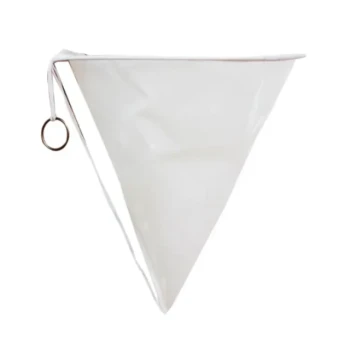
Fine muslin cloth acts as the definitive physical barrier in the final stages of honey processing. It serves as a filtration medium designed to capture and remove wax chips, larval debris, and other physical impurities from extracted honey. Whether used in conjunction with a press or gravity-fed over a collection container, its primary function is to ensure the final product meets strict hygiene and clarity standards before packaging.
Core Takeaway Muslin cloth provides a critical balance in filtration; it is fine enough to remove visual contaminants and organic debris to ensure hygiene, yet porous enough to allow the honey's essential botanical characteristics to pass through.
The Role of Physical Filtration
Removing Organic Contaminants
The primary technical function of muslin cloth is the removal of macro-impurities.
During extraction or pressing, honey often carries beeswax fragments, larval debris, and other hive byproducts. Muslin acts as a sieve, effectively trapping these solids to prevent them from entering the final storage vessel.
Ensuring Hygiene Standards
Beyond simple debris removal, this filtration step is a hygiene necessity.
By filtering out organic matter that could spoil or degrade, the cloth ensures the honey is sanitary and safe for long-term storage. This is particularly vital when processing honey that has been manually pressed or heated, where debris counts may be higher.
Marketability and Visual Quality
Achieving Product Clarity
Consumer confidence is often driven by the visual appearance of the product in the jar.
Muslin cloth polishes the honey by removing the cloudiness associated with suspended wax particles. This results in the high level of "market transparency" and clarity required for commercial sale.
Standardization of Grade
Consistent filtration creates a consistent product.
Using a standardized consumable like fine muslin ensures that every batch meets the same level of purity. This reliability allows producers to maintain a specific market grade, regardless of variations in the raw extraction conditions.
The Biological Advantage: Retention vs. Removal
Preserving Pollen Content
A critical distinction in honey filtration is what is left behind.
While muslin removes unwanted debris, it does not act as an ultra-filter. According to industry standards, it allows microscopic pollen grains to pass through into the final product.
Maintaining Botanical Character
Because pollen is retained, the honey keeps its specific botanical identity.
This ensures the product can still be classified by its floral source. The cloth cleans the honey of "environmental impurities" without stripping it of the nutritional and biological properties that distinguish real honey from syrup.
Understanding the Trade-offs
Flow Rate Limitations
While muslin offers superior clarity compared to coarse wire mesh, it restricts flow rate.
The tighter the weave of the cloth, the slower the gravity filtration process will be, especially with viscous or cooler honey. This can create bottlenecks during high-volume processing.
Maintenance and Replacement
Muslin is a consumable that requires management.
The cloth will eventually clog with wax and propolis, requiring frequent cleaning or replacement to maintain filtration speed. Failure to manage the cloth can lead to overflows or contamination if the fabric becomes compromised.
Making the Right Choice for Your Goal
To optimize your filtration process, consider your specific end-product requirements:
- If your primary focus is visual clarity: Utilize multiple layers of fine muslin to achieve a highly polished, translucent look suitable for clear glass packaging.
- If your primary focus is raw/botanical integrity: Ensure you are using standard fine muslin rather than ultra-fine synthetic filters to guarantee maximum pollen retention while still removing wax debris.
Effective filtration is not just about cleaning honey; it is about refining the product without stripping away its natural essence.
Summary Table:
| Feature | Function & Benefit |
|---|---|
| Primary Filtration | Removes wax chips, larval debris, and macro-impurities |
| Hygiene Control | Eliminates organic matter to prevent spoilage and ensure safety |
| Visual Polish | Achieves high market transparency and product clarity |
| Biological Integrity | Allows microscopic pollen grains to pass through, preserving floral identity |
| Standardization | Ensures consistent product grading across different extraction batches |
Elevate Your Honey Quality with HONESTBEE Professional Filtration Solutions
At HONESTBEE, we understand that the difference between raw honey and a premium market-ready product lies in the details of filtration. We specialize in catering to commercial apiaries and distributors, providing the high-quality muslin cloth and professional-grade consumables required to maintain the perfect balance of clarity and botanical integrity.
From advanced honey-filling and hive-making machinery to essential beekeeping tools, HONESTBEE offers a comprehensive wholesale portfolio designed to scale your operations. Partner with us to ensure your honey meets the highest industry standards while preserving its natural essence.
Ready to upgrade your processing efficiency? Contact HONESTBEE Today to explore our full spectrum of wholesale beekeeping equipment and supplies.
References
- A. Adekunle, Oluwatosin Emmanuel Obembe. PARTICIPATORY ASSESSMENT OF HONEY EXTRACTION METHODS IN THE SAVANNA BELT OF NIGERIA. DOI: 10.1081/fri-120014689
This article is also based on technical information from HonestBee Knowledge Base .
Related Products
- Nylon Honey Strainer Square Filter Cloth for Honey Filters
- Conical Nylon Honey Strainer Filter Bag for Beekeeping and Honey Filtration
- Stainless Steel Double Layer Honey Strainer Sieve Filters
- Professional Honey Filter with Tripod Support Stand
- Professional Stainless Steel Honey Filter with Support Handle
People Also Ask
- What is the significance of using professional filter cloths or sieves in honey processing? Ensure Purity and Quality
- What is the simple straining method for processing honey? A Cost-Effective Guide to Pure Extraction
- What cloth for straining honey? The Best Materials for Clean, High-Quality Honey
- What size mesh to strain honey? A Guide to the Standard Double-Sieve Method
- Why is specialized filter cloth preferred over the traditional squeezing method for wild honey? Achieve Higher Purity