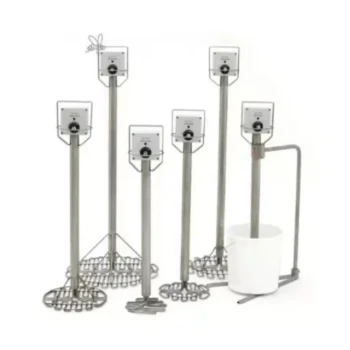
Applying thermal energy is critical when preparing a 50% sugar syrup because it drives the physical change required to turn granular sugar and water into a stable, homogeneous solution. Heating accelerates molecular diffusion, ensuring that sucrose crystals dissolve completely rather than settling, while simultaneously creating a mixture that is fluid enough to prevent clogging feeding equipment and easy for bees to metabolize.
Heating is not merely about mixing; it is about stability and bioavailability. By ensuring complete dissolution, you prevent crystallization that damages equipment and create a feed that allows bees to access immediate energy without digestive struggle.
The Physics of Solubility
Accelerating Molecular Diffusion
At a molecular level, mixing sugar and water is a diffusion process.
Using heating equipment introduces thermal energy to the mixture. This energy increases the kinetic movement of molecules, forcing the sugar to integrate with the water at a significantly faster rate than cold mixing allows.
Creating a Homogeneous Mixture
A 50% concentration is dense; without heat, sugar tends to remain suspended or settle at the bottom.
Heating ensures the mixture becomes homogeneous, meaning the sugar is uniformly distributed throughout the water. This consistency is vital for maintaining the correct ratio in every drop the bees consume.
Protecting Your Feeding Infrastructure
Preventing Crystallization
One of the primary risks in syrup preparation is the re-formation of solid sugar.
If the sucrose is not fully dissolved, it is prone to crystallizing, particularly when the syrup is exposed to low-temperature environments. Heating creates a stable solution that is resistant to returning to a solid state.
Avoiding Mechanical Clogs
Crystallized sugar is a mechanical hazard for beekeeping equipment.
Solid particles can easily accumulate in and clog small feeding tubes. By using heat to ensure total dissolution, you maintain a liquid flow that keeps your feeding hardware functional and maintenance-free.
Enhancing Biological Efficiency
Facilitating Ingestion
Bees feed by sucking liquid through their mouthparts.
A completely dissolved, smooth syrup is physically easier for bees to ingest than a gritty or cold suspension. This reduces the physical energy the bee must expend simply to feed.
Improving Digestion
The ultimate goal of feeding is energy transfer.
Syrup prepared with heat is easier for bees to digest. This allows for immediate and efficient energy utilization, which is critical for the hive's survival and productivity.
Understanding the Operational Trade-offs
Equipment and Energy Requirements
While heating is necessary for a stable solution, it does introduce an additional layer of complexity.
You must invest in appropriate heating equipment and expend energy to warm the water. However, attempting to bypass this step to save time or energy often results in wasted syrup due to spoilage or crystallization.
Temperature Management
It is important to note that the goal is "warming," not necessarily boiling.
The reference emphasizes using thermal energy to dissolve crystals, not to alter the chemical structure of the sugar through excessive heat. Controlled heating achieves the necessary physical changes without degrading the feed quality.
Optimizing Your Syrup Preparation
If your primary focus is Equipment Reliability:
- Use heating to guarantee total dissolution, as this is the only way to prevent crystals from forming and clogging fine feeding tubes in cool weather.
If your primary focus is Colony Nutrition:
- Prioritize a homogeneous, warm mix to ensure the feed is easy for bees to suck through their mouthparts and digest for immediate energy.
Heat transforms a simple mixture into a biologically efficient fuel source for your hive.
Summary Table:
| Benefit Category | Impact of Heating Equipment | Why It Matters for Your Apiary |
|---|---|---|
| Solubility | Accelerates molecular diffusion | Ensures sugar integrates fully with water for a homogeneous mix. |
| Infrastructure | Prevents sucrose crystallization | Eliminates clogs in feeding tubes and maintains hardware longevity. |
| Bee Health | Enhances bioavailability | Easier for bees to ingest and digest for immediate energy. |
| Consistency | Uniform sugar distribution | Guarantees every bee receives the correct 50% concentration ratio. |
Maximize Your Colony’s Productivity with HONESTBEE
Efficient bee feeding starts with the right equipment. HONESTBEE specializes in supporting commercial apiaries and distributors by providing the industry's most reliable beekeeping machinery and tools. Whether you need specialized honey-filling machines for large-scale operations or a steady supply of essential industry consumables, our wholesale offerings are designed to scale with your business.
Don't let inefficient mixing or equipment failures hinder your productivity. Partner with HONESTBEE to access high-quality hardware and tailored solutions that bring value to your apiary or distribution network.
Ready to upgrade your beekeeping operations? Contact us today to explore our comprehensive portfolio!
References
- Roberto Barbosa Sampaio, Patrícia Faquinello. Avaliação de alimentadores para abelha mandaçaia (Melipona quadrifasciata anthidioides). DOI: 10.4321/s0004-05922013000400018
This article is also based on technical information from HonestBee Knowledge Base .
Related Products
- HONESTBEE Commercial Upright Honey Melter
- Professional Thermostatic Conical Honey Melter
- Silicone Rubber Honey Drum Heating Belt
- Honey Tank Heater Drum Heating Blanket for Honey Barrel
- Stainless Steel Heated Honey Tank Warming Heating Tank
People Also Ask
- What is melter honey used for? A Low-Cost Ingredient for Bakers and Brewers
- How do you melt a bucket of honey? Safely Reliquefy Crystallized Honey Without Damage
- How does a honey melter address the issue of crystallized honey in storage? Restore Flow and Quality Efficiently
- When is a honey melter necessary? Optimize Your Facility's Workflow for Crystallized Honey
- What methods are used to heat honey, and what precaution should be taken? Expert Guide to Safe Honey Liquefaction