High-resolution visual observation equipment is a mandatory requirement, not an optional tool, for studying Apis florea due to the species' diminutive size. Because these bees are physically very small, standard observation methods fail to capture the minute mechanical details of their foraging, making it impossible to distinguish between nectar feeding and pollen gathering without optical aid.
The Core Reality: The small stature of Apis florea obscures critical behavioral indicators invisible to the naked eye. High-resolution equipment bridges this gap, enabling the precise categorization of plants as nectar or pollen sources by revealing specific anatomical movements.
Overcoming the Physical Constraints of the Subject
The Challenge of Scale
The primary driver for using high-performance optics is the physical scale of Apis florea. As a significantly smaller species compared to other honey bees, their interactions with floral structures are subtle and difficult to track.
Standard field observation often results in ambiguity. Without magnification, a researcher can see the bee is present on a flower, but cannot definitively state what the bee is doing.
Distinguishing Foraging Modes
High-resolution equipment solves the problem of ambiguity by visualizing specific anatomical markers. It allows the observer to clearly see the bee inserting its mouthparts into nectar tubes, which is the definitive sign of nectar collection.
Conversely, this equipment captures the mechanical action of the bee attaching particles to its hind leg baskets. This visual evidence is required to confirm pollen collection, distinguishing it from nectar feeding or mere resting.
The Scientific Value of Precision
Accurate Plant Classification
The ultimate goal of monitoring is to create a reliable dataset of plant utility. By visualizing the specific behaviors described above, researchers can accurately classify plants as nectar sources, pollen sources, or dual-purpose sources.
Mapping Honey Sources
This precise classification provides a scientific basis for honey source distribution. For commercial apiaries and ecological surveys, understanding exactly which plants provide which resource allows for optimized planning in specific regions.
Common Pitfalls to Avoid
The Risk of Assumed Behavior
A major error in apiary research is assuming that visitation equals foraging. Without high-resolution verification of mouthpart insertion or pollen packing, data can become contaminated.
Misinterpreting Dual Sources
Many plants offer both pollen and nectar, but a bee may only be harvesting one. Relying on low-resolution observation often leads to broad generalizations, missing the nuance of how Apis florea selectively utilizes different parts of the local flora.
Making the Right Choice for Your Goal
To ensure your data is actionable, tailor your observation criteria to your specific objectives:
- If your primary focus is Honey Production: Prioritize equipment that can clearly resolve mouthpart insertion, as this confirms the availability of nectar sources for honey creation.
- If your primary focus is Colony Health and Growth: Focus on optics that highlight the hind leg baskets, allowing you to track pollen sources which are critical for brood rearing.
Accurate equipment is the only way to transform vague field observations into a reliable scientific basis for resource management.
Summary Table:
| Feature | Observation Challenge (Low-Res) | High-Resolution Solution |
|---|---|---|
| Subject Scale | Diminutive size leads to visual ambiguity. | Magnification reveals subtle anatomical details. |
| Nectar Collection | Mouthparts insertion is invisible to naked eye. | Clear visualization of feeding into nectar tubes. |
| Pollen Gathering | Difficult to see small particles on hind legs. | Confirms mechanical attachment to leg baskets. |
| Data Accuracy | Risks assuming visitation equals foraging. | Provides definitive proof of resource extraction. |
| Plant Mapping | Vague classification of floral resources. | Precise mapping of honey and brood-rearing sources. |
Elevate Your Apiary Intelligence with HONESTBEE
Precise observation is the foundation of successful commercial beekeeping and resource management. At HONESTBEE, we specialize in supporting commercial apiaries and distributors with a comprehensive suite of professional-grade solutions. From specialized hardware like honey-filling and hive-making machines to a full spectrum of beekeeping tools and equipment, we provide the precision you need to optimize your operations.
Whether you are scaling up honey production or managing diverse honey-themed cultural merchandise, our wholesale offerings are designed to enhance your efficiency and scientific accuracy.
Ready to upgrade your beekeeping infrastructure? Contact us today to explore how our specialized tools and machinery can empower your business!
References
- A. Vidhya, M Shanthi. Weed Flora, A Rich Foraging Source for Little/Dwarf Bee Apis florea Fabricius (Hymenoptera: Apidae) in Madurai District, Tamil Nadu. DOI: 10.20546/ijcmas.2019.806.115
This article is also based on technical information from HonestBee Knowledge Base .
Related Products
- Heavy-Duty Ergonomic Grip Galvanized Pollen Shovel
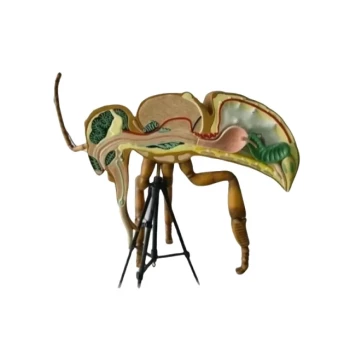
- HONESTBEE Anatomy Bee Model Detailed Anatomical Display for Education and Study
- Professional Dual Action Queen Excluder Scraper for Beekeeping
- Honey Bee Lifecycle Model: A Detailed Honeycomb Display of Bee Development
- Modern Flat-Mount Hive Number Set for Beekeeping
People Also Ask
- For what reasons do beekeepers collect bee pollen? Boost Hive Health and Unlock New Revenue Streams
- Why should commercial apiaries focus on the collection of diversified bee products? Maximize Your Hive’s Profit Potential
- How do bee pollen collection tools affect the quality of bee pollen used in functional dairy ice cream production?
- How does a specialized pollen collector facilitate the harvesting of diverse bee products? Automate High-Value Yields
- What is the impact of pollen collectors and associated equipment on the cost structure of pollen production? Maximize ROI