Honey is heated before filtering primarily to reduce its viscosity. By warming the substance, producers effectively thin the honey, making it significantly less thick and resistant to movement. This thermal step ensures the liquid flows effortlessly through fine filters, allowing for the rapid and effective removal of impurities that would otherwise be difficult to strain from cold, dense honey.
Core Takeaway The central purpose of heating honey prior to filtration is to maximize processing efficiency. By gently increasing the temperature, producers reduce the honey's natural thickness, allowing it to be strained of debris and bottled with greater speed and consistency.
The Mechanics of Viscosity and Flow
Overcoming Natural Resistance
Honey in its natural state is highly viscous and thick. This density creates substantial resistance when producers attempt to move it through processing equipment.
Heating acts as a physical modifier to overcome this resistance. By applying warmth, the internal friction of the fluid decreases, changing how the honey behaves mechanically.
The Transformation to a Thinner Fluid
As the temperature rises, the honey undergoes a physical change, becoming thinner.
It transitions from a slow-moving, sludge-like consistency to a more free-flowing liquid. This reduction in thickness is the prerequisite for any efficient high-volume processing.
Improving Filtration Efficiency
Facilitating Impurity Removal
The primary goal of filtration is to strain out unwanted particles. Heating is critical because it ensures the honey is fluid enough to pass through fine filters.
If the honey were left cold and thick, it would struggle to pass through the mesh, potentially clogging the system. Thinner, warm honey allows the filters to catch impurities effectively without impeding the flow.
Speeding Up Production
Beyond simple filtration, viscosity reduction is about speed.
Warming the honey allows it to flow more rapidly through the entire system. This includes moving quickly through sieves and flowing smoothly into bottling equipment, preventing bottlenecks in the production line.
Equipment and Application
Using Honey Super Warmers
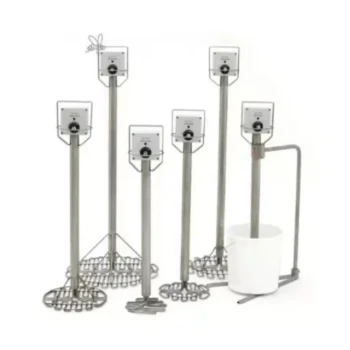
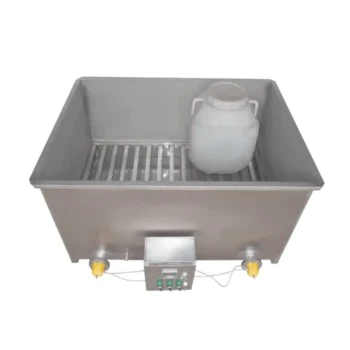
To achieve this viscosity reduction, producers often use specialized equipment known as honey super warmers.
These devices are designed to increase the temperature of the honey supers before processing begins. This ensures the honey is already in a flow-ready state before it reaches the extraction and filtration machinery.
Understanding Process Trade-offs
The Balance of Gentle Warming
While heating is essential for efficiency, the process relies on gentle temperature increases.
References highlight the use of warmers to "gently" increase the temperature rather than subjecting the honey to aggressive thermal shocks. The goal is strictly to alter the physical flow (viscosity) to facilitate mechanical processing, rather than to cook the product.
Making the Right Choice for Your Goal
- If your primary focus is filtration efficiency: Prioritize heating the honey to reduce viscosity, ensuring it passes through fine mesh without clogging.
- If your primary focus is production speed: Use honey super warmers to prepare the supers ahead of time, allowing for rapid flow through bottling equipment.
Heating is a practical tool used to transform a thick, resistant substance into a manageable fluid for optimal processing.
Summary Table:
| Factor | Cold Honey | Heated Honey |
|---|---|---|
| Viscosity | High (Thick & Resistant) | Low (Thin & Free-flowing) |
| Flow Speed | Slow / Prone to bottlenecks | Rapid / Efficient |
| Filtration Ease | Difficult; clogs fine mesh | Easy; passes through fine filters |
| Processing Goal | Natural storage | High-volume bottling & purity |
| Equipment Used | Standard storage | Honey super warmers / Heat exchangers |
Streamline Your Honey Production with HONESTBEE
Are you looking to optimize your apiary's efficiency and product quality? At HONESTBEE, we specialize in empowering commercial apiaries and honey distributors with professional-grade solutions. From specialized honey super warmers and extraction machinery to high-precision honey-filling machines, we provide the full spectrum of equipment needed to master viscosity and speed up your production line.
Whether you are scaling your wholesale operations or sourcing essential beekeeping consumables, our team is ready to support your growth with industry-leading expertise.
Ready to elevate your beekeeping business? Contact HONESTBEE Today to discover our comprehensive wholesale offerings and customized machinery solutions.
Related Products
- Stainless Steel Heated Honey Tank Warming Heating Tank
- Honey Tank Heater Drum Heating Blanket for Honey Barrel
- 0.5T Capacity Honey Dehumidifier Dryer with Vacuum Heating and Thickening Filtering Machine
- Silicone Rubber Honey Drum Heating Belt
- Honey Concentrating Vacuum Heating Thickening Machine Dehumidifier for Honey
People Also Ask
- What are the benefits of precise temperature control in honey heating tanks? Preserve Quality and Efficiency
- How do honey heating tanks offer scalability for growing beekeeping operations? Strategic Equipment Growth Solutions
- What features of a honey heating tank contribute to hygiene? Ensure Purity with Stainless Steel & Sanitary Design
- What is the primary role of a honey heating tank? Enhance Your Honey Processing Flow and Quality
- What is the purpose of using heating tanks or constant temperature water baths in honey dehydration? Optimize Purity & Flow