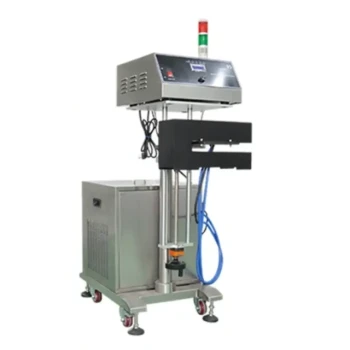
Industrial low-temperature freezing is technically required because it serves as an immediate physiological "pause button" for both honey bee larvae and parasitic mites. By utilizing equipment typically set at -20°C, researchers instantly halt biological development, capturing the specific ecological state of the brood comb at the exact moment of sampling.
Accurate evaluation of Varroa destructor reproduction relies on eliminating "recording biases" caused by continued biological activity. Freezing ensures that the developmental stages observed during laboratory analysis exactly match the reality of the colony at the time of collection.
Preserving the Ecological Snapshot
Halting Biological Clocks
In the study of Varroa destructor, timing is a critical variable. Both the host (honey bee larvae) and the parasite (mites) are in a state of constant, rapid development.
Industrial freezing equipment functions to immediately stop this biological clock. This prevents the transition of organisms from one life stage to the next during the interval between collection and analysis.
Preventing Data Distortion
Without immediate freezing, biological processes continue even after the sample is removed from the hive. This creates a disconnect between the field conditions and the laboratory data.
Specifically, this rapid cooling prevents recording biases in key reproduction parameters. It ensures that a mite egg does not hatch, or a nymph does not molt into a later stage, while the sample awaits processing.
The Mechanics of Accuracy
Targeting Specific Parameters
The primary goal of this storage method is to protect the integrity of specific developmental markers. This includes the precise count of mite eggs and the identification of various nymphal development stages.
If these stages were allowed to progress naturally, the calculated reproduction success rates of the mites would be artificially inflated or skewed.
Consistency in Temperature
The standard requirement is -20°C. This temperature is sufficiently low to ensure a total cessation of metabolic and developmental activity.
Just as freezing inhibits enzymatic activity and microbial growth in other hive products (such as royal jelly or bee bread), here it acts to lock in the macroscopic developmental state of the insects and arachnids involved.
Understanding the Trade-offs
The Risk of Ambient Storage
The primary trade-off in this methodology is the absolute intolerance for ambient temperatures post-collection. There is no "grace period" for these samples.
If samples are left at room temperature, even for a short duration, the data becomes compromised. The "snapshot" blurs, and the researcher can no longer distinguish between the state of the colony and development that occurred in the transport box.
Equipment Dependency
This method creates a strict dependency on industrial-grade equipment. Standard refrigeration is often insufficient to arrest development rapidly enough to prevent bias.
Reliable access to -20°C storage is not merely a preservation technique; it is a fundamental prerequisite for data validity in this specific field of research.
Making the Right Choice for Your Goal
To ensure your research yields valid conclusions regarding Varroa reproduction, you must align your storage protocols with your analytical goals.
- If your primary focus is determining accurate reproduction rates: You must freeze samples at -20°C immediately to prevent egg hatching and nymphal maturation post-sampling.
- If your primary focus is minimizing equipment costs: You must acknowledge that excluding industrial freezing will introduce significant recording biases that likely invalidate reproduction metrics.
Data integrity in Varroa research begins the moment the biological clock is stopped.
Summary Table:
| Parameter | Ambient Storage | -20°C Industrial Freezing |
|---|---|---|
| Biological Clock | Continues (Development persists) | Halted (Instant physiological pause) |
| Data Integrity | High risk of recording bias | Maintains exact ecological snapshot |
| Mite Life Stages | Eggs hatch; nymphs mature | Developmental stages locked in |
| Research Utility | Unreliable for reproduction rates | Gold standard for accurate metrics |
| Enzymatic Activity | High (Sample degradation) | Minimized (Preserves sample quality) |
Secure Your Apiary Research and Productivity with HONESTBEE
At HONESTBEE, we understand that data integrity is as vital to researchers as equipment reliability is to commercial operators. Whether you are a distributor looking to supply the latest in beekeeping technology or a commercial apiary seeking high-performance honey-filling machines, hive-making equipment, or essential consumables, we provide the industrial-grade tools you need to succeed.
From specialized hardware to honey-themed cultural merchandise, our comprehensive wholesale offering is designed to scale your operations and enhance your market presence. Don't let equipment limitations hinder your growth.
Contact HONESTBEE today to discover how our premium beekeeping solutions can empower your business and ensure the highest standards in hive management.
References
- Martin Gabel, Ralph Büchler. Immediate and long-term effects of induced brood interruptions on the reproductive success of Varroa destructor. DOI: 10.1007/s13592-023-00998-x
This article is also based on technical information from HonestBee Knowledge Base .
Related Products
- Professional Water Cooled Induction Sealing Machine for Bottles and Containers
- Professional Plastic Honey Dipper for Easy Honey Drizzling
- Economy Small Scale Honey Dryer Dehumidifier Thickening Machine
- Heavy Duty Stainless Steel Honey Processing Machine Decrystallizing Tank
- 0.5T Capacity Honey Dehumidifier Dryer with Vacuum Heating and Thickening Filtering Machine
People Also Ask
- How does tamper-evident sealing equipment benefit the honey trade? Ensure Product Integrity and Market Trust
- What is the function of an induction sealing machine in packaging? Secure Your Brand with Tamper-Evident Seals
- How does an induction sealing machine work? Enhance Honey Packaging with Hermetic Seals & Tamper Evidence
- What is an induction sealing machine and how does it work? Achieve Airtight, Tamper-Evident Seals
- How does the induction sealing process work? Create Tamper-Evident, Airtight Seals for Your Products