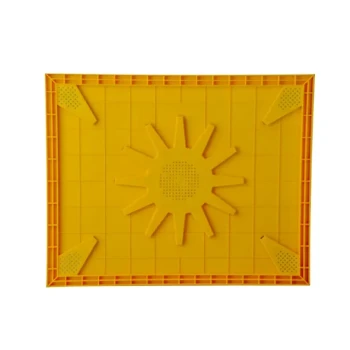
Monitoring hive entrances and bottom boards provides a critical, non-invasive window into colony health. This necessity stems from the innate hygienic behavior of worker bees, who use their mandibles to extract dead, mummified larvae from brood cells. By inspecting the hive floor and entrance for these ejected remains, beekeepers can immediately gauge the presence of fungal disease and the colony's active response to it.
By observing the accumulation of discarded mummified larvae, beekeepers can assess both the severity of a fungal infection and the colony's natural resilience without disrupting the internal nest structure.
The Mechanism of Detection
The Role of Worker Bees
The visibility of disease symptoms depends entirely on the colony's workforce. Worker bees act as the primary sanitation crew.
When they detect larvae that have succumbed to fungal infection, they do not ignore them. Instead, they use their mandibles to physically remove the remains from the comb.
The Path of Debris
Once extracted, the diseased larvae must be removed from the nest area. Worker bees carry these remains away from the brood nest.
They ultimately discard them outside the hive entrance or let them drop to the bottom board. This accumulation creates a diagnostic zone that beekeepers can monitor externally.
Interpreting the Visual Evidence
Identifying the Remains
To effectively track disease, you must know what to look for. The ejected remains have a distinct appearance compared to normal hive debris.
Look for white or grayish-black mummified remains. These hard, chalk-like or stone-like pellets are the definitive sign of a fungal issue affecting the brood.
Assessing Outbreak Severity
The quantity of debris serves as a direct metric for the infection's intensity. A high volume of mummies at the entrance indicates a significant percentage of the brood is affected.
This allows for a rapid assessment of the "infection load" the colony is currently managing.
Measuring Self-Cleaning Capability
Monitoring these areas does more than just identify disease; it evaluates colony behavior. The presence of mummies outside the hive confirms the colony possesses strong self-cleaning capabilities.
It proves the bees are actively detecting and removing pathogens rather than allowing them to fester within the comb.
Understanding the Methodological Trade-offs
Reliance on Behavioral Traits
This monitoring method relies heavily on the specific hygienic genetics of your bees. It is an indirect measure of disease.
You are technically observing the cleanup of the disease, not the disease in situ. If a colony has poor hygienic traits, they may not remove the mummies, potentially leading to a false sense of security during an external inspection.
The Non-Invasive Advantage
The primary benefit is the preservation of hive climate and structure. You can diagnose the problem without opening the hive.
However, this passive observation should eventually be paired with active management if the debris levels suggest the colony is overwhelmed.
Making the Right Choice for Your Goal
To effectively utilize bottom board and entrance monitoring, align your observations with your management objectives:
- If your primary focus is rapid diagnosis: regularly scan the hive entrance for white or grayish-black pellets to identify fungal outbreaks without disturbing the colony.
- If your primary focus is genetic selection: track the volume of ejected remains to identify and breed from colonies that demonstrate superior self-cleaning and hygienic behaviors.
Successful disease management relies on recognizing that debris at the hive entrance is not just waste; it is data.
Summary Table:
| Diagnostic Feature | Observation Details | Significance |
|---|---|---|
| Debris Type | White or grayish-black mummified pellets | Confirms presence of fungal pathogens |
| Location | Bottom boards and hive entrances | Indicates worker bees' active sanitation efforts |
| Debris Volume | Quantity of ejected larvae | Measures infection severity and colony load |
| Worker Behavior | Physical extraction via mandibles | Demonstrates colony's hygienic genetic traits |
Maximize Your Apiary Productivity with HONESTBEE
Identifying disease is only the first step—having the right equipment to manage it is what ensures a thriving business. HONESTBEE provides commercial apiaries and distributors with premium, wholesale beekeeping solutions designed for efficiency and scale.
Whether you need specialized hive-making and honey-filling machinery to streamline operations, or high-quality beekeeping tools and consumables to maintain colony health, we deliver the professional-grade hardware you require.
Ready to upgrade your apiary’s performance? Contact HONESTBEE today to explore our comprehensive product portfolio and discover how our global supply chain can benefit your business.
References
- H. Fathy, Dina Mandouh. SURVEY OF CHALK AND STONE BROOD FUNGAL DISEASES ON HONEY BEE COLONIES IN DAKAHLIA GOVERNORATE, EGYPT.. DOI: 10.21608/jppp.2012.84161
This article is also based on technical information from HonestBee Knowledge Base .
Related Products
- Langstroth Solid Bottom Board for Beekeeping
- Solid Bottom Board Australian Pine Wood Langstroth Bottom Board for Wholesale
- Langstroth Screen Bottom Board for Beekeeping Wholesale
- HONESTBEE Top Bar & Bottom Bar Forming Machine | Bee Frame Machine
- HONESTBEE Wooden Bee Escape Board with Triangle Mesh Design for Beekeeping
People Also Ask
- What are the functions of solid bottom boards for a beehive? Essential Thermal Protection and Winter Survival Tips
- What is the purpose of a solid bottom board for bee hives? Enhance Hive Health and Winter Survival
- How does climate influence the choice between a solid and screened bottom board? Optimize Your Hive for Local Weather
- What is the primary function of a bottom board in a modern modified beehive system? Essential Foundation Guide
- What are the characteristics of a solid bottom board for a beehive? Boost Colony Health and Thermal Insulation