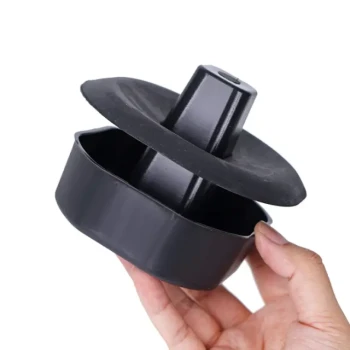
Preventing colony collapse caused by ant invasions is the primary reason for this pest management technique. Ants are highly dangerous pests that can destroy brood chambers, leading to the complete failure of the hive. Wrapping hive stand legs with oil-soaked fabric creates an impassable chemical barrier, preventing these predators from climbing up to attack the colony.
Ants pose a lethal threat to stingless bees by preying on larvae and destroying brood chambers. Using oil-soaked fabrics provides a durable, low-cost defensive perimeter that prevents crawling predators from accessing the hive and triggering colony absconding.
The Nature of the Threat
Vulnerability of the Brood Chamber
Ants are not merely nuisance pests; they are aggressive predators capable of destroying the brood chamber. This is the heart of the colony where new bees are raised. If ants gain access to this area, they prey on the bees and larvae, rapidly devastating the colony's population.
The Risk of Colony Absconding
Stingless bees are sensitive to persistent disturbance. When natural enemies like ants successfully breach the hive, the stress and damage often force the colony to abscond, or migrate. This results in the total loss of the managed hive as the bees abandon their home to seek safety elsewhere.
Establishing a Defensive Perimeter
Creating a Continuous Barrier
Tying fabrics soaked in lubricating or high-viscosity oil to the wooden stands creates a dual physical and chemical barrier. Unlike applying oil directly to wood, which may soak in or dry out, the fabric retains the oil effectively. This creates a "no-cross" zone that crawling predators cannot traverse.
Critical Timing for New Colonies
This protection is vital during the early stages of colony establishment. A young colony has not yet developed a sufficient internal defensive layer to repel invaders. The external barrier provided by the oil-soaked fabric buys the colony time to grow strong enough to defend itself.
Understanding the Trade-offs
Maintenance Requirements
While the fabric holds oil better than bare wood, this method is not a "set and forget" solution. The barrier is durable, but the oil will eventually dry or become covered in dust, reducing its effectiveness. Regular re-application of oil to the fabric is necessary to maintain the integrity of the chemical barrier.
Limitation to Crawling Predators
This technique is highly effective against crawling predators specifically. It does not protect the hive from flying pests or airborne threats. It should be viewed as a specialized ground defense mechanism rather than a comprehensive cure-all for all hive pests.
Securing Your Hive's Success
To ensure the longevity of your stingless bee colonies, consider the current state of your apiary when applying this method.
- If your primary focus is establishing new hives: Apply the barriers immediately, as young colonies lack the internal defenses to survive an ant incursion.
- If your primary focus is cost-effective management: Utilize this method as a low-cost, high-impact solution to reduce colony loss without investing in expensive equipment.
A secure perimeter allows the colony to focus its energy on growth and production rather than defense.
Summary Table:
| Feature | Description | Impact on Colony |
|---|---|---|
| Primary Function | Creates a chemical/physical barrier on hive stand legs | Prevents predatory ants from reaching the brood |
| Target Pests | Crawling insects (specifically ants) | Eliminates the risk of larvae predation |
| Key Benefit | Prevents colony absconding | Maintains hive stability and long-term survival |
| Maintenance | Periodic re-application of high-viscosity oil | Ensures the defensive perimeter remains effective |
| Application | Critical for new or young colonies | Allows colony time to develop internal defenses |
Secure Your Apiary Success with HONESTBEE
Protecting your stingless bee colonies requires more than just defensive barriers—it requires high-quality, professional-grade equipment. At HONESTBEE, we specialize in supporting commercial apiaries and distributors with a comprehensive wholesale portfolio. Whether you need specialized hive-making machinery, honey-filling equipment, or essential industry consumables, we provide the tools necessary to scale your operations and safeguard your colonies.
Why partner with HONESTBEE?
- Full-Spectrum Supply: From specialized hardware to honey-themed cultural merchandise.
- Commercial Focus: Tailored solutions for large-scale beekeeping and distributors.
- Expert Support: We help you enhance efficiency and minimize colony loss.
Ready to elevate your beekeeping business? Contact us today to explore our wholesale offerings!
References
- Reza Ashari, Safrudin M. Abidin. The Best Practices of Stingless Bee Farming in Kapuas Hulu Regency, West Kalimantan Province, Indonesia. DOI: 10.1088/1755-1315/394/1/012051
This article is also based on technical information from HonestBee Knowledge Base .
Related Products
- Plastic Bee Hive Stand for Beekeeping
- Professional Ant-Proof Beehive Stand with Integrated Moat for Beekeeping
- Metal Hive Feet Bee Hive Stand for Ant Protection
- Metal Bee Hive Stand Bee Box Stand for Beekeeping
- Solid Bottom Board Australian Pine Wood Langstroth Bottom Board for Wholesale
People Also Ask
- What are the benefits of elevating a bee hive with a stand or base? Protect Your Colony and Your Back
- What are the essential technical specifications for a high-quality bee hive stand? Maximize Stability and Hive Safety
- What are the potential risks of plastic bee hive stands? Avoid Structural Failure in Your Apiary
- What height should a bee hive stand be? Optimize for Your Back and Hive Health
- Why are specialized beehive stands or protective barriers necessary for pest management in apiaries? Secure Your Colony