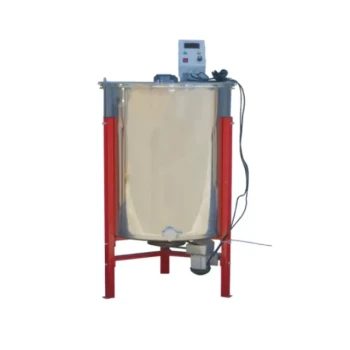
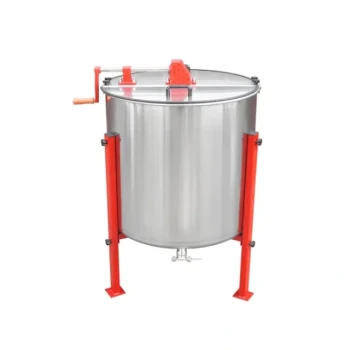
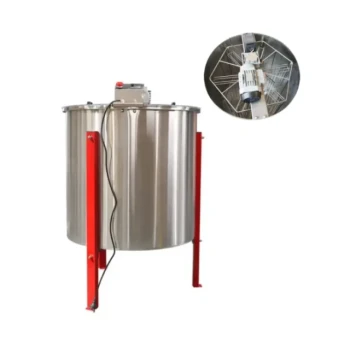
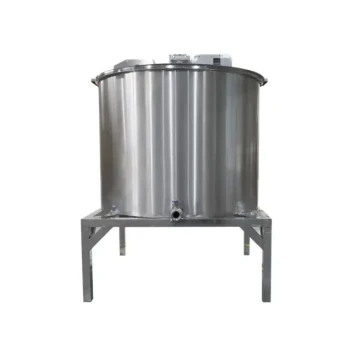
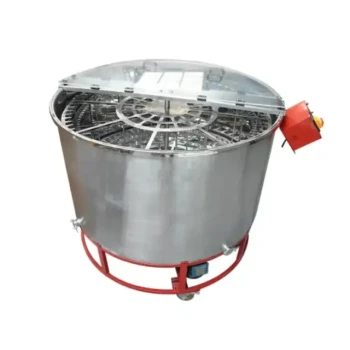
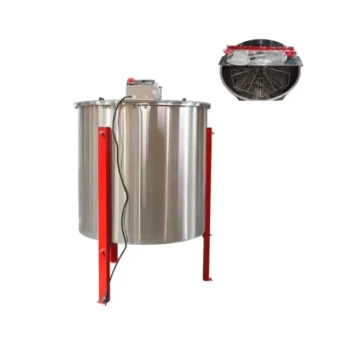
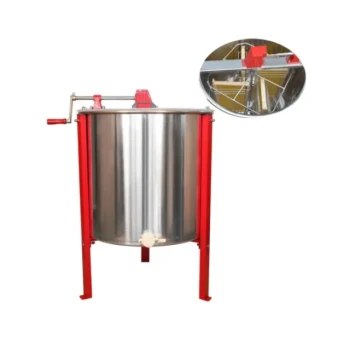
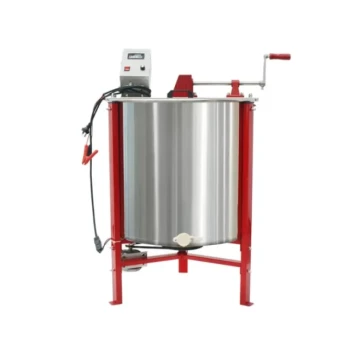
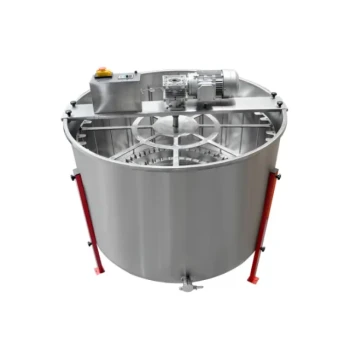
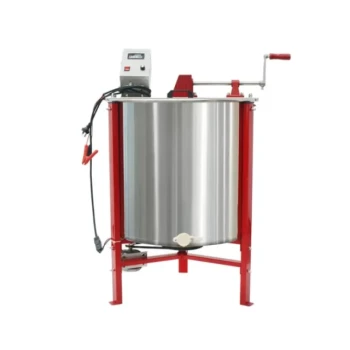
The use of centrifugal honey extractors is essential because they utilize rotational physics to separate liquid honey from the comb without destroying the delicate wax structure. By keeping the comb intact, beekeepers can return it to the hive for immediate reuse, which preserves the colony's energy and dramatically increases production efficiency compared to destructive harvesting methods.
The critical advantage of this technology is not just mechanical speed, but biological conservation. By preventing the need for bees to rebuild honeycombs, the colony is spared the significant metabolic cost of secreting new wax, allowing that energy to be redirected entirely toward nectar collection and honey production.
The Impact on Colony Energy and Yield
Eliminating the Cost of Wax Production
The most significant efficiency factor is the preservation of the honeycomb. Honeybees consume a vast amount of energy and time to secrete beeswax and construct new combs.
Centrifugal extraction separates the honey while leaving the wax frame physically intact. This allows the beekeeper to return the empty combs to the hive, bypassing the reconstruction phase entirely.
Shortening the Production Cycle
When bees are provided with drawn (ready-to-use) combs, they can immediately begin filling them with nectar. This effectively shortens the turnaround time between harvests.
By removing the construction delay, colonies can maximize their intake during short or intense flowering periods, resulting in a substantially higher total annual yield.
Elevating Hygiene and Quality Standards
Mechanical Purity
Traditional methods, such as crushing and straining, often introduce significant amounts of wax debris and impurities into the final product.
Centrifugal extractors use physics rather than physical pressure to extract the honey. This results in a cleaner separation that maintains the integrity of the honeycombs and reduces the need for aggressive filtration that could remove beneficial pollen.
Controlling Chemical Composition
Modern centrifugal systems are critical for meeting strict parameters required for exportable or premium honey, such as Protected Designation of Origin (PDO) certification.
High-efficiency extractors help maintain low moisture content (below 18.6%) and minimize air exposure. This process also slows the development of Hydroxymethylfurfural (HMF), a compound that indicates thermal damage or aging, thereby preserving the honey's natural enzymes and volatile flavors.
Understanding the Trade-offs
Equipment Complexity and Cost
While efficient, centrifugal extractors represent a shift from simple tools to mechanized processing. This introduces an initial capital investment and requires a power source for high-capacity industrial models.
Operational Precision Required
The process relies on "centrifugal force," but it requires careful calibration. While the goal is to save the comb, improper speeds or unbalanced loads can still damage the wax structure, negating the primary biological benefit of the machine.
Making the Right Choice for Your Goal
To maximize the benefits of centrifugal extraction, align your usage with your specific production targets:
- If your primary focus is Volume and Yield: Prioritize returning wet, intact combs to the hive immediately after extraction to minimize the colony's downtime and metabolic stress.
- If your primary focus is Export-Grade Quality: Utilize extractors with temperature controls and multi-layer stainless steel screens to ensure HMF levels remain low and physical impurities are removed without thermal damage.
The centrifugal extractor is the industry standard not merely because it is faster, but because it respects the biological resources of the bee colony.
Summary Table:
| Feature | Centrifugal Extraction | Traditional Crushing & Straining |
|---|---|---|
| Comb Integrity | Preserves wax for immediate hive reuse | Destroys wax structure during process |
| Colony Energy | Bees focus on nectar collection | Bees must spend energy rebuilding wax |
| Honey Purity | High; minimal wax debris or impurities | Lower; prone to debris and air exposure |
| HMF Levels | Controlled; maintains enzyme integrity | Higher risk due to increased processing time |
| Production Yield | Maximum; shorter harvest turnaround | Limited by the speed of comb reconstruction |
Partner with HONESTBEE for Superior Apiary Performance
At HONESTBEE, we specialize in empowering commercial apiaries and distributors with the industry's most reliable beekeeping solutions. Whether you are scaling your operation or sourcing for a distribution network, our comprehensive wholesale portfolio offers everything you need to succeed:
- High-Efficiency Machinery: From precision centrifugal extractors to honey-filling and hive-making machines.
- Premium Hardware & Tools: A full spectrum of durable beekeeping equipment built for heavy industrial use.
- Essential Consumables: A wide array of industry-standard supplies to keep your colonies thriving.
- Cultural Merchandise: Unique honey-themed merchandise to enhance your brand's market appeal.
Ready to elevate your production efficiency and honey quality? Contact us today to discuss how our wholesale equipment and specialized machinery can drive your business forward.
References
- Yogi Sirjana, Bharti Bibas. PRODUCTION AND MARKETING ECONOMICS OF HONEY FROM APIS CERANA IN DANG DISTRICT OF NEPAL. DOI: 10.26480/rfna.01.2020.22.26
This article is also based on technical information from HonestBee Knowledge Base .
Related Products
- electric honey extractor honey centrifuge 3 frame honey extractor stainless steel honey frame extractor
- Manual Hand Crank 4 Frame Honey Extractor Centrifuge for Beekeeping
- Professional 4 Frame Self Reversing Electric Honey Extractor for Beekeeping
- Stainless Steel Manual 8 Frame Radial Honey Extractor Machine for Beehives
- Electric 4 Frame Tangential Honey Extractor
People Also Ask
- What are the characteristics of electric honey extractors? Boost Your Apiary Efficiency with Automated Technology
- What are the disadvantages of using an electric honey extractor? Weighing Cost, Power, and Comb Safety
- What are the advantages of an electric honey extractor? Boost Efficiency and Scale Your Honey Production
- What are the technical advantages of electric honey extractors? Maximize Yield and Protect Your Bee Colony
- How does an electric honey extractor affect the quality of honey? Preserve Flavor & Purity with Precision Extraction