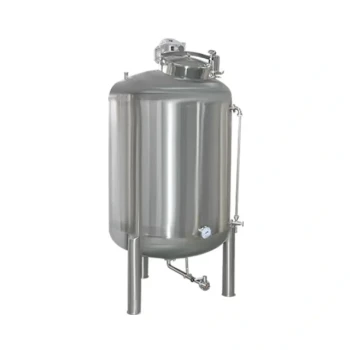
Stainless steel settling tanks serve as the primary clarification mechanism in the post-extraction stage of honey processing. They function as static reservoirs that utilize gravity to naturally separate microscopic impurities, wax debris, and air bubbles from the liquid honey. This critical step ensures the product achieves the necessary clarity and purity levels before entering the final bottling phase.
By facilitating natural sedimentation rather than aggressive mechanical filtration, these tanks remove residues without compromising the honey's nutritional structure. This process is essential for producing high-quality honey that meets commercial hygiene standards and market expectations for visual clarity.
The Mechanics of Natural Clarification
Gravity-Based Separation
The core function of a settling tank is to leverage density differences within the raw honey.
When honey is left static, heavier particles sink to the bottom while lighter materials naturally rise to the top.
This allows low-density impurities, such as wax fragments and air bubbles generated during extraction, to form a surface layer that can be skimmed off.
The Role of Static Resting
Unlike active filtration systems that force honey through screens, settling tanks require a period of dormancy.
Supplementary data indicates that allowing honey to rest for approximately two weeks maximizes the effectiveness of this separation.
This "standing time" is crucial for allowing very fine particles to migrate, resulting in a cleaner final product.
Temperature Control
To optimize the settling process, the environment within the tank must be carefully managed.
Ideally, the honey is maintained between 25 and 30 degrees Celsius.
This temperature range reduces the honey's viscosity enough to allow impurities to move freely, without applying excessive heat that could damage the honey’s nutritional components.
Why Material Choice Matters
Chemical Stability
Honey is naturally acidic and chemically active, making the choice of tank material vital for food safety.
Stainless steel provides the necessary chemical resistance to prevent corrosion or leaching when in contact with high-sugar, high-acid content.
Hygiene and Market Standards
Using stainless steel ensures the equipment complies with rigorous food hygiene standards.
This material is non-porous and easy to sanitize, preventing cross-contamination between batches.
Furthermore, processing in stainless steel protects the flavor profile and visual appeal of the honey, directly increasing its commercial market value.
Understanding the Trade-offs
Time Constraints
The primary drawback of relying solely on settling tanks is the duration required for effective clarification.
Because the process relies on gravity, it can create a bottleneck in production compared to rapid, high-pressure filtration methods.
Temperature Sensitivity
The efficiency of a settling tank is heavily dependent on maintaining the correct thermal environment.
If the temperature drops too low, the honey becomes too viscous for impurities to separate and may begin to crystallize.
Conversely, exceeding the optimal temperature range risks degrading the honey's enzymes and reducing its classification as "raw" or high-nutrient honey.
Making the Right Choice for Your Goal
When integrating settling tanks into your processing line, consider your production priorities.
- If your primary focus is nutritional integrity: Prioritize a longer settling duration at controlled temperatures (25-30°C) to clarify the honey without damaging heat-sensitive enzymes.
- If your primary focus is visual clarity: Ensure the tank design allows for easy skimming of the top layer and drainage of bottom sediment to remove all wax and air bubbles effectively.
- If your primary focus is commercial scale: Plan for multiple tanks to stagger the two-week resting periods, preventing the static settling time from halting your overall bottling workflow.
Balancing the patience required for gravity settling with precise temperature control yields a product that is both visually pristine and nutritionally superior.
Summary Table:
| Feature | Function & Benefit |
|---|---|
| Mechanism | Gravity-based static separation of wax, bubbles, and debris |
| Material | Food-grade stainless steel for acid resistance and hygiene |
| Temperature | Maintained at 25-30°C to optimize viscosity and flow |
| Resting Period | Approx. 2 weeks for maximum clarity and sedimentation |
| Key Advantage | Preserves enzymes and nutrients vs. aggressive filtration |
Elevate Your Honey Quality with HONESTBEE Professional Equipment
Maximize the purity and market value of your harvest with HONESTBEE’s premium stainless steel settling tanks and processing solutions. As a leading partner to commercial apiaries and distributors, we provide a comprehensive wholesale range—from precision-engineered honey-filling and hive-making machinery to essential beekeeping tools and industry consumables.
Whether you are scaling your production line or looking for specialized hardware to maintain nutritional integrity, our team is ready to support your growth. Contact HONESTBEE today to discover how our end-to-end equipment solutions can streamline your workflow and deliver the high-quality honey your customers demand.
References
- Valeria Leoni, Sara Panseri. Multidisciplinary analysis of Italian Alpine wildflower honey reveals criticalities, diversity and value. DOI: 10.1038/s41598-021-98876-y
This article is also based on technical information from HonestBee Knowledge Base .
Related Products
- Stainless Steel Honey Storage and Settling Tank with Double Strainer
- Stainless Steel Honey Storage Tank with Lid for Honey
- Heavy Duty Stainless Steel Honey Processing Machine Decrystallizing Tank
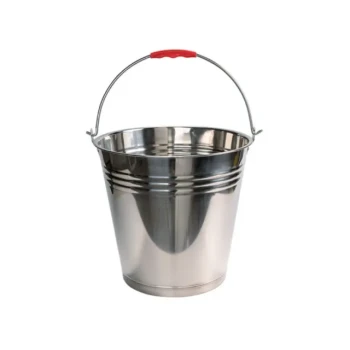
- Premium Stainless Steel Honey Tank Bucket Pail with Reinforced Handle and Polished Finish
- Stainless Steel Honey Tank Stand for Honey Storage
People Also Ask
- What economic role do honey storage tanks play? Boost Your Revenue Through Strategic Inventory Management
- What roles do industrial honey storage tanks and filtration meshes play in processing? Ensure Purity & Consistency
- What is the purpose of a honey storage tank? Streamline Your Honey Processing for Quality & Efficiency
- What role do settling tanks play in honey production? Achieve Pure, High-Clarity Honey Naturally
- Why are large settling tanks used in the honey clarification process? Achieve Natural Purity & Batch Consistency