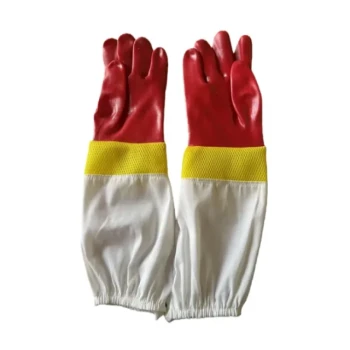
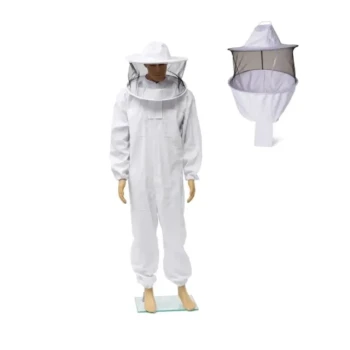
Standardized cleaning is mandatory when moving between bee colonies to neutralize residual chemical signals known as alarm pheromones. Without this decontamination, the chemical markers left by one colony will trigger an immediate, heightened defensive reaction in the next colony you inspect, compromising both safety and procedure neutrality.
Failure to remove pheromones creates a compounding "intruder" signature on your gear. This artificially amplifies the aggression of subsequent colonies, invalidating experimental data and significantly increasing the risk of stinging incidents.
The Mechanism of Defensive Escalation
The Role of Alarm Pheromones
When honey bees defend their hive, they do not just sting; they release alarm pheromones.
These chemical signals act as a target marker, identifying the intruder as a threat.
The Consequence of Transfer
If these pheromones remain on your gloves or suit, you carry that "threat marker" to the next hive.
The subsequent colony detects these residual chemicals immediately.
Instead of reacting to your current behavior, they react to the chemical history of your previous interactions.
This provokes a more intense defensive response than would naturally occur.
Integrity of Data and Operations
Eliminating Experimental Interference
For researchers and technicians, the goal is often to observe a colony's natural behavior.
Residual pheromones introduce a variable of experimental interference.
If a colony acts aggressively solely because your gear smells like a previous attack, your behavioral data is flawed.
Ensuring Repeatability
Standardized cleaning ensures that every colony is approached in a neutral state.
This consistency is vital for the repeatability of management procedures and scientific experiments.
It ensures that reactions are specific to the colony being tested, not a reaction to the technician's equipment.
Understanding the Trade-offs
Time vs. Accuracy
The primary trade-off in standardized cleaning is the time investment required between hives.
Thorough cleaning slows down the workflow compared to rapid-fire inspections.
However, skipping this step inevitably leads to escalated aggression, which slows operations down due to difficult bee management.
Safety Implications
While professional gear protects against stings, it does not stop the bees from swarming an identified threat.
Neglecting to clean gear turns the technician into a "pheromone beacon."
This increases the density of bees attacking the suit, stressing the structural integrity of even high-performance protective equipment.
Making the Right Choice for Your Goal
To maintain high standards in beekeeping management or research, you must prioritize the "chemical neutrality" of your equipment.
- If your primary focus is Operator Safety: Prioritize cleaning gloves and suits to prevent inducing artificial aggression that tests the limits of your protective gear.
- If your primary focus is Research Integrity: Enforce strict decontamination protocols to ensure that observed defensive behaviors are intrinsic to the colony, not a reaction to cross-contamination.
Standardized cleaning is not just hygiene; it is a fundamental control measure for behavior and safety.
Summary Table:
| Factor | Without Cleaning (Cross-Contamination) | With Standardized Cleaning (Neutral) |
|---|---|---|
| Bee Behavior | Heightened aggression & defensive escalation | Natural, colony-specific behavior |
| Chemical State | Residual alarm pheromones act as a "threat marker" | Chemically neutral equipment |
| Data Integrity | Flawed; affected by previous colony interactions | High; ensures repeatable & valid results |
| Operator Safety | High risk; gear becomes a "pheromone beacon" | Maximized; minimizes swarming intensity |
| Efficiency | Slower due to difficult colony management | Faster, predictable colony inspections |
Elevate Your Apiary Operations with HONESTBEE
Maintaining chemical neutrality is just one step in professional bee management. At HONESTBEE, we empower commercial apiaries and distributors with the high-performance tools needed to scale safely and efficiently.
From durable protective gear that withstands rigorous decontamination to advanced honey-filling machines and specialized hive-making hardware, our comprehensive wholesale portfolio is designed for industry leaders who refuse to compromise on quality.
Ready to upgrade your equipment or stock your distribution line? Contact us today to discover how HONESTBEE’s specialized machinery and premium consumables can optimize your beekeeping results.
References
- Ederson de Sousa Martins, Adcléia Pereira Pires. The use of smoke in the control of the defensive behavior of tiuba bees. DOI: 10.21708/avb.2020.14.2.8907
This article is also based on technical information from HonestBee Knowledge Base .
Related Products
- Premium Cowboy Beekeeper Hat with Visibility Veil Outdoor Professional Beekeeping Protective Gear
- White Cotton Beekeeping Jacket and Veil for Bee Keepers
- Premium Cotton Beekeeper Suit with Reinforced Fencing Veil
- Beekeeping Gloves Goatskin Leather with Long Cotton Sleeve for Beekeepers
- Beekeeper Cowboy Hat and Veil for Beekeeping
People Also Ask
- What design features contribute to the stability and fit of the beekeeper hat? Key Features for Maximum Hive Safety
- How is the beekeeper hat designed for comfort and practicality? Explore Key Features for Enhanced Apiary Safety
- What is the general protective gear recommendation for new beekeepers? Your Essential Beginner's Safety Guide
- How does beekeeping protective gear facilitate the queen bee selection process? Enhancing Precision in Queen Breeding
- What should beekeepers consider when choosing protective gear? A Guide for Maximum Safety & Comfort