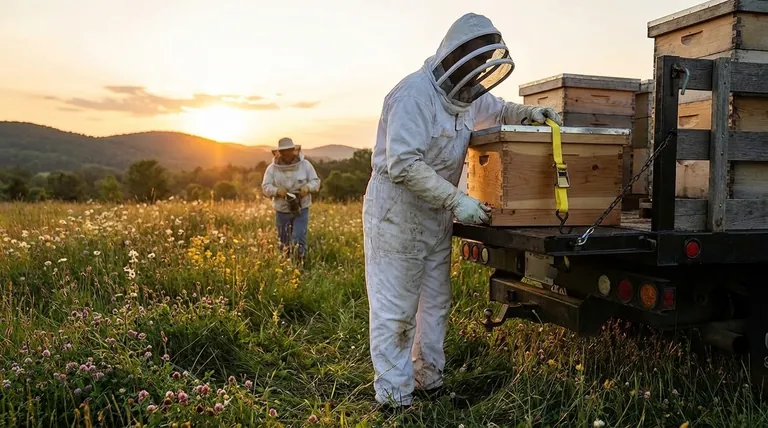
Relocating beehives demands precision—move them just 3 feet, and they adapt seamlessly; shift them 2 miles without preparation, and you risk colony disorientation or collapse. This guide merges entomological insights with proven field techniques to help beekeepers execute flawless hive relocations, whether adjusting yard layouts or transporting colonies long distances.
The Biology Behind the "3 Feet or 2 Miles" Rule
How Bees Navigate and Forage
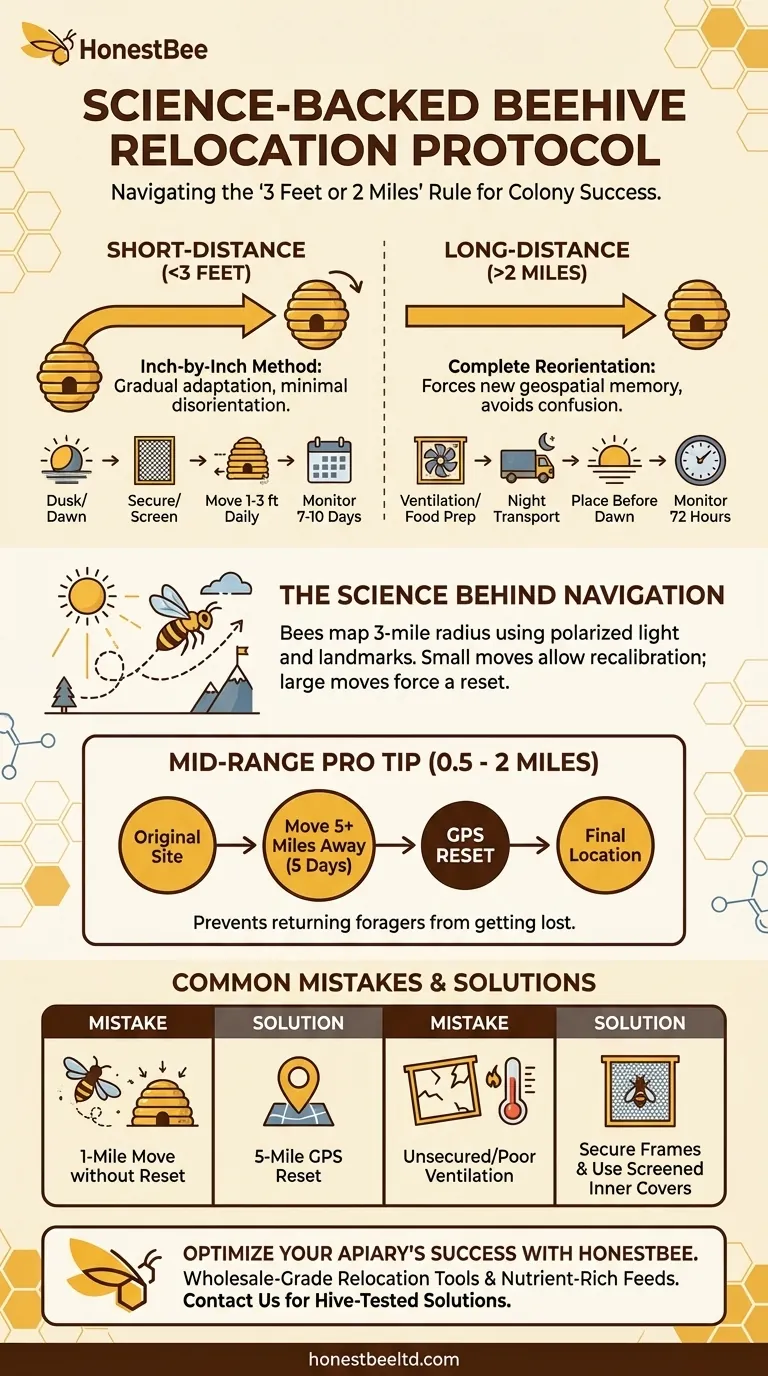
Honeybees rely on polarized light patterns and landmark memory to navigate. Research shows they map their surroundings within a 3-mile radius, creating "flight paths" to food sources. When hives are moved within this radius, returning foragers may circle the original location, unable to reconcile their mental map with the hive’s new position.
Why Small Moves Prevent Disorientation
Moving a hive incrementally (under 3 feet daily) allows bees to recalibrate their navigation cues gradually. This mimics natural swarm behavior, where colonies adjust to new locations over time. For longer relocations, exceeding 2 miles is essential—it forces bees to rebuild their geospatial memory entirely, avoiding confusion.
Pro Tip: For mid-range moves (e.g., 1 mile), temporarily relocate hives 5+ miles away for 5 days before placing them at the final site. This "GPS reset" technique ensures bees reorient effectively.
A Practical Guide to Short-Distance Hive Relocation
Preparing the Hive: Timing and Tools
- When to Move: Dusk or dawn, when most bees are inside.
- Equipment: Use a hive strap to secure boxes, and screen entrances to prevent escapes during transit.
- Weather: Overcast days reduce foraging activity, minimizing stragglers.
Gradual Shifting Techniques (Inch-by-Inch Method)
- Mark the hive’s original position.
- Move it 1–3 feet daily, ensuring the entrance faces the same direction.
- After 7–10 days, verify bees are orienting to the new location before resuming normal inspections.
Post-Move Monitoring Tips
- Watch for "lost" bees clustering near the old site; gently relocate them to the new hive.
- Provide supplemental sugar syrup if foraging patterns seem disrupted.
Long-Distance Relocation Protocols
Pre-Move Hive Preparation
- Food/Water: Ensure frames contain ample honey (or feed syrup 48 hours prior) to sustain bees during transport.
- Ventilation: Install screened inner covers to prevent overheating—a leading cause of stress deaths.
Securing Hives for Transport
- Stack and strap boxes tightly; use foam padding to minimize jostling.
- Transport at night or early morning to leverage cooler temperatures and lower bee activity.
Re-establishing Foraging Patterns
- Place hives in their final location before dawn, allowing bees to acclimate as daylight appears.
- Monitor for 72 hours: Reduced activity may indicate disorientation; consider providing nearby water sources.
Common Mistakes and How to Avoid Them
Case Study: Colony Collapse After a 1-Mile Move
A beekeeper relocated hives 1 mile without the 5-mile reset. Foragers returned to the original site, leaving the queen and nurse bees understaffed. Within days, the colony failed. Solution: Always use the 5-mile reset for moves between 0.5–2 miles.
Overlooked Equipment Risks
- Frame Stability: Unsecured frames can shift during transit, crushing bees or damaging brood.
- Ventilation Gaps: Too little airflow risks overheating; too much exposes bees to wind stress.
Ready to Optimize Your Apiary’s Success?
HONESTBEE equips commercial beekeepers and distributors with wholesale-grade relocation tools—from ventilated hive straps to nutrient-rich supplemental feeds. Protect your colonies with equipment designed for stress-free moves. [Contact HONESTBEE today] to stock your operation with hive-tested solutions.
By aligning relocation practices with honeybee biology, beekeepers safeguard their colonies’ productivity—and the ecosystems that depend on them.
Visual Guide
Related Products
- Stainless Steel Round Beehive Air Vents for Ventilation
- Wholesales Dadant Size Wooden Bee Hives for Beekeeping
- Metal Hive Feet Bee Hive Stand for Ant Protection
- Metal Bee Hive Stand Bee Box Stand for Beekeeping
- Wooden Bee Hive Frames for Beekeeping and Wholesale
Related Articles
- How to Optimize Beehive Ventilation: Prevent Disease and Boost Colony Health
- Beyond the Bee Box: Why Your First Apiary Investment Determines Your Success
- The Silent Killer in the Hive: Why Moisture, Not Cold, Is Winter's Greatest Threat
- The Precision of Chaos: Navigating the Biological Risks of Commercial Beehive Transportation
- The Art of Intervention: A Systems Approach to Beehive Maintenance













