The First Five Seconds
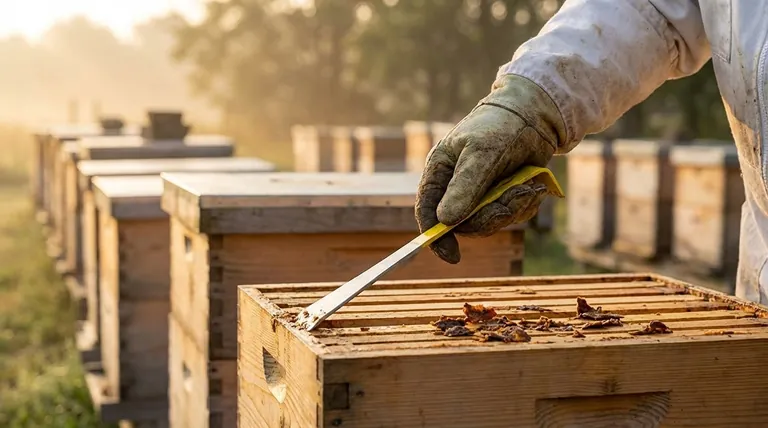
Imagine an apiary at dawn. Fifty hives sit silent, veiled in the low morning light. For the commercial beekeeper, this is not a tranquil scene; it's the start of a long day of physically and mentally demanding work. Before the smoker is lit, before the veil is dropped, they reach for one thing: a simple, solid bar of steel.
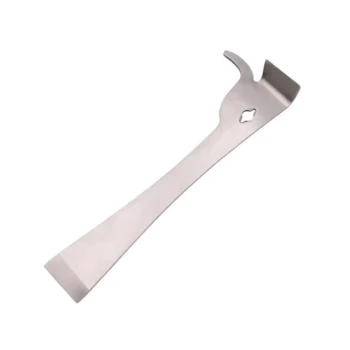
This is the hive tool. And in the first five seconds of approaching a hive, its role is absolute. It is the key that will grant or deny efficient access. It is the intermediary between human intention and the sealed, propolized world of the bee colony.
The Fortress and The Key
A beehive is not a simple wooden box. It is a fortress, meticulously sealed from the inside. Bees use a potent, sticky resin called propolis to glue every component together, sealing every crack. This creates a structurally sound, weatherproof, and anti-microbial environment.
It also makes the hive nearly impossible for a human to open with bare hands.
The hive tool is the beekeeper's answer to this natural defense. It is not merely a lever; it's an extension of the beekeeper's will. Its primary function is to overcome the bees' powerful engineering without destroying it, transforming a sealed fortress into an accessible, manageable system.
The Two Foundational Actions
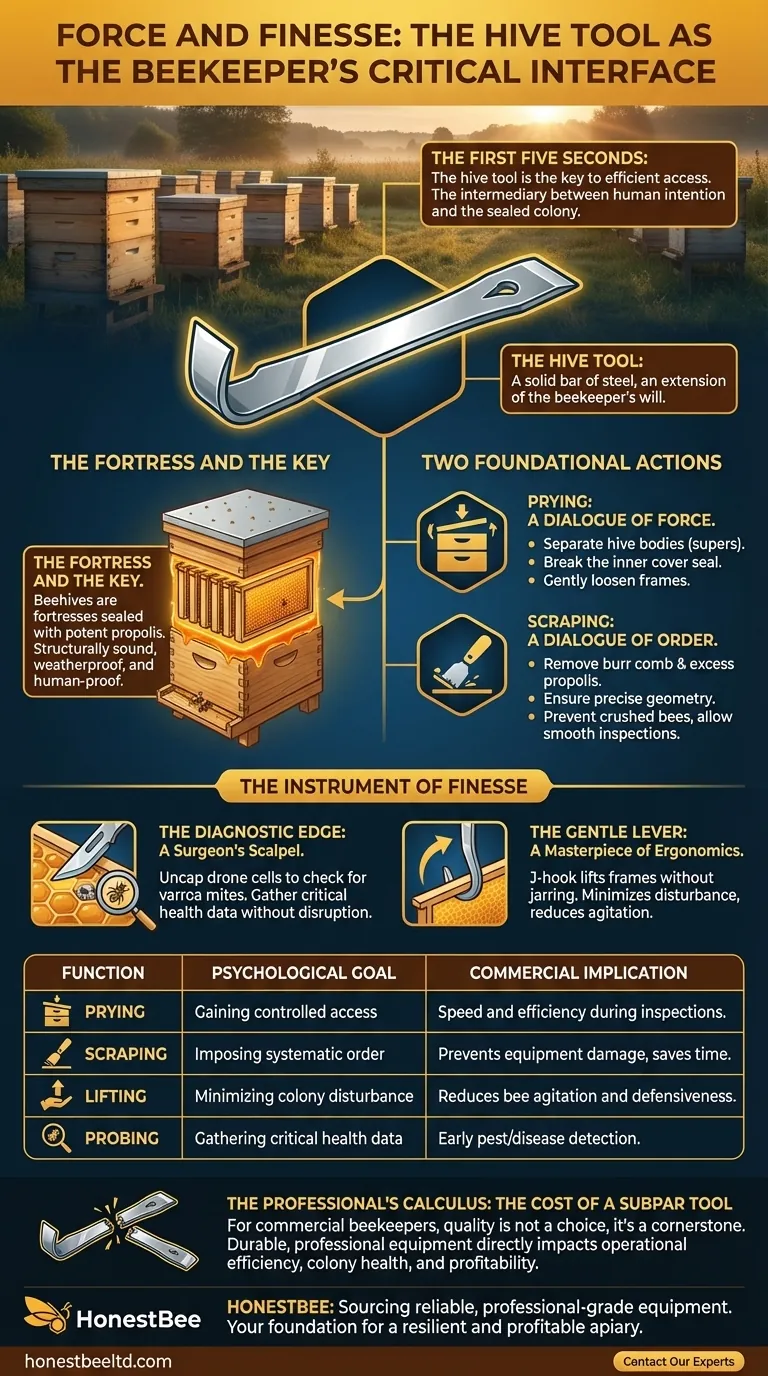
At its core, interacting with a hive via the tool is a conversation built on two words: prying and scraping.
Prying: A Dialogue of Force
The main purpose of the tool is to pry. The beekeeper wedges the tapered end between hive bodies and applies steady, controlled force. This action breaks the propolis seal that makes the colony a single, solid unit.
It’s used to:
- Separate hive bodies (supers) to inspect the colony's layers.
- Break the seal on the inner cover, the final door to the colony's heart.
- Gently loosen frames that are cemented in place with wax and propolis.
For a professional managing hundreds of colonies, this isn't just about strength. It's about a consistent, repeatable motion that minimizes disturbance and maximizes speed.
Scraping: A Dialogue of Order
Bees build where they please. They fill any available space with "burr comb" and plaster surfaces with propolis. While this serves the colony, it disrupts the beekeeper's system of removable frames.
The hive tool's sharp, beveled edge is an instrument of order. It scrapes away this excess comb and propolis from frame rests and box edges. This isn't just about cleanliness; it's about ensuring the precise, man-made geometry of the hive is maintained. Properly seated frames prevent crushed bees and allow for smooth, efficient inspections.
The Instrument of Finesse
Beyond these brute-force applications, the hive tool becomes an instrument of precision, akin to a surgeon's scalpel. Its design allows for a level of interaction that is surprisingly delicate.
The Diagnostic Edge
A seasoned beekeeper uses the tool's sharp corner to perform diagnostics. They might uncap a few drone brood cells to check for the devastating varroa mite. The tool becomes a probe, gathering critical data about colony health without disrupting thousands of other cells. This is where the beekeeper transitions from a laborer to a diagnostician.
The Gentle Lever
Many hive tools feature a "J-hook" on one end. This small curve is a masterpiece of ergonomic engineering. It’s designed to hook under the ear of a frame, allowing the beekeeper to lift the first, tightly packed frame without jarring its neighbors or crushing bees. It’s the difference between a clumsy intrusion and a practiced, gentle extraction.
| Function | Psychological Goal | Commercial Implication |
|---|---|---|
| Prying | Gaining controlled access | Speed and efficiency during inspections |
| Scraping | Imposing systematic order | Prevents equipment damage, saves time |
| Lifting | Minimizing colony disturbance | Reduces bee agitation and defensiveness |
| Probing | Gathering critical health data | Early pest/disease detection |
The Professional's Calculus: The Cost of a Subpar Tool
For a hobbyist, a bent or low-quality hive tool is an annoyance. For a commercial beekeeper, it's a liability.
Every action in a large-scale apiary is magnified by the number of hives. A tool that bends under pressure means wasted energy and time. A dull edge that fails to scrape cleanly means more effort and sloppier hives. A poorly designed hook can slip, crushing the queen and dooming a colony's productivity for weeks.
In this context, the hive tool is not an expense; it is a piece of capital equipment. Its durability, temper, and design directly impact operational efficiency, colony health, and ultimately, profitability. This is why professionals don't compromise. Sourcing reliable, professional-grade equipment isn't a choice; it's a cornerstone of the business model.
HONESTBEE is dedicated to this principle, supplying robust, thoughtfully designed beekeeping equipment to commercial apiaries and distributors who understand that quality tools are the foundation of a productive operation.
Mastering this simple bar of steel is to master the physical interaction with the hive. It allows the beekeeper to be forceful when necessary, delicate when required, and efficient always. Ensuring every tool in your operation meets this high standard is the first step toward a more resilient and profitable apiary. Contact Our Experts
Visual Guide
Related Products
- Professional Multi-Function Stainless Steel Hive Tool
- Professional Stainless Steel Pry-Bar Hive Tool
- HONESTBEE Professional Long Handled Hive Tool with Precision Cutting Blade
- HONESTBEE Premium Italian Style Hive Tool with Hardwood Handle
- Ergonomic Plastic Frame Spacer Tool for Rapid Hive Management Beekeeping
Related Articles
- The Physics of Flow: How a Single Hive Tool Redefines the Beekeeper's Workflow
- The Essential Guide to Hive Tools in Modern Beekeeping
- The Beekeeper's Scalpel: How a Simple Hive Tool Governs Apiary Health
- How to Choose Hive Tools That Match Your Beekeeping Workflow
- The Apiary as a System: Why Your Hive Tool is More Than Just Steel