The Anatomy of a Simple Mistake
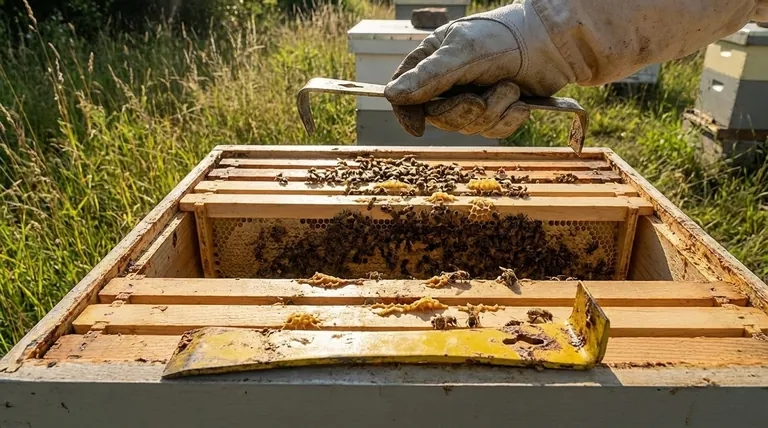
It’s a perfect day for an inspection. The sun is warm, the air is still, and the colony is calm. You gently lift the outer cover, pry the inner cover, and begin your work. Your one trusted hive tool, now slick with beeswax and sticky propolis, slips from your grasp and vanishes into the tall grass beside the hive.
Suddenly, the calm is broken. The methodical workflow shatters.
This moment of frustration isn't just bad luck; it's a system failure. In any complex operation, from surgery to aviation, professionals are obsessed with eliminating single points of failure. For a beekeeper, relying on a single hive tool is creating one.
The real cost isn't the two dollars for a new tool; it's the lost efficiency, the mounting stress on the colony as the hive remains open, and the shift in your own mindset from calm steward to flustered operator.
The "One Tool" Fallacy
There's a psychological appeal to minimalism. The idea of a single, perfect tool that does everything is compelling. But this assumes the job is simple and singular. Beekeeping is not.
An apiary is a dynamic, unpredictable environment. A hive inspection is not one task, but a series of distinct mechanical problems requiring different solutions. Believing one tool can solve them all is a fundamental misunderstanding of the work.
Engineering Calm: The Right Tool for the Right Problem
Using the wrong tool is inefficient at best and catastrophically clumsy at worst. Different hive tools are not variations on a theme; they are purpose-built instruments designed with a deep understanding of physics and bee biology.
The J-Hook: A Study in Surgical Precision
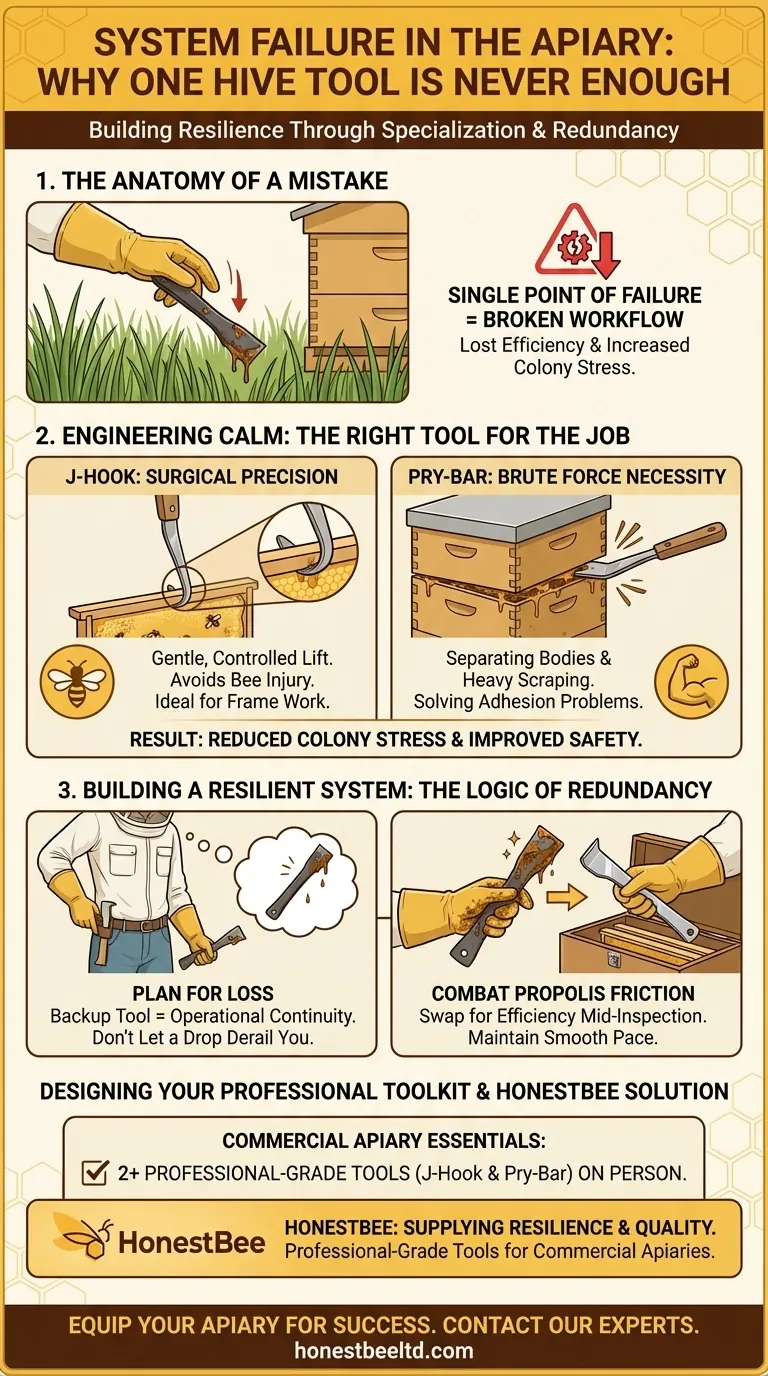
The J-hook tool is an elegant piece of engineering. The hook isn't a gimmick; it's a lever designed to engage a specific interface—the ear of a hive frame.
It allows you to apply force precisely where needed, popping a single propolis-sealed frame loose with a gentle, controlled, vertical lift. This single motion avoids the jarring, horizontal prying that often rolls and crushes bees against the hive wall. It's the difference between a surgeon's scalpel and a butcher's cleaver.
The Pry-Bar: The Necessity of Brute Force
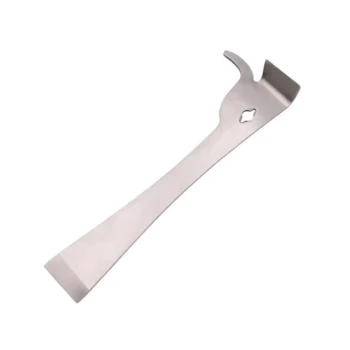
The traditional American-style pry-bar, by contrast, is your heavy-duty implement. Its purpose is not finesse, but force.
When two 80-pound hive bodies are welded together with propolis, the pry-bar's wide, angled head provides the leverage needed to break the seal. Its sharp, flat end is indispensable for scraping away the stubborn buildup of wax and resin from frames and boxes. It's a tool designed to solve a problem of adhesion, not delicate extraction.
The Psychology of Disturbance
The choice of tool has a direct impact on the colony's collective mood. A calm, methodical inspection with the right instruments keeps stress levels low. A chaotic one, full of jarring movements and crushed bees, triggers a defensive response.
A stressed hive makes your job harder, slower, and less safe. Engineering a calm environment begins with the tool in your hand.
Building a Resilient System: The Logic of Redundancy
Beyond functional specialization, having multiple tools is about building a resilient, fault-tolerant system. You have to plan for the world as it is, not as you wish it would be.
Planning for Inevitable Failure
Tools get lost. It's a predictable outcome in an outdoor workplace. A second hive tool on your person or in your bee bag isn't a "spare"—it's a core component of your operational system. It ensures that a minor, predictable event like a dropped tool doesn't derail the entire inspection.
The Friction of Propolis
Propolis is the friction in your workflow. As it coats your tool, performance degrades. The tool becomes harder to grip and less effective for delicate work.
Swapping to a clean, secondary tool mid-inspection is a simple act of efficiency. It allows you to maintain a smooth, uninterrupted pace, respecting both your time and the bees' patience.
Designing Your Beekeeping Toolkit
A professional's toolkit is not a random collection of items; it's a curated system designed for efficiency and preparedness.
- For the New Beekeeper: Start with one J-hook for frame work and one standard pry-bar for heavy lifting and scraping. This covers your functional bases.
- For the Gentle Beekeeper: Master the J-hook for all frame manipulation. Reserve the pry-bar strictly for separating boxes and heavy scraping to minimize bee disturbance.
- For the Commercial Apiary: Keep at least two of your preferred tools on your person at all times. Redundancy is not a luxury; it's a necessity for productivity. For large-scale operations and distributors, the foundation of this system is sourcing reliable, professional-grade equipment that can withstand heavy use.
HONESTBEE specializes in supplying these professional-grade tools to commercial apiaries, ensuring that your operation is built on a foundation of quality and resilience.
| Tool Type | Primary Function | Key Advantage |
|---|---|---|
| J-Hook Tool | Precision frame lifting | Gentle, controlled motion to avoid bee injury |
| Standard Pry-Bar | Heavy prying and scraping | Ideal for separating propolis-sealed hive bodies |
Ultimately, having the right tools on hand is about more than convenience. It reflects a professional mindset: an anticipation of problems, a respect for the animals in your care, and an understanding that in complex systems, the smallest details determine success or failure.
To equip your apiary with the tools designed for resilience and efficiency, Contact Our Experts.
Visual Guide
Related Products
- HONESTBEE Professional Long Handled Hive Tool with Precision Cutting Blade
- Professional Multi-Function Stainless Steel Hive Tool
- HONESTBEE Premium Italian Style Hive Tool with Hardwood Handle
- Ergonomic Plastic Frame Spacer Tool for Rapid Hive Management Beekeeping
- Professional Grade Foldable Beehive Handles
Related Articles
- Force and Finesse: The Hive Tool as the Beekeeper's Critical Interface
- The Essential Guide to Hive Tools in Modern Beekeeping
- The Apiary as a System: Why Your Hive Tool is More Than Just Steel
- How to Choose Hive Tools That Match Your Beekeeping Workflow
- The Beekeeper's Scalpel: How a Simple Hive Tool Governs Apiary Health