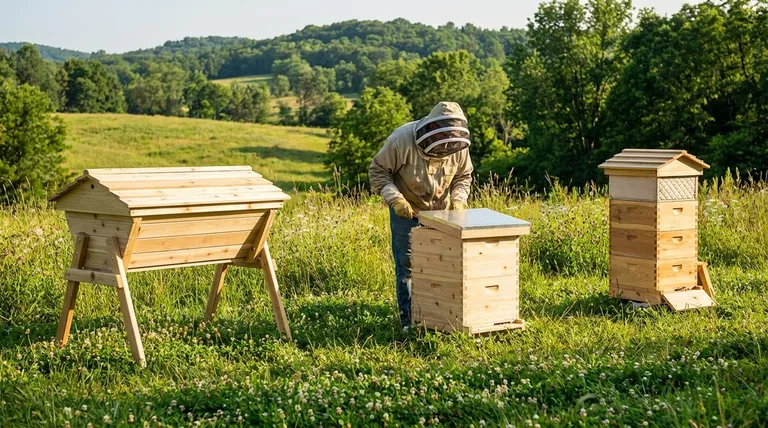
Whether you're a hobbyist nurturing your first colony or a commercial producer scaling operations, selecting the right beehive impacts honey yields, bee health, and your workload. This guide compares Langstroth, Top Bar, and Warre hives—helping you align design features with your environment, budget, and beekeeping philosophy.
Understanding Beekeeping Hive Fundamentals
Key Design Differences Between Hive Types
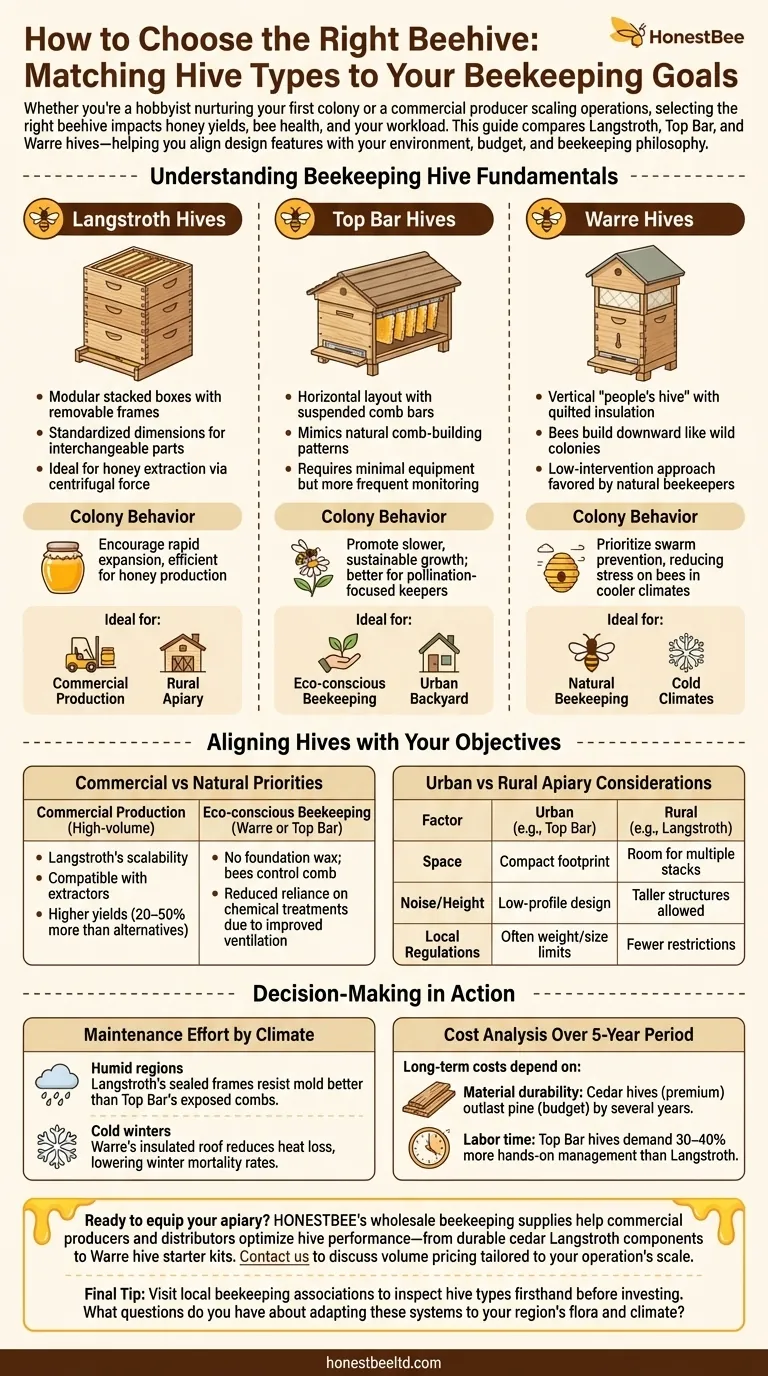
Langstroth Hives
- Modular stacked boxes with removable frames
- Standardized dimensions for interchangeable parts
- Ideal for honey extraction via centrifugal force
Top Bar Hives
- Horizontal layout with suspended comb bars
- Mimics natural comb-building patterns
- Requires minimal equipment but more frequent monitoring
Warre Hives
- Vertical "people's hive" with quilted insulation
- Bees build downward like wild colonies
- Low-intervention approach favored by natural beekeepers
How Colony Behavior Varies Across Systems
Langstroth hives encourage rapid expansion, making them efficient for honey production. Top Bar systems promote slower, more sustainable growth—better suited to pollination-focused keepers. Warre hives prioritize swarm prevention, reducing stress on bees in cooler climates.
Aligning Hives with Your Objectives
Commercial Production vs Natural Beekeeping Priorities
-
High-volume beekeepers benefit from Langstroth's scalability:
- Compatible with extractors and other automation tools
- Higher honey yields per colony (estimates suggest 20–50% more than alternative designs)
-
Eco-conscious beekeepers often prefer Warre or Top Bar hives:
- No foundation wax means bees control comb structure
- Reduced reliance on chemical treatments due to improved ventilation
Urban Backyard vs Rural Apiary Considerations
| Factor | Urban (e.g., Top Bar) | Rural (e.g., Langstroth) |
|---|---|---|
| Space | Compact footprint | Room for multiple stacks |
| Noise/Height | Low-profile design | Taller structures allowed |
| Local Regulations | Often weight/size limits | Fewer restrictions |
Decision-Making in Action
Maintenance Effort Comparison by Climate
- Humid regions: Langstroth’s sealed frames resist mold better than Top Bar’s exposed combs.
- Cold winters: Warre’s insulated roof reduces heat loss, lowering winter mortality rates.
Cost Analysis Over 5-Year Period
While initial prices vary, long-term costs depend on:
- Material durability: Cedar hives (premium) outlast pine (budget) by several years
- Labor time: Top Bar hives demand 30–40% more hands-on management than Langstroth
Ready to equip your apiary? HONESTBEE’s wholesale beekeeping supplies help commercial producers and distributors optimize hive performance—from durable cedar Langstroth components to Warre hive starter kits. [Contact us] to discuss volume pricing tailored to your operation’s scale.
Final Tip: Visit local beekeeping associations to inspect hive types firsthand before investing. What questions do you have about adapting these systems to your region’s flora and climate?
Visual Guide
Related Products
- Stainless Steel Round Beehive Air Vents for Ventilation
- Wholesales Dadant Size Wooden Bee Hives for Beekeeping
- Metal Hive Feet Bee Hive Stand for Ant Protection
- Metal Bee Hive Stand Bee Box Stand for Beekeeping
- Wooden Bee Hive Frames for Beekeeping and Wholesale
Related Articles
- How to Optimize Beehive Ventilation: Prevent Disease and Boost Colony Health
- The Silent Killer in the Hive: Why Moisture, Not Cold, Is Winter's Greatest Threat
- Beyond the Bee Box: Why Your First Apiary Investment Determines Your Success
- The Precision of Chaos: Navigating the Biological Risks of Commercial Beehive Transportation
- Beyond the Box: Why Hive Architecture Is Your Apiary's Core Operating System













