Establishing a new bee colony requires precise nutritional support and progress monitoring during the critical first weeks. This guide details proven feeding protocols, self-sufficiency benchmarks, and seasonal adjustments to maximize hive survival rates.
Feeding Protocols for New Hives
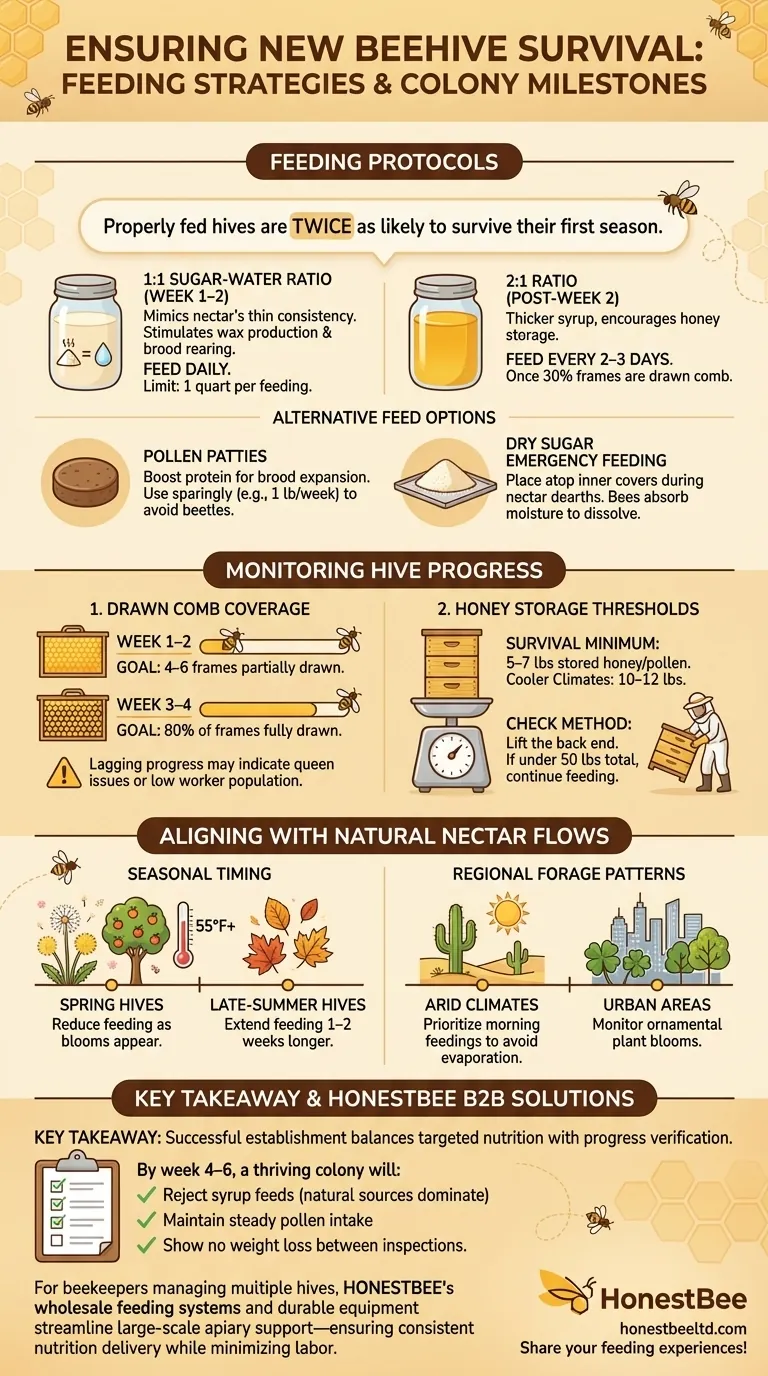
New colonies lack stored resources, making supplemental feeding essential until they achieve foraging stability. Research shows properly fed hives are twice as likely to survive their first season compared to unfed colonies.
Sugar Syrup Ratios and Feeding Frequency
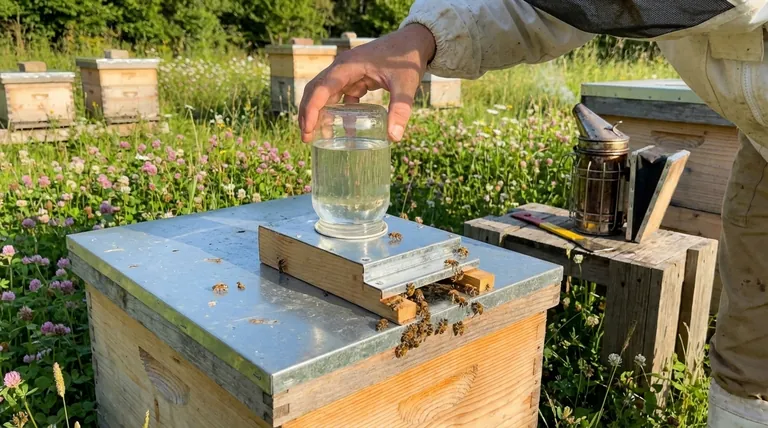
- 1:1 Sugar-Water Ratio: Mimics nectar’s thin consistency, stimulating wax production and brood rearing. Feed daily for the first 7–10 days via entrance feeders or frame-mounted reservoirs.
- 2:1 Ratio (Post-Week 2): Thicker syrup encourages honey storage. Reduce frequency to every 2–3 days once 30% of frames show drawn comb.
Tip: Avoid overfilling feeders—bees may drown. Limit portions to 1 quart per feeding.
Alternative Feed Options
When syrup isn’t practical, consider:
- Pollen Patties: Boost protein intake during brood expansion. Use sparingly (e.g., 1 lb per week) to prevent hive beetle attraction.
- Dry Sugar Emergency Feeding: Place granulated sugar atop inner covers during nectar dearths. Bees absorb moisture from the air to dissolve it.
Monitoring Hive Progress
A colony transitions to self-sufficiency when it meets three milestones:
1. Drawn Comb Coverage
- Week 1–2 Goal: 4–6 frames partially drawn.
- Week 3–4 Goal: 80% of frames fully drawn. Lagging progress may indicate queen issues or low worker population.
2. Honey Storage Thresholds
- Survival Minimum: At least 5–7 lbs of stored honey/pollen before stopping feed. In cooler climates, aim for 10–12 lbs.
- Check Method: Lift the hive’s back end. If it feels light (under 50 lbs total), continue feeding.
Aligning with Natural Nectar Flows
Feeding should complement, not replace, natural forage.
Seasonal Timing
- Spring Hives: Reduce feeding as dandelion/fruit blooms appear (typically when daytime temps exceed 55°F).
- Late-Summer Hives: Extend feeding 1–2 weeks longer due to shorter forage windows.
Regional Forage Patterns
- Arid Climates: Prioritize morning feedings; midday heat evaporates syrup faster.
- Urban Areas: Monitor ornamental plant blooms (e.g., clover, linden trees) to time feed reductions.
Key Takeaway
Successful hive establishment balances targeted nutrition with progress verification. By week 4–6, a thriving colony will:
✓ Reject syrup feeds as natural sources dominate
✓ Maintain steady pollen intake
✓ Show no weight loss between inspections
For beekeepers managing multiple hives, HONESTBEE’s wholesale feeding systems and durable equipment streamline large-scale apiary support—ensuring consistent nutrition delivery while minimizing labor.
Have you observed differences in feeding efficiency between top feeders and frame feeders? Share your experiences to help others optimize their approach.
Visual Guide
Related Products
- Stainless Steel Round Beehive Air Vents for Ventilation
- Wholesales Dadant Size Wooden Bee Hives for Beekeeping
- Metal Hive Feet Bee Hive Stand for Ant Protection
- Metal Bee Hive Stand Bee Box Stand for Beekeeping
- Wooden Bee Hive Frames for Beekeeping and Wholesale
Related Articles
- How to Optimize Beehive Ventilation: Prevent Disease and Boost Colony Health
- Beyond the Bee Box: Why Your First Apiary Investment Determines Your Success
- The Silent Killer in the Hive: Why Moisture, Not Cold, Is Winter's Greatest Threat
- The Precision of Chaos: Navigating the Biological Risks of Commercial Beehive Transportation
- Why Start with Two Beehives? Balancing Risk and Learning for New Beekeepers













