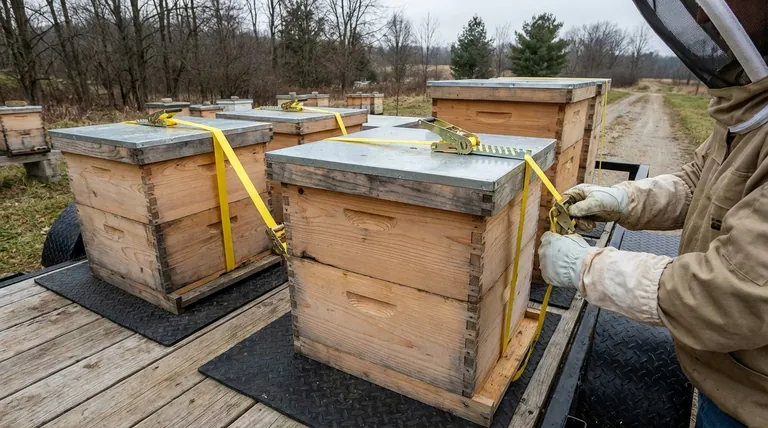
Transporting beehives safely requires more than just strapping them down—it demands a balance of structural security, bee welfare, and hive preservation. Whether you're moving hives seasonally or delivering them to new locations, improper methods can lead to colony stress, comb collapse, or even hive loss. This guide covers proven techniques used by commercial apiaries to protect both bees and equipment during transit.
Securing Hives for Transit: Beyond Basic Fastening
Key Principle: Effective hive transport prevents shifting while minimizing bee agitation.
Traditional methods like rope ties or basic bungee cords often fail under vibration and sudden stops. Modern solutions focus on:
- Distributed pressure to avoid hive deformation
- Ventilation maintenance to prevent overheating
- Shock absorption to reduce comb damage
Commercial beekeepers report significantly fewer incidents when using purpose-designed systems over makeshift solutions.
Understanding the Risks of Poorly Secured Hives
Three primary hazards emerge during hive transport:
-
Comb Collapse
- Unsecured frames swing during turns, breaking wax connections
- Crushed bees release alarm pheromones, escalating colony stress
-
Bee Escapes
- Gaps >3mm allow worker bees to exit while trapping heavier queens inside
-
Structural Fatigue
- Repeated movement weakens box joints, shortening hive lifespan
A single transit incident can undo months of colony development.
Staples vs. Ratchet Straps: Durability and Practicality Compared
| Method | Pros | Cons | Best For |
|---|---|---|---|
| Hive Staples | Prevents lid slippage | Limited lateral stability | Short-distance moves |
| Ratchet Straps | Even pressure distribution | Over-tightening risks | Highway-speed transport |
Professional Tip: Combine both methods—staples for vertical security, straps for horizontal stability.
Step-by-Step Guide to Load Distribution and Bee Calming Techniques
Pre-Transport Preparation (24 Hours Prior)
-
Reduce Bee Activity
- Move hives to shaded areas to encourage clustering
- Avoid inspections 48 hours before transit
-
Secure Internal Components
- Insert frame restraints or foam spacers
- Use ventilated travel screens instead of standard inner covers
Loading Protocol
-
Platform Preparation
- Place rubber mats on trailer beds to absorb vibration
- Orient hives parallel to the direction of travel
-
Strap Configuration
- Cross two straps over each hive body at 45° angles
- Maintain "finger-tight" tension—straps should indent wood slightly
Bee-Calming Measures During Transit:
- Spray sugar water at entrance holes to reduce agitation
- Schedule moves during cool, overcast weather when bees are less active
Weather and Road Condition Adaptations
Hot Climate Adjustments
- Add temporary upper ventilation without creating escape routes
- Transport at night when temperatures are below 80°F
Rough Terrain Modifications
- Use suspension-style hive carriers for rocky roads
- Increase strap check frequency to every 50 miles
Post-Transit Hive Health Assessment
Within 1 Hour of Arrival:
- Check for:
- Visible comb damage (tilt test)
- Queen presence (look for egg patterns within 72 hours)
- Replenish food stores if bees consumed emergency sugar during transit
Long-Term Monitoring:
- Track honey production for 2 weeks—delays may indicate transit stress
- Inspect hive bodies for new cracks at next maintenance cycle
Protect Your Investment With Professional-Grade Solutions
Transporting colonies shouldn't mean risking your bees or equipment. HONESTBEE's wholesale-focused beekeeping supplies help commercial operations move hives safely with:
- Ventilated hive straps that adjust to temperature changes
- Shock-absorbent pallets designed for apiary trailers
- Beekeeper-approved restraints that distribute pressure evenly
[Contact HONESTBEE] to outfit your operation with transit systems that keep colonies intact from origin to destination.
Have questions about custom configurations for oversized hives? Our apiary equipment specialists can recommend solutions tailored to your fleet.
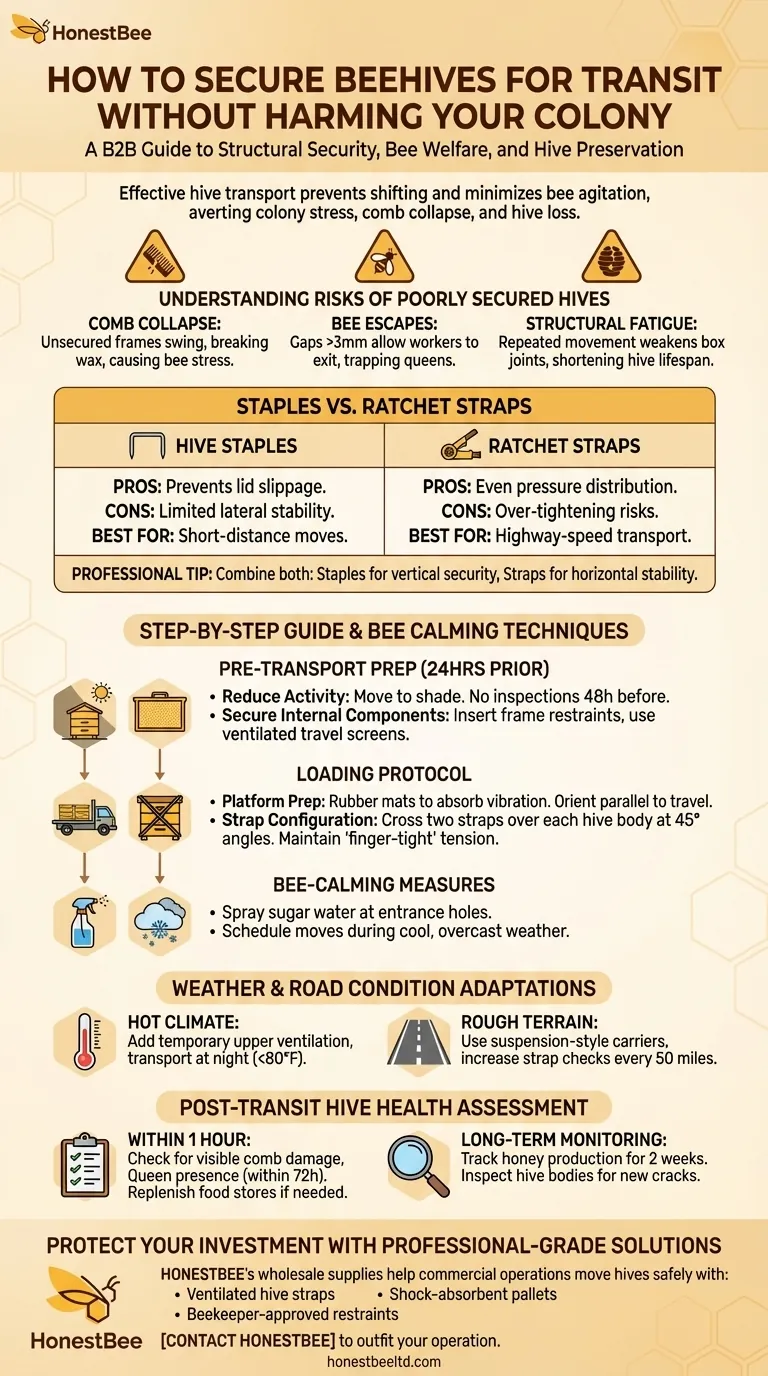
Visual Guide
Related Products
- Stainless Steel Round Beehive Air Vents for Ventilation
- Wholesales Dadant Size Wooden Bee Hives for Beekeeping
- Metal Hive Feet Bee Hive Stand for Ant Protection
- Metal Bee Hive Stand Bee Box Stand for Beekeeping
- Wooden Bee Hive Frames for Beekeeping and Wholesale
Related Articles
- How to Optimize Beehive Ventilation: Prevent Disease and Boost Colony Health
- Beyond the Bee Box: Why Your First Apiary Investment Determines Your Success
- The Silent Killer in the Hive: Why Moisture, Not Cold, Is Winter's Greatest Threat
- The Precision of Chaos: Navigating the Biological Risks of Commercial Beehive Transportation
- How to Choose the Right Beehive: A Practical Guide for Every Beekeeper













