The Psychology of a Queenless Hive
Imagine a perfectly managed factory. Every worker has a role, resources flow seamlessly, and production is flawless. Now, imagine the CEO suddenly vanishes.
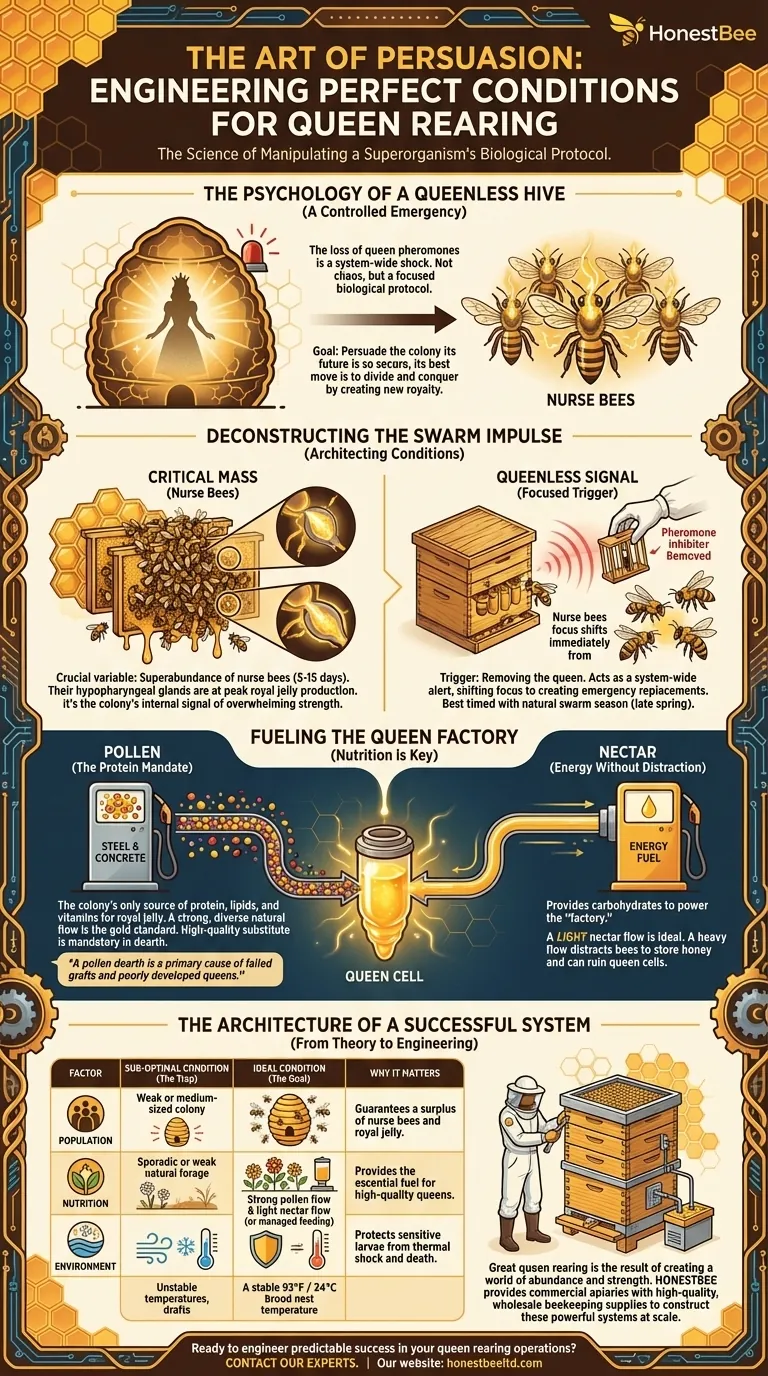
For a honeybee colony, the loss of the queen's pheromones is a similar system-wide shock. It triggers a controlled, predictable emergency. This isn't chaos; it's a biological protocol of immense focus.
Successful queen rearing is not merely a checklist of beekeeping chores. It is the art of manipulating this protocol. It's about persuading a superorganism that it is so powerful, so resource-rich, and its future so secure, that its single best strategic move is to divide and conquer by creating new royalty.
Deconstructing the Swarm Impulse
All methods of raising high-quality queens are sophisticated imitations of one natural event: the swarm. You are architecting the conditions that convince a colony its very survival depends on executing this reproductive program.
The Critical Mass of Nurse Bees
The most crucial variable is population density. Specifically, a superabundance of young nurse bees, aged 5-15 days. These are the bees whose hypopharyngeal glands are at peak production for creating royal jelly—the sole diet of a queen.
A moderately-sized colony cannot be coaxed into greatness here. A proper cell-builder colony must be overflowing, with bees "dripping" from the frames. This density isn't just about manpower; it’s the colony's internal signal of overwhelming strength. It's the social proof that convinces the collective it can afford the immense investment of raising new queens.
The Queenless Signal: A Focused Emergency
Removing the queen and her inhibiting pheromones is the trigger. This "queenless signal" acts like a system-wide alert, immediately shifting the nurse bees' focus from general brood care to the urgent task of creating emergency replacements. They are biologically compelled to find suitable larvae and begin the lavish feeding that creates a queen.
Timing this signal with the natural swarm season (late spring) leverages the colony's own biological clock, which is already primed for reproduction.
Fueling the Queen Factory
A motivated workforce is useless without fuel. The quality of a queen is a direct reflection of the quality and quantity of the nutrition she receives as larvae.
Pollen: The Non-Negotiable Protein Mandate
Think of pollen as the steel and concrete of queen production. It is the colony's only source of protein, lipids, and vitamins—the raw materials for royal jelly.
A pollen dearth is a primary cause of failed grafts and poorly developed queens. You simply cannot build a robust queen from thin air.
A strong, diverse natural pollen flow is the gold standard. In its absence, a high-quality pollen substitute is not optional; it is a mandatory input for any serious commercial operation.
The Nectar Paradox: Energy Without Distraction
While pollen builds the queen, nectar fuels the workers. The ideal state is a light nectar flow. This provides the necessary carbohydrates to power the "factory" without becoming a distraction.
A heavy nectar flow is counterproductive. The bees' focus shifts to ripening and storing honey, and they may even fill the queen cells with nectar ("honey-binding"), ruining the developing larvae. If no natural flow exists, a steady, simulated flow via 1:1 sugar syrup is required to keep the engine running smoothly.
The Architecture of a Successful System
Understanding the theory is one thing; implementing it reliably, especially at a commercial scale, is an engineering challenge. It requires control over the colony's environment.
| Factor | Sub-Optimal Condition (The Trap) | Ideal Condition (The Goal) | Why it Matters |
|---|---|---|---|
| Population | A weak or medium-sized colony | One powerful, overflowing colony | Guarantees a surplus of nurse bees and royal jelly. |
| Nutrition | Sporadic or weak natural forage | Strong pollen flow & light nectar flow (or managed feeding) | Provides the essential fuel for high-quality queens. |
| Environment | Unstable temperatures, drafts | A stable 93°F / 34°C brood nest temperature | Protects sensitive larvae from thermal shock and death. |
Attempting to raise queens in a weak colony is a false economy. The resulting queens will be underfed, smaller, and have lower reproductive potential. The professional standard is to combine weaker colonies into a single, potent cell-builder.
This is where the beekeeper transitions from a biologist to an architect. You are not just managing bees; you are designing a system. This system requires durable, well-constructed hive bodies to maintain population density and thermal stability. It demands reliable feeding systems to deliver precise nutritional inputs, simulating the perfect nectar flow when nature doesn't cooperate.
Great queen rearing is the result of creating a world of such abundance and strength for your bees that making a new queen becomes their most logical and urgent priority. To build this world, you need the right tools. HONESTBEE provides commercial apiaries with the high-quality, wholesale beekeeping supplies and equipment necessary to construct these powerful, productive systems at scale.
If you're ready to engineer more predictable and successful outcomes in your queen rearing operations, Contact Our Experts.
Visual Guide
Related Products
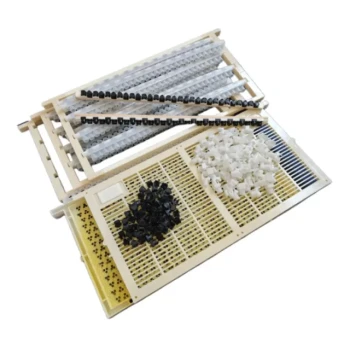
- Jenter Queen Rearing Kit Complete Set for Bee Breeding
- Premium Nicot Style Queen Rearing Kit with Hair Roller Bee Cages
- JZBZ Langstroth Queen Rearing Frame for Beekeeping
- Professional Multi-Functional Queen Bee Cage
- Nicot Queen Rearing Kit for Beekeeping and Grafting in Nicot System
Related Articles
- Mastering Queen Rearing: A Beekeeper’s Guide to Reliable Production
- The Art of Deception: Integrating Queen Rearing Kits into the Hive Mind
- Harnessing the Emergency Impulse: The Biology of Commercial Queen Rearing
- How to Maximize Queen Bee Survival After Marking: Science-Backed Handling Protocols
- How Queen Bee Aging Impacts Hive Health and Science-Backed Requeening Solutions