The Illusion of a Simple Tool
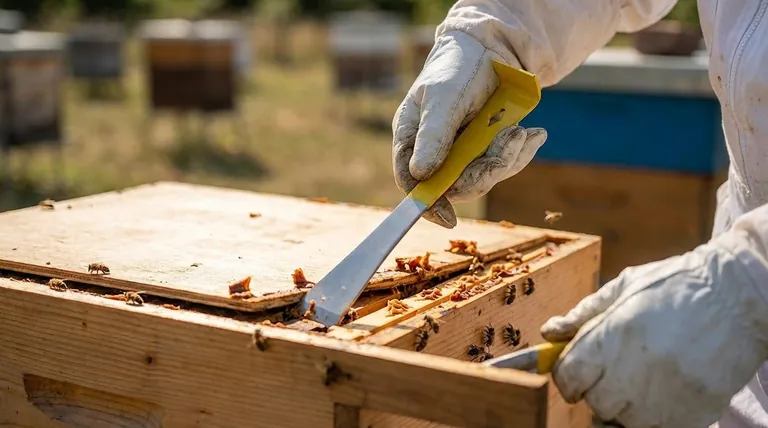
Picture the scene: a beekeeper stands over a hive, the hum of the colony a low, steady drone. They slide the flat end of a steel bar into a nearly invisible seam and apply gentle pressure. The sharp crack of a breaking propolis seal is the sound of access—the first step in any inspection.
That steel bar, the hive tool, feels like a simple object. A pry bar. A scraper. But this perception is a dangerous illusion.
The hive tool is the primary interface between the beekeeper and the colony. It is an extension of our will into a complex biological system. And like a surgeon's scalpel, its improper handling is one of the most common—and most overlooked—vectors for systemic failure across an entire apiary.
The Biology of a "Stuck" Hive
To understand the tool, we must first respect what it defeats. Bees are master architects and chemists, constantly working to perfect their environment.
Bee Glue: A Double-Edged Sword
Propolis, the resinous "bee glue" that seals every crack, is not just an inconvenience. It is a core component of the colony's immune system, an antimicrobial barrier that protects them from external pathogens. The bees use it to seal drafts, reinforce structures, and even mummify invaders too large to remove.
Burr Comb: The Price of Imperfection
Burr comb is excess wax built in spaces that violate the precise "bee space" required for movement. It's a biological response to an architectural flaw, often fusing frames and hive bodies into a single, unmanageable block.
When we pry and scrape, we are not merely cleaning. We are temporarily defeating the hive's natural defenses to perform our own essential health checks.
The Mechanics of Intervention
Mastery of the hive tool is not about brute force. It is about precision and an understanding of bee behavior.
The Pry: A Lesson in Leverage
When you insert the tool to separate hive bodies, you are performing a delicate negotiation. Slow, steady pressure uses leverage to break the propolis seal without jarring the colony. A sudden, forceful movement sends shockwaves through the hive, triggering a defensive response and unnecessary stress.
The Scrape: Restoring Order
Scraping top bars and frame rests is more than tidiness. It's about restoring the hive’s internal logic. By removing obstructive propolis and burr comb, you ensure frames can be lifted without tearing the comb, spilling honey, or crushing bees. You are maintaining the bee space that is critical for colony function.
The Invisible Threat: A Beekeeper's Cognitive Blind Spot
Here lies the psychological trap. Why do even experienced beekeepers sometimes neglect tool hygiene?
The threat is invisible. Pathogens like the spores of American Foulbrood (AFB) are microscopic. The action—thoroughly cleaning a tool between hives—feels like a repetitive, time-consuming chore. The devastating consequence, a dead-out hive weeks later, is disconnected in time and space from the moment of contamination.
This is a classic cognitive bias. We are wired to react to immediate, visible threats, not abstract, delayed ones. We underestimate the risk carried on a smear of propolis.
Your Hive Tool as a Hypodermic Needle
The most accurate way to view your hive tool is not as a crowbar, but as a reusable hypodermic needle.
Every time you move from one hive to the next without sterilization, you risk taking a potential infection from a strong, asymptomatic colony and injecting it directly into a healthy one. This single, repeated failure in protocol can doom an entire operation.
A Protocol for Biosecurity
A professional's work is defined by their protocols. For hive tools, the system can be simple but must be rigid.
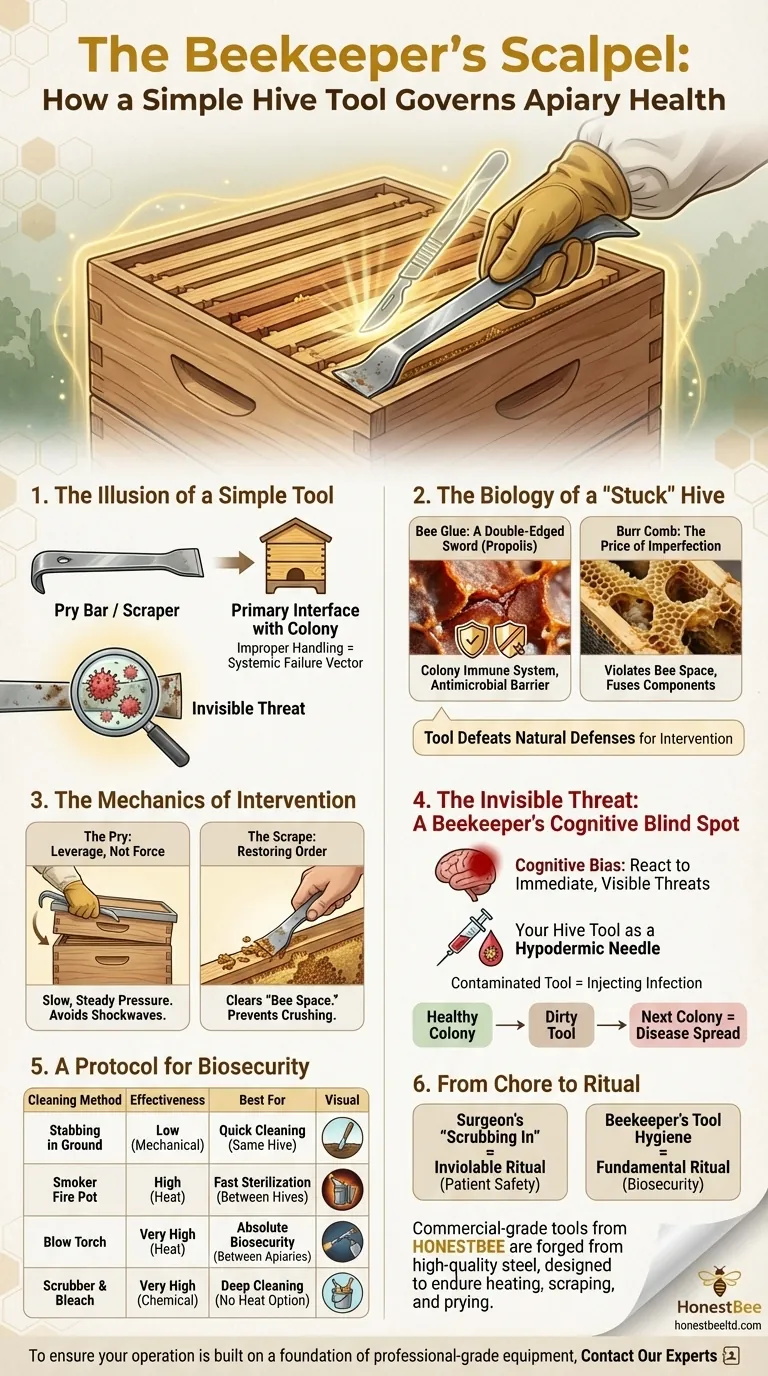
- Field Triage: Stabbing the tool into the ground between frames can remove clumps of wax but offers no real sterilization.
- Active Sterilization: Placing the tool in the hot fire pot of your smoker for a few seconds will burn off propolis and kill many pathogens. This is a good, fast-acting option.
- Terminal Sterilization: For absolute biosecurity between apiaries or after finding disease, nothing beats a blow torch. Heating the tool until it glows ensures a sterile instrument. Scrubbing with a disinfectant is another effective method.
| Cleaning Method | Effectiveness | Best For |
|---|---|---|
| Stabbing in Ground | Low (Mechanical) | Quick cleaning within the same hive. |
| Smoker Fire Pot | High (Heat) | Fast sterilization between hives in one apiary. |
| Blow Torch | Very High (Heat) | Between apiary visits or after known disease. |
| Scrubber & Bleach | Very High (Chemical) | Deep cleaning when heat is not an option. |
From Chore to Ritual
A surgeon doesn't see "scrubbing in" as a chore; it is an inviolable ritual that guarantees patient safety. Likewise, a professional beekeeper must reframe tool hygiene. It is not an annoyance; it is the fundamental ritual of biosecurity.
This discipline requires tools that can withstand the process. Commercial-grade hive tools from HONESTBEE are forged from high-quality steel, designed to endure the repeated cycles of heating, scraping, and prying that define professional apiary management. For commercial operators and distributors, equipment isn't a purchase; it's an investment in operational resilience.
The simple steel hive tool is the physical point where your knowledge, discipline, and respect for the colony intersect. Mastering it is the first step toward managing a truly healthy and productive apiary.
To ensure your operation is built on a foundation of professional-grade equipment, Contact Our Experts.
Visual Guide
Related Products
- Professional Multi-Function Stainless Steel Hive Tool
- Professional Stainless Steel Pry-Bar Hive Tool
- HONESTBEE Professional Long Handled Hive Tool with Precision Cutting Blade
- HONESTBEE Premium Italian Style Hive Tool with Hardwood Handle
- Ergonomic Plastic Frame Spacer Tool for Rapid Hive Management Beekeeping
Related Articles
- The Physics of Flow: How a Single Hive Tool Redefines the Beekeeper's Workflow
- The Essential Guide to Hive Tools in Modern Beekeeping
- How to Choose Hive Tools That Match Your Beekeeping Workflow
- The Apiary as a System: Why Your Hive Tool is More Than Just Steel
- Leverage and Finesse: The Unseen Physics of a Simple Hive Tool



















