The Illusion of a Perfect Tool
In any profession that relies on physical tools, there is no such thing as a perfect design. There are only trade-offs. A surgeon’s scalpel sacrifices durability for sharpness. A carpenter's hammer trades precision for force.
The beekeeper's veil is no different. It’s a microcosm of design philosophy, balancing absolute security against daily, repetitive use. Understanding its construction reveals a deeper story about risk, trust, and the psychology of working alongside thousands of stinging insects.
Anatomy of a Deliberate Design
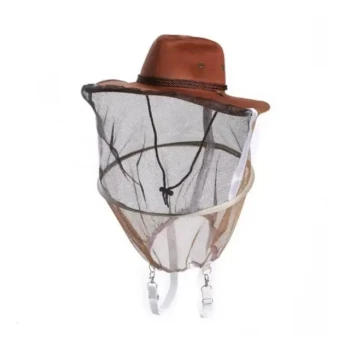
At a glance, the square veil seems archaic—a hardhat with a boxy mesh screen. But its design isn't accidental. It is a system of deliberate choices, each optimizing for the realities of commercial beekeeping.
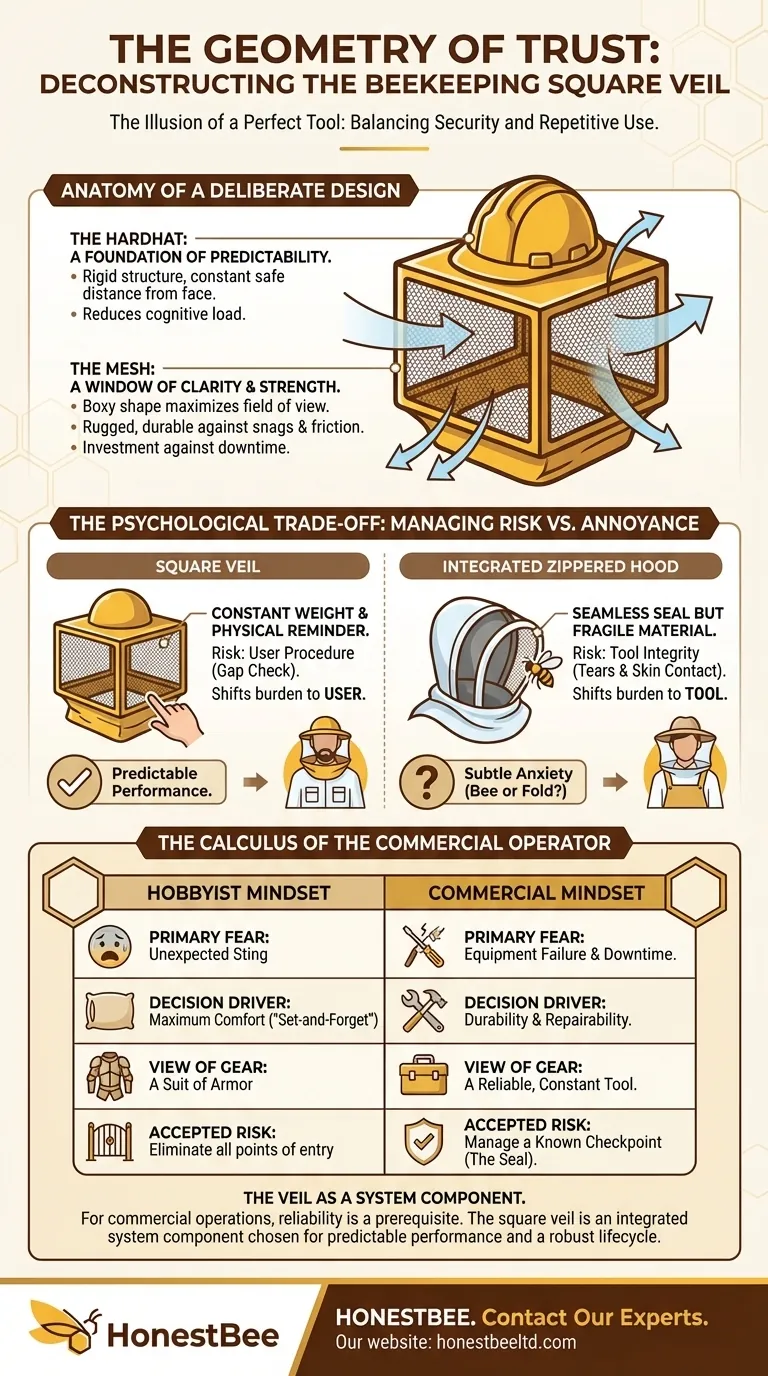
The Hardhat: A Foundation of Predictability
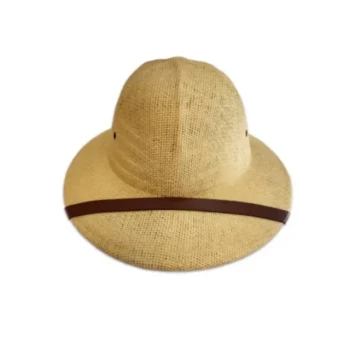
The rigid hardhat foundation does more than just protect from bumps. It creates a predictable, unchanging architecture on your head.
This structural stability ensures the mesh remains a constant, safe distance from your face. There's no sagging, no unexpected contact, no momentary distraction wondering if a fold has brought a bee too close. For a professional inspecting their 100th hive of the day, this reduction in cognitive load is invaluable. The system is predictable. It works the same way every time.
The Mesh: A Window of Clarity and Strength
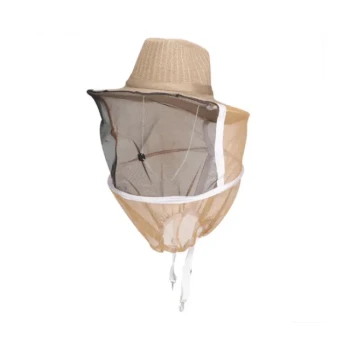
The square veil’s heavier, more durable mesh is formed into a box. This geometry isn't just for shape; it maximizes the field of view by creating flat, undistorted planes in front of the eyes.
More importantly, its ruggedness is an economic feature. In a commercial apiary, moving between pallets of hives, loading trucks, and working near trees, a veil will inevitably snag on a branch or piece of equipment. A lighter veil might tear, ending a day's work. The square veil is built to endure that friction. It’s an investment against downtime.
The Psychological Trade-Off: Managing Risk vs. Annoyance
Every beekeeper must choose what kind of risk they are willing to manage. The decision between a square veil and a fully integrated, zippered hood is a masterclass in this choice.
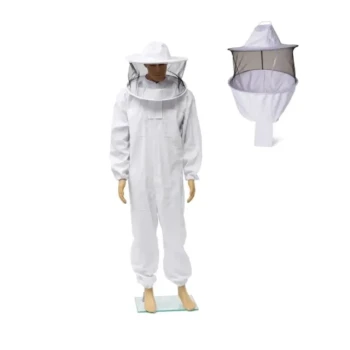
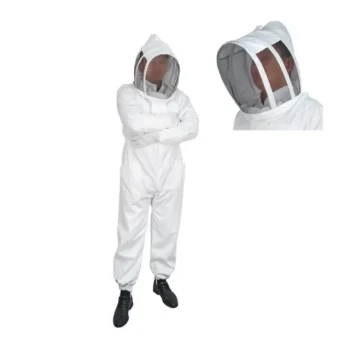
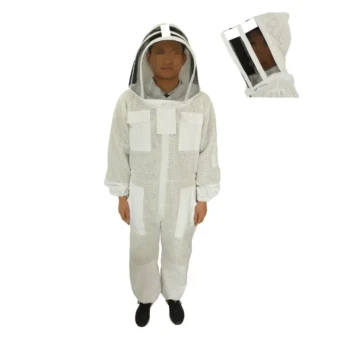
An integrated hood often provides a more seamless seal against bees. Its primary weakness is the material's fragility and its tendency to rest against your skin when you bend over. The anxiety it creates is subtle but persistent: Is that a bee crawling on the mesh, or on my neck?
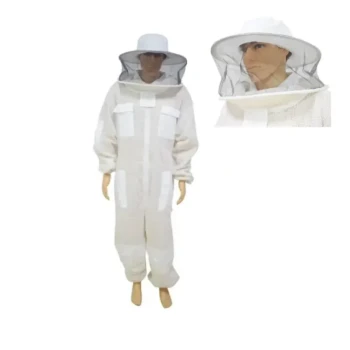
The square veil presents a different contract. Its weight is a constant, physical reminder of its presence. Its primary risk is not a material failure, but a user error—a potential gap where the veil meets the suit.
This trade-off shifts the burden of safety from the tool's integrity to the user's procedure.
The Calculus of the Commercial Operator
A hobbyist and a commercial beekeeper have fundamentally different relationships with risk and equipment. Their choices reflect this.
| Factor | Hobbyist Mindset | Commercial Mindset |
|---|---|---|
| Primary Fear | An unexpected sting | Equipment failure leading to downtime |
| Decision Driver | Maximum comfort; "set-and-forget" security | Durability, repairability, and long-term cost |
| View of Gear | A suit of armor for occasional use | A reliable tool for constant, repetitive work |
| Accepted Risk | Prefers to eliminate bee entry points at all cost | Prefers to manage a known checkpoint (the seal) |
The professional understands that a tool that lasts for 500 inspections but requires a careful check each time is superior to a tool that lasts for 50 inspections and fails without warning.
The Veil as a System Component
For large-scale distributors and commercial apiaries, equipment isn't a collection of individual items. It's an integrated system designed for efficiency, longevity, and operational safety. A square veil is not just headwear; it is a component chosen for its predictable performance and robust lifecycle.
At HONESTBEE, we focus on supplying the wholesale beekeeping market because we understand this mindset. We provide equipment, like the rugged square veil, that is built not just for protection, but for the relentless pace of commercial work. It represents a philosophy of durability over disposability—a belief that the right tools are an investment in operational continuity.
Choosing the right equipment is about understanding the deeper trade-offs baked into its design. For operations where reliability is not a feature but a prerequisite, the square veil remains an enduring and logical choice. If your business depends on gear that shows up to work every day, let's ensure it's built for the job.
Visual Guide
Related Products
- Professional Square Folding Wire Mesh Beekeeping Veil
- Professional Beekeeper Suit with Square Folding Cotton Veil
- Square Folding Beekeeping Hat with Integrated Veil
- Rigid Pith Style Beekeeper Hat for Square Folding Veils
- Professional Cotton Beekeeper Suit with Round Veil Design for Commercial Apiaries
Related Articles
- The Beekeeper's Blind Spot: The Cognitive Ergonomics of a Veil
- Black Mesh, Clear Sight: The Unseen Engineering in a Beekeeper's Veil
- How to Choose a Beekeeping Veil: Safety and Comfort for Beginners
- Beyond the Apiary: The Beekeeping Veil as a Tool for Focus
- Managing Volatility: The Veil as a Beekeeper's Most Critical Interface