A honeybee colony is a fortress.
From the outside, it appears orderly, a stack of simple wooden boxes. But inside, every crack, every seam, and every joint is sealed with a substance of remarkable strength: propolis. This resinous "bee glue" is an antimicrobial, structural sealant that turns a simple box into a hermetically sealed superorganism.
For the beekeeper, this biological marvel presents a fundamental physical problem. The hive is glued shut. Without a tool designed specifically to overcome this, hive inspection would be impossible.
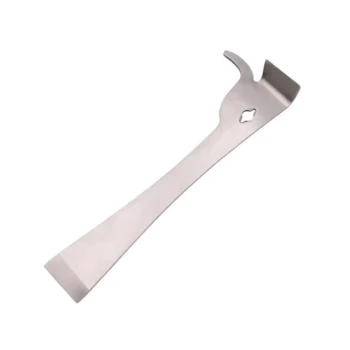
This is the role of the hive tool—a simple bar of steel that acts as the essential interface between the beekeeper and the bee.
An Elegant Solution to a Sticky Problem
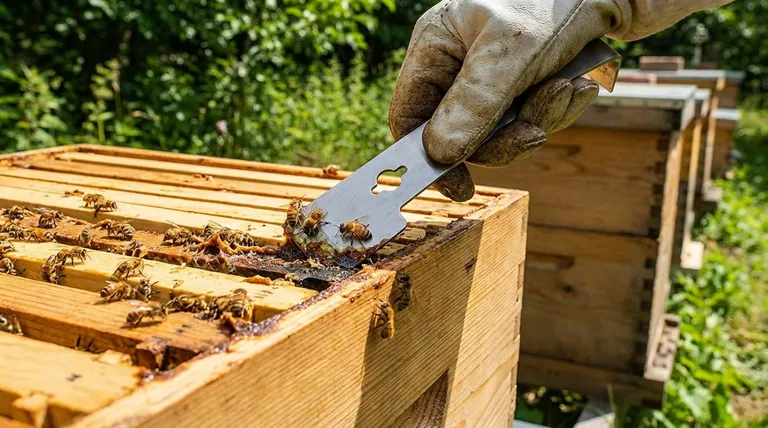
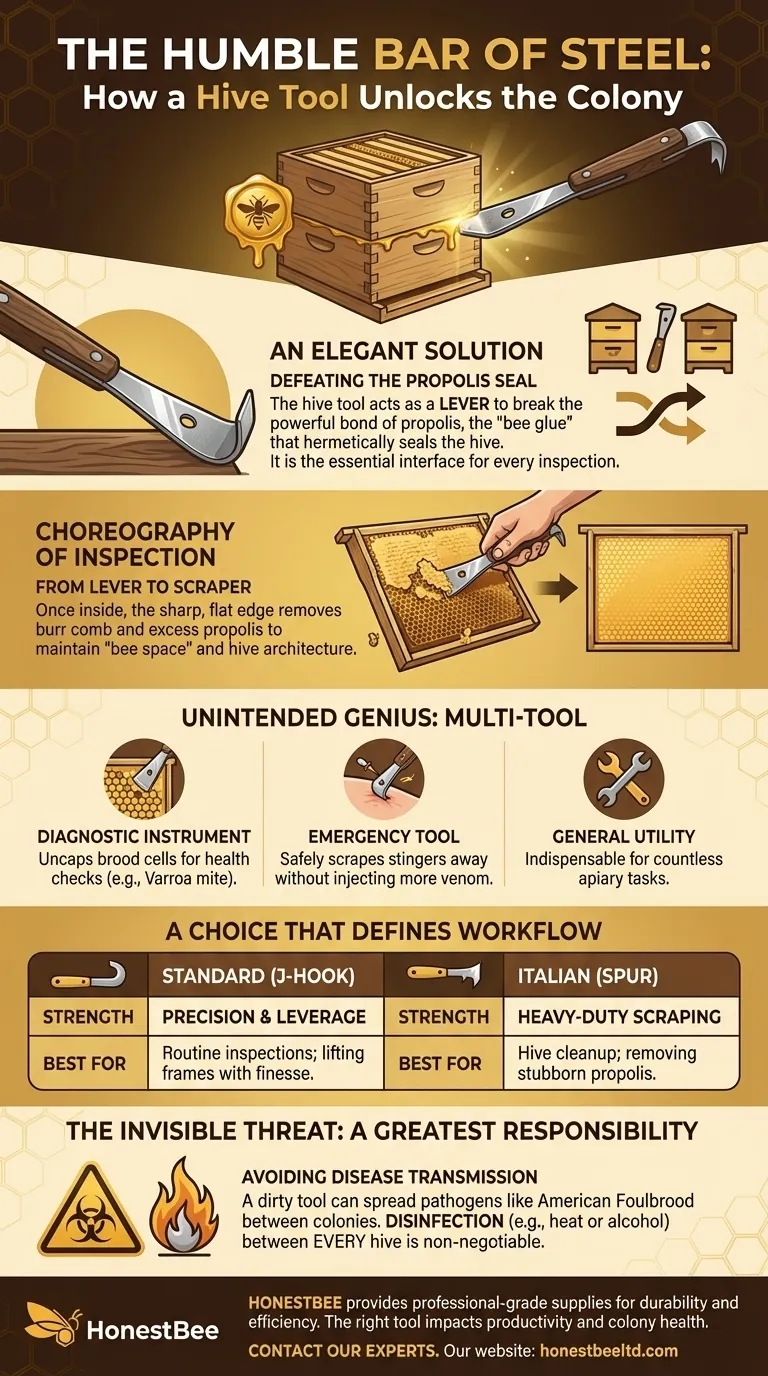
The primary challenge in beekeeping is not managing bees; it's managing their environment. The hive tool is first and foremost a lever, designed to defeat the powerful bond of propolis with mechanical advantage.
When you slide the flat, beveled edge between two hive bodies and give a gentle twist, you aren't just breaking a seal. You are momentarily defying the colony's architectural intent. This act of prying is the first step in every inspection, every harvest, and every health check.
The same principle applies on a smaller scale. Frames, spaced meticulously apart, are quickly bonded to the hive walls and each other with propolis and wax. The hive tool allows the beekeeper to gently pry them loose, one by one, without the jarring, destructive force that would alarm the colony.
The Choreography of Inspection
Once inside, the hive tool transforms from a lever into a scraper. Its sharp, flat edge is perfect for removing unwanted burr comb—wax built in undesirable places—that violates the critical "bee space" required for healthy movement within the hive.
This isn't just about tidiness. Scraping away excess propolis and wax from the frame rests and box edges does more than just make the next inspection easier. It maintains the hive's intended architecture, preventing brace comb that can fuse frames together and disrupt the colony's structure.
It is a conversation between the beekeeper's goals and the bees' instincts, mediated by a piece of steel.
The Unintended Genius of a Simple Design
The robust, no-frills design of the hive tool has made it an indispensable multi-tool for countless other tasks in the apiary. Its simplicity is its strength.
A Diagnostic Instrument
A beekeeper must often look for problems they cannot see. To check for devastating pests like the Varroa mite, a beekeeper can use the sharp edge of the tool to delicately uncap a few sealed brood cells. This small, surgical action provides a crucial window into the colony's internal health.
An Emergency Tool
If a beekeeper is stung, the worst thing to do is pinch the stinger with their fingers, which injects more venom from the attached sac. The hive tool's flat edge is the perfect instrument for scraping the stinger away cleanly and safely, minimizing the dose of venom.
A Choice That Defines Your Workflow
While the function is universal, the form is not. The two dominant styles of hive tools reflect different operational priorities, a choice that becomes critical in commercial settings where efficiency is paramount.
For large-scale commercial apiaries and equipment distributors, sourcing tools that match the workflow is key. HONESTBEE provides professional-grade beekeeping supplies designed for durability and efficiency, recognizing that the right tool directly impacts a beekeeper's productivity and the health of their colonies.
| Tool Type | Primary Strength | Best For |
|---|---|---|
| Standard (J-Hook) | Precision & Leverage | Routine inspections; lifting frames with minimal disturbance. |
| Italian (Spur) | Heavy-Duty Scraping | Hive cleanup; removing thick, stubborn propolis and burr comb. |
The J-hook's curved end provides exceptional leverage for lifting a single frame, a task requiring finesse. The Italian tool's broad, heavy blade makes quick work of cleaning and preparation. Professional operations often equip their teams with both.
The Invisible Threat: A Beekeeper's Greatest Responsibility
A hive tool's greatest strength—its ability to move between and within colonies—is also its greatest liability. It is a potential vector for disease.
Pathogens like American Foulbrood can be invisibly carried on a dirty tool, spreading from a single infected hive to an entire apiary with devastating speed. For a commercial beekeeper, this represents an existential threat.
The discipline of cleaning and disinfecting a hive tool after inspecting every single hive is non-negotiable. Whether using a blowtorch to scorch the tool or wiping it down with rubbing alcohol, this simple act of hygiene is one of the most important responsibilities a beekeeper has.
The hive tool is, therefore, more than just steel. It is a symbol of the beekeeper's craft—a blend of force, finesse, and profound responsibility. It is the key that unlocks the fortress, but it must be wielded with respect for the delicate world within.
For operations that depend on efficiency, hygiene, and durability, equipping your team with the right professional-grade tools is the first step toward success. Contact Our Experts
Visual Guide
Related Products
- HONESTBEE Professional Long Handled Hive Tool with Precision Cutting Blade
- Professional Multi-Function Stainless Steel Hive Tool
- HONESTBEE Premium Italian Style Hive Tool with Hardwood Handle
- Ergonomic Plastic Frame Spacer Tool for Rapid Hive Management Beekeeping
- Professional Grade Foldable Beehive Handles
Related Articles
- Force and Finesse: The Hive Tool as the Beekeeper's Critical Interface
- The Essential Guide to Hive Tools in Modern Beekeeping
- The Apiary as a System: Why Your Hive Tool is More Than Just Steel
- How to Choose Hive Tools That Match Your Beekeeping Workflow
- The Beekeeper's Scalpel: How a Simple Hive Tool Governs Apiary Health