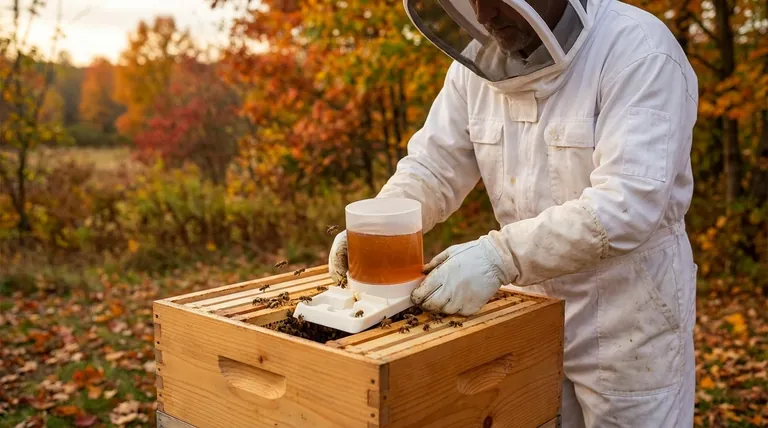
As temperatures drop, beekeepers face a critical question: How can we best support our colonies through winter? The answer lies in mastering the 2:1 sugar-water ratio—a scientifically validated method to prevent starvation while maintaining hive health. This guide unpacks the osmotic science behind the ratio, offers fail-proof syrup preparation steps, and reveals regional adaptation strategies used by professional apiarists.
The Essential Guide to Fall Feeding Ratios
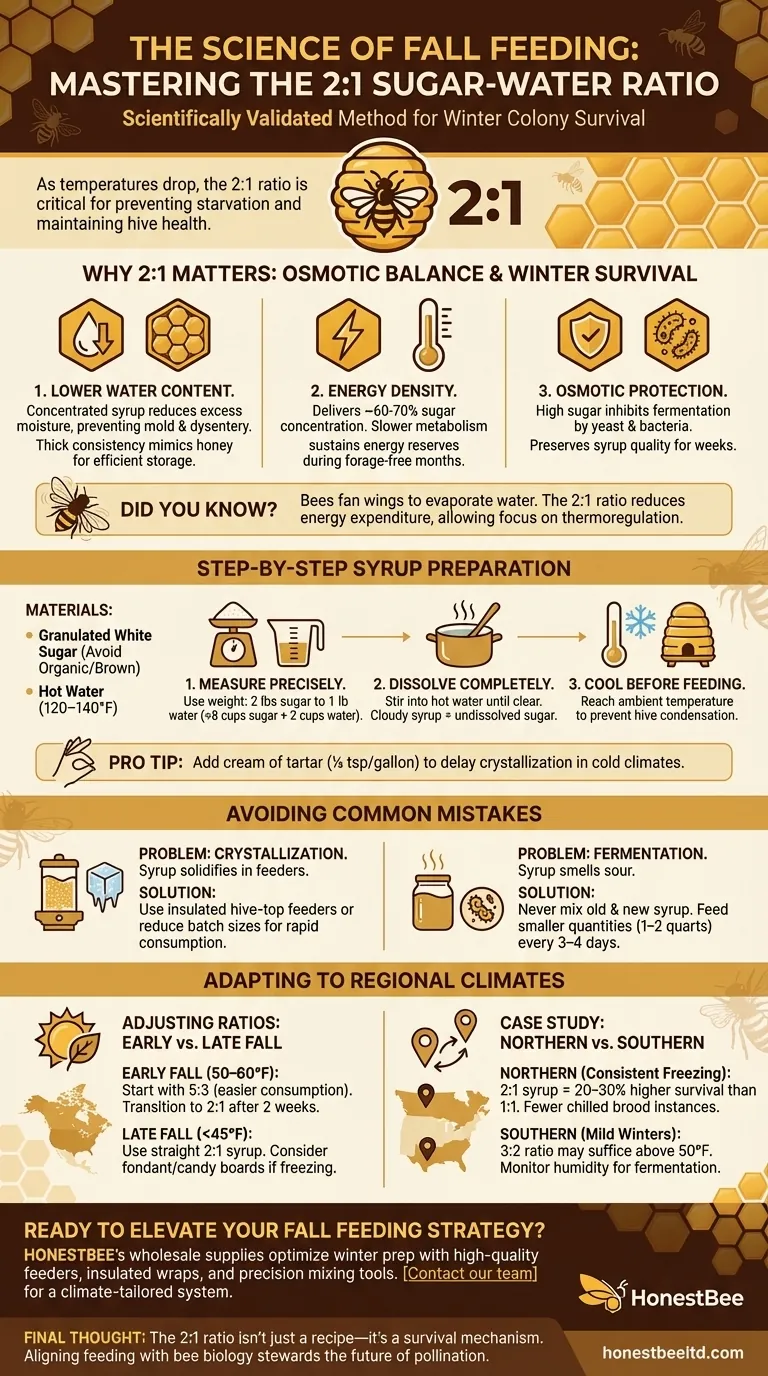
Why 2:1 Matters: Osmotic Balance and Winter Survival
Research shows colonies fed 2:1 syrup in fall have significantly higher winter survival rates. Here’s why this ratio outperforms spring’s 1:1 formula:
-
Lower Water Content
- Concentrated syrup reduces excess moisture in hives, preventing mold growth and dysentery in bees.
- Thick consistency mimics honey’s viscosity, encouraging bees to store it efficiently.
-
Energy Density
- A 2:1 ratio delivers approximately 60-70% sugar concentration—the ideal range for bee digestion in cold weather.
- Studies note bees metabolize thicker syrup slower, sustaining energy reserves during months without forage.
-
Osmotic Protection
- High sugar content creates osmotic pressure that inhibits fermentation by yeast and bacteria.
- This preserves syrup quality for weeks in hive storage.
Did you know? Bees fan their wings to evaporate water from nectar. The 2:1 ratio reduces this energy expenditure, letting them focus on thermoregulation.
Step-by-Step Syrup Preparation for Cooler Temperatures
Follow this professional method to avoid crystallization and spoilage:
Materials Needed:
- Granulated white sugar (avoid organic or brown sugars—they contain impurities)
- Hot water (120–140°F)
Procedure:
-
Measure Precisely
- Use weight, not volume: 2 pounds sugar to 1 pound water (≈8 cups sugar + 2 cups water).
-
Dissolve Completely
- Stir sugar into hot water until fully dissolved. Cloudy syrup indicates undissolved sugar.
-
Cool Before Feeding
- Let syrup reach ambient temperature to prevent hive condensation.
Pro Tip: Add a pinch of cream of tartar (⅛ tsp per gallon) to delay crystallization in cold climates.
Avoiding Common Mistakes: Crystallization and Fermentation Risks
Problem: Syrup solidifies in feeders during cold snaps.
- Solution: Use insulated hive-top feeders or reduce batch sizes to ensure rapid consumption.
Problem: Fermented syrup smells sour.
-
Solution:
- Never mix old and new syrup.
- Feed smaller quantities (1–2 quarts) every 3–4 days.
Adapting to Regional Climates
Adjusting Ratios for Early vs. Late Fall Feeding
-
Early Fall (50–60°F):
- Start with a 5:3 ratio (5 parts sugar to 3 parts water) for easier consumption.
- Transition to 2:1 after 2 weeks as temperatures drop.
-
Late Fall (<45°F):
- Use straight 2:1 syrup.
- Consider fondant or candy boards if syrup freezes.
Case Study: Hive Health Outcomes in Northern vs. Southern Regions
-
Northern Climates (Consistent Freezing):
- Hives fed 2:1 syrup show 20–30% higher survival than 1:1-fed colonies.
- Beekeepers report fewer instances of chilled brood.
-
Southern Climates (Mild Winters):
- A 3:2 ratio may suffice until temperatures dip below 50°F.
- Monitor humidity—high moisture increases fermentation risk.
Ready to Elevate Your Fall Feeding Strategy?
HONESTBEE’s wholesale beekeeping supplies help commercial apiaries optimize winter prep with high-quality feeders, insulated hive wraps, and precision mixing tools. [Contact our team] to build a climate-tailored feeding system for your operation.
Final Thought: The 2:1 ratio isn’t just a recipe—it’s a survival mechanism honed by decades of apicultural science. By aligning your feeding practices with bees’ biological needs, you’re not just sustaining hives; you’re stewarding the future of pollination.*
Visual Guide
Related Products
- Durable Plastic Hive Number Set for Beekeeping
- Stainless Steel Round Beehive Air Vents for Ventilation
- HONESTBEE Professional Hive Top Bee Feeder Feeding Solution
- Professional Large-Format Hive Number Set for Beekeeping
- HONESTBEE Professional Long Handled Hive Tool with Precision Cutting Blade
Related Articles
- Hive Thermodynamics: The Unseen Clock Governing Winter Survival
- How Beekeepers Can Diagnose Queen Issues and Prevent Colony Collapse
- The Tipping Point: Managing the Psychology of a Beehive to Prevent Swarming
- The Physics of Survival: Managing the Unseen Threat in a Winter Beehive
- The Tipping Point: How the 7/10 Rule Prevents a Beehive's Silent Collapse