Beeswax begins to discolor when it reaches a temperature of 185°F (85°C). While different wax varieties may exhibit slight variations, this is the widely accepted threshold where heat damage begins to degrade the visual quality of the wax. To prevent this, the use of a thermometer to monitor the temperature throughout the melting process is critical.
Core Takeaway: Heating beeswax is a delicate balance; while it melts at a much lower temperature, crossing the 185°F threshold can permanently alter the aesthetic quality of your wax. For best results, maintain a "low and slow" heating approach to stay comfortably within the safe working range.
Critical Temperature Thresholds
The Discoloration Point
The chemical changes that lead to discoloration generally start at 185°F (85°C).
If the wax is allowed to reach or exceed this temperature, you will likely notice a darkening or dulling of its natural golden color.
It is important to note that time plays a role; holding beeswax above this temperature for an extended period will worsen the discoloration effect.
The Melting "Safe Zone"
You do not need to approach the danger zone to effectively work with beeswax.
The natural melting point of beeswax is approximately 145°F.
This provides a significant safety buffer of roughly 40 degrees between the point where the wax becomes liquid and the point where it begins to discolor.
The Flash Point (Safety Warning)
While discoloration is a quality issue, extreme overheating presents a serious safety hazard.
Beeswax has a flash point of approximately 400°F.
If the wax reaches this temperature, it can spontaneously burst into flames, making temperature control a matter of physical safety as well as product quality.
Common Pitfalls to Avoid
Rushing the Process
The most common mistake when working with beeswax is attempting to speed up the melting process with high heat.
Applying high heat to melt a solid block quickly often causes the liquid portions of the wax to spike above 185°F before the solid core has finished melting.
Always use a double boiler or a temperature-controlled melting pot to ensure even, gradual heating.
Relying on Visual Cues
It is nearly impossible to judge the exact temperature of wax just by looking at it.
Different types of wax may react differently to heat, making visual estimation unreliable.
Using a dedicated thermometer is the only way to objectively ensure you are staying below the 185°F limit.
Preserving Quality for Your Project
To ensure your beeswax retains its natural color and scent, manage your heat source according to your specific goals.
- If your primary focus is preserving color: Aim to keep the wax temperature between 145°F and 165°F, ensuring it melts fully without approaching the discoloration threshold.
- If your primary focus is safety: Ensure your setup never allows the wax to approach the 400°F flash point, and never leave melting wax unattended.
Respecting the thermal limits of beeswax ensures a finished product that retains its natural beauty and structural integrity.
Summary Table:
| Temperature Metric | Threshold (°F/°C) | Impact on Beeswax |
|---|---|---|
| Melting Point | ~145°F (63°C) | Wax transitions from solid to liquid state |
| Optimal Working Range | 145°F – 165°F | Safe melting while preserving color and scent |
| Discoloration Threshold | 185°F (85°C) | Chemical changes cause darkening and loss of luster |
| Flash Point | ~400°F (204°C) | Extreme safety hazard; wax may spontaneously ignite |
Elevate Your Apiary Operations with HONESTBEE
Preserving the pristine quality of your beeswax is essential for high-value hive products. At HONESTBEE, we specialize in supporting commercial apiaries and distributors by providing the professional-grade tools and machinery required for precision temperature control.
From advanced honey-filling machines and durable hive-making equipment to a comprehensive range of beekeeping consumables, our wholesale offerings are designed to enhance your efficiency and product integrity.
Ready to scale your production with industry-leading equipment?
Contact HONESTBEE today to discuss your wholesale needs!
Related Products
- Beeswax Foundation Sheets Beehive Foundation for Wholesale
- Colorful Silicone Beeswax Foundation Mold Mould for Beekeeping
- Economy Manual Beeswax Embossing Mill Wax Foundation Machine Roller
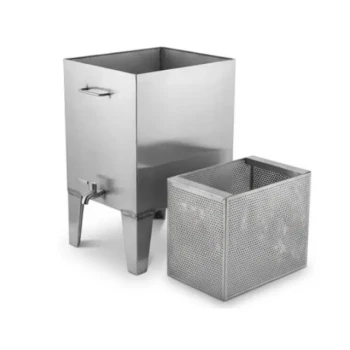
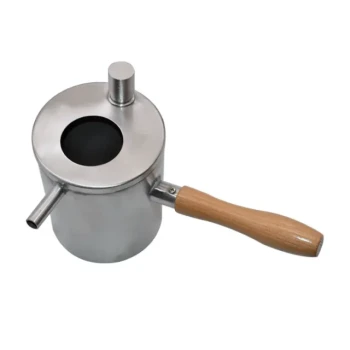
- Beeswax Melter for Candle Making Honey Bee Wax Melter
- Electric Beeswax Flat Sheet Machine with Operating Tray for Wax Processing
People Also Ask
- What are the technical advantages of beeswax foundations and feeding tools? Optimize Your Bee Breeding Phase
- Why is the regular exchange and replacement of beeswax foundations encouraged? Boost Honey Yield & Hive Biosafety
- What are the negative consequences of using old or contaminated beeswax in foundations? Protect Your Hive Today
- Why is high-purity natural beeswax essential for foundations? Prevent Larval Mortality & Boost Colony Health
- What are the specific advantages of regular comb replacement? Boost Hive Health with New Beeswax Foundations