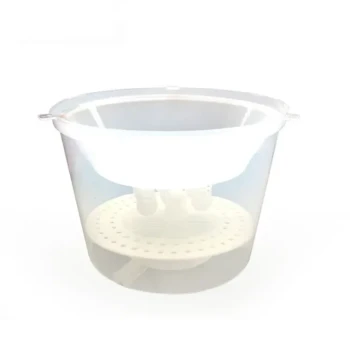
Strategic design features in pollen traps act as safeguards to balance harvesting with colony survival. A properly engineered trap is designed to be inefficient by nature, capturing only a portion of the incoming pollen while allowing the rest to bypass the collection grid to sustain the hive.
A well-designed pollen trap acts as a partial filter, not a total blockade. It ensures the colony retains enough protein for larval development while maintaining open exit routes to prevent stress and congestion.
The Mechanics of Colony Safety
The Principle of Partial Capture
The primary safety mechanism of a pollen trap is its selective permeability. A trap designed for well-being does not capture every grain of pollen entering the hive.
It allows a calculated percentage of pollen-laden foragers to bypass the stripping mechanism entirely. This ensures that nurse bees have access to sufficient protein to feed the developing larvae, preventing nutritional starvation.
Unrestricted Exits
While incoming bees are filtered through a grid, outgoing bees require a different path. High-quality traps feature unrestricted exits, often designed as cones.
These exits allow bees to leave the hive without obstruction. This is particularly critical for drones (male bees) and the Queen, who are larger than worker bees and would otherwise be trapped inside by the stripping grid.
Managing Hive Congestion
Poorly designed traps can create "traffic jams" at the entrance. This congestion slows down foragers and can disrupt the colony's rhythm for several days after installation.
Superior designs minimize this disruption by maintaining clear flow patterns. They ensure that the physical presence of the trap does not hinder the bees' normal daily activities or cause excessive confusion at the threshold.
Understanding the Trade-offs
The Resource Feedback Loop
When a trap is installed, it mechanically strips pollen pellets from the hind legs of returning bees. This creates an artificial protein deficiency within the hive.
The colony responds to this shortage by adjusting its labor division. It converts more nectar foragers into pollen foragers to compensate for the loss.
Impact on Honey Production
This shift in labor ensures brood production remains unaffected, as the bees work harder to bring in the necessary pollen. However, there is a cost.
With fewer bees dedicated to nectar collection, total honey production typically decreases. The energy of the colony is diverted from making honey to replenishing the pollen stores lost to the trap.
Monitoring is Essential
Reliance on design alone is not enough. Beekeepers must actively monitor the colony to ensure the increased foraging demand does not exhaust the bees.
Over-trapping can negatively impact the longevity of the workforce. It is vital to verify that local floral resources are abundant enough to support this increased foraging intensity.
Balancing Harvest with Health
To ensure the long-term vitality of your apiary, apply these principles when selecting and using pollen traps:
- If your primary focus is Colony Growth: Select a trap with a high pass-through rate to ensure maximum protein availability for brood rearing.
- If your primary focus is Honey Production: Accept that pollen trapping will lower honey yields and plan your trapping schedule outside of major nectar flows.
- If your primary focus is Bee Longevity: Monitor entrance congestion closely and remove the trap periodically to allow the colony to recover its natural rhythm.
The best pollen trap is one that respects the biological needs of the bee first and the harvest of the beekeeper second.
Summary Table:
| Feature | Design Function | Impact on Colony Well-being |
|---|---|---|
| Partial Capture Grid | Allows a percentage of foragers to bypass the trap | Ensures nurse bees have protein for larval development |
| Unrestricted Exits | One-way cone exits for outgoing bees | Prevents congestion; allows drones and queens to exit freely |
| Flow Management | Minimized entrance obstruction | Reduces stress and prevents disruption of foraging rhythms |
| Labor Adjustment | Triggers shift from nectar to pollen foraging | Maintains internal pollen stores despite mechanical stripping |
Maximize Your Harvest Without Compromising Colony Vitality
At HONESTBEE, we understand that the health of your bees is the foundation of your business. Whether you are managing a large-scale commercial apiary or supplying the industry as a distributor, our professional-grade pollen traps and beekeeping equipment are engineered to balance high-yield harvesting with superior bee welfare.
From advanced hive-making machinery to essential consumables and specialized hardware, HONESTBEE provides the full spectrum of tools needed to scale your operations. Partner with us to access wholesale solutions that prioritize efficiency and sustainable beekeeping practices.
Ready to upgrade your apiary’s performance? Contact HONESTBEE Today to explore our comprehensive machinery and equipment catalog!
Related Products
- Removable Plastic Pollen Trap With Ventilated Tray for Bees Pollen Collector
- 30 cm Plastic Entrance Hole Bee Pollen Trap and Collector
- Plastic Bee Pollen Trap Strips Comb Catcher Collector
- High-Efficiency Diamond Maze Bee Escape for Clearing Supers
- Professional Bucket Style Wasp and Moth Pheromone Trap
People Also Ask
- What are the design principles and advantages of pollen traps in the collection of bee pollen? Boost Your Apiary Yield
- What is the function of professional pollen traps in evaluating honey plants? Quantifying Pollination and Crop Potential
- What functions do pollen traps serve for bee bread production? Optimize Your Raw Material Collection
- What maintenance and pest prevention measures should be taken for pollen traps? Protect Your Hive and Harvest Quality
- How does the use of pollen traps in honeybee hives enhance crop fertilization? Boost Your Yield Through Induced Activity