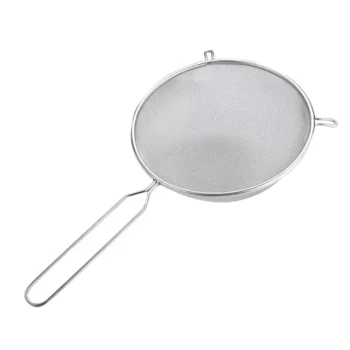
Standardized mesh screens and shaking containers function as a mechanical filtration system designed to separate Varroa destructor mites from honey bees for accurate population quantification. By subjecting the sample to agitation within a liquid or powder medium, the process generates shear force to dislodge the mites, while the mesh screen—specifically sized with a 2 mm aperture—physically isolates the larger bees from the smaller parasites.
The core principle of this method is the use of fluid shear force combined with differential sizing. This setup transforms a visual inspection into a quantifiable data point, providing the precise density metrics required for informed apiary management.
The Mechanics of Separation
Generating Shear Force
The shaking container serves as the engine for detachment. When filled with an eluent (such as an ethanol solution) and agitated, the container creates fluid shear force.
This physical turbulence breaks the mechanical grip the mites hold on the bees' bodies. Without this vigorous agitation, mites often remain hidden between the bees' abdominal segments.
The Function of the Mesh
The mesh screen acts as the critical filter. It typically features a 2 mm aperture, a specific size chosen to exploit the size difference between the host and the parasite.
During the shaking process, the screen retains the adult honey bees within the main chamber while allowing the dislodged, smaller mites to pass through into a collection area or counting basin.
The Role of the Eluent
The liquid solution (often alcohol-based) serves two purposes. First, it acts as the medium that transmits the shear force during shaking.
Second, it washes the bees, helping to flush the detached mites through the mesh screen for an accurate count.
Enhancing Accuracy and Visibility
High-Contrast Backgrounds
To ensure no mite goes uncounted, the receiving containers are often white. This provides a high-contrast background against the reddish-brown color of the Varroa mites.
This visual clarity is essential for technicians to distinguish mites from other debris or bee body parts that may have passed through the filter.
Sample Consistency
Using a standardized container and shaking method ensures reproducibility. By keeping the volume of bees and the intensity of agitation consistent, beekeepers can track infestation trends over time reliably.
Understanding the Trade-offs
Destructive vs. Non-Destructive Methods
While the mechanics of the screen and container remain similar, the medium used changes the outcome for the bees.
Alcohol Wash (Destructive): Using isopropyl alcohol or ethanol yields the most accurate, quantitative data by effectively killing and washing the mites off. However, it requires sacrificing the sample of bees.
Powdered Sugar Shake (Non-Destructive): Replacing liquid with powdered sugar coats the bees’ tarsal pads and stimulates grooming. This causes mites to fall through the sieve without killing the bees, though it may be slightly less precise than a liquid wash.
How to Apply This to Your Project
Before selecting your specific protocol, determine your priority regarding data precision versus colony preservation.
- If your primary focus is absolute precision: Utilize an alcohol-based eluent with the mesh screen to maximize mite detachment and obtain the most scientifically accurate infestation ratio.
- If your primary focus is sample preservation: Utilize the powdered sugar method with a perforated sieve to induce mite drop via grooming behavior, allowing you to return the live bees to the colony.
Obtaining precise infestation percentage data is the scientific foundation for developing effective integrated pest management strategies.
Summary Table:
| Component | Technical Specification/Function | Benefit to Monitoring |
|---|---|---|
| Shaking Container | Agitation vessel for eluent or powder | Generates shear force to dislodge hidden mites |
| Mesh Screen | 2 mm aperture size | Effectively separates larger bees from smaller parasites |
| Eluent (Alcohol) | Ethanol or Isopropyl solution | Maximizes detachment rate for highest data precision |
| Powdered Sugar | Non-toxic powder medium | Allows for non-destructive testing and bee survival |
| White Basin | High-contrast collection surface | Ensures visibility and accurate counting of mites |
Optimize Your Apiary Management with HONESTBEE
Accurate Varroa monitoring is the first step toward a healthy colony, but having the right tools is what ensures success. At HONESTBEE, we specialize in supporting commercial apiaries and distributors with a full spectrum of professional beekeeping equipment.
From high-precision testing kits and specialized hardware to honey-filling machinery and hive-making tools, our comprehensive wholesale offering is designed to scale your operations and enhance efficiency. Let us provide the industrial-grade consumables and specialized machinery your business needs to thrive.
Ready to upgrade your beekeeping inventory? Contact us today to explore our wholesale solutions!
References
- Agostina Giacobino, Julieta Merke. <i>Varroa destructor</i> and viruses association in honey bee colonies under different climatic conditions. DOI: 10.1111/1758-2229.12410
This article is also based on technical information from HonestBee Knowledge Base .
Related Products
- Langstroth Screen Bottom Board for Beekeeping Wholesale
- 8 Frame and 10 Frame Propolis Trap Collector Screen for Propolis Collection
- Australian Pine Wood Langstroth Screen Bottom Board for Wholesale
- Professional Beekeeper Suit with Square Folding Cotton Veil
- Heavy-Duty Ergonomic Grip Galvanized Pollen Shovel
People Also Ask
- What is the primary function of a standard screen bottom board when assessing honeybee grooming behavior? - Key Mite Data
- What role do screen bottom boards and monitoring inserts play in assessing Varroa mite mortality and maintaining hive hygiene in Langstroth hives?
- Why is the combination of a screen bottom board and a sticky trap board essential for monitoring Varroa mite? Guide
- What is the primary function of a screen bottom board? Achieve Accurate Varroa Mite Assessment in Your Apiary
- Why might a screen bottom board be less effective for pest control? Understanding the 'Mixed Sunlight' Complication