Expanding an apiary requires more than adding boxes and bees. Managers should forecast honey yield using a conservative per-hive range, validate assumptions with local records, and measure actual production by hive unit. They must also evaluate the management benefits of multiple colonies and match hive components, monitoring tools, treatments, storage, and processing equipment to the expanded operation.
The most reliable expansion plan combines three evaluations: expected surplus honey per hive, operational gains from managing multiple colonies, and equipment capacity for inspection, treatment, harvesting, storage, and packaging.
Start With a Realistic Honey Yield Forecast
Use a planning range, not a guaranteed result
A practical starting assumption is 40 to 70 pounds of honey per hive per year under standard conditions. Strong colonies in favorable forage and weather may produce 60 to 80 pounds or more, while weaker colonies or difficult seasons may produce substantially less.
For budgeting, managers should use a conservative baseline and treat higher yields as upside. Local forage, rainfall, temperature, colony strength, queen quality, pests, and management practices can all shift the result.
Separate surplus honey from total hive stores
The amount harvested is not the same as the colony’s total honey supply. Bees need sufficient honey reserves for winter, periods of poor forage, and the energy demands of maintaining the colony.
Before harvesting, managers should account for climate, hive size, ventilation, bee population, seasonal timing, and any planned supplemental feeding. Extracting too much or harvesting too early can weaken colonies and reduce future productivity.
Build the forecast from hive-level data
The basic forecast is:
Projected annual honey = number of productive hives × expected surplus honey per hive
For example, an operation planning around 50 hives and a conservative 40-pound estimate would forecast approximately 2,000 pounds of annual honey before accounting for seasonal losses, weak colonies, or retained stores.
The estimate should be refined using the apiary’s own records rather than relying solely on industry averages.
Track yield by hive unit
Record the honey harvested from each hive, along with colony strength, queen age, disease observations, forage conditions, and feeding activity. Honey yield per hive is one of the clearest indicators of equipment condition and management efficiency.
This information helps identify underperforming colonies, defective frames or foundation, uneven apiary locations, and production trends that may not be visible at the yard level.
Use Multiple Hives to Improve Management
Compare healthy and abnormal colonies
A larger apiary gives managers a built-in comparison group. Colonies can be evaluated against nearby hives under similar weather and forage conditions.
Differences in brood patterns, bee population, food stores, temperament, and honey production can help managers identify abnormal colonies earlier.
Share resources between colonies
Multiple colonies make it possible to transfer resources from stronger colonies to weaker ones. Depending on management objectives, this may include bees, brood, honey, or other colony-support measures.
Resource sharing can help stabilize weaker colonies, but it requires careful inspection and disease-control procedures. Moving material between colonies without adequate screening can also spread pests or pathogens.
Improve queen and colony replacement planning
Queen performance strongly affects colony population, temperament, and honey production. Productivity can decline after approximately two to three years because of queen aging, comb residue buildup, and pest pressure.
Expansion plans should therefore include replacement queens, queen-rearing capacity, or reliable access to replacement colonies. Standardized hive components make these transitions easier to manage at scale.
Monitor colony population efficiently
A one-minute entrance count can provide a rough population estimate by counting bees entering and leaving the hive and multiplying the result by 1,000. This is only an approximation, not a substitute for full colony inspection.
Managers should use it as a quick comparison tool alongside brood-area observations, food stores, mite monitoring, and hive-weight data.
Match Equipment to the Expanded Hive Count
Standardize hive kits and frames
Standardized hive bodies, supers, frames, and foundation simplify inspection, repairs, interchangeability, and inventory control. They also allow managers to move components between colonies without creating unnecessary compatibility problems.
For distributors and commercial operators, standardization supports more predictable replenishment and faster order fulfillment across multiple apiary sites.
Prepare inspection and treatment equipment
Expansion increases the number of colonies requiring regular attention. Essential management equipment includes tools for hive inspection, feeding, queen management, mite control, and seasonal preparation.
The objective is not simply to own more equipment, but to ensure that every hive can be inspected and treated on schedule. Delayed inspections or unavailable treatments can turn a manageable issue into a production loss.
Expand supers and storage before nectar flows
Honey supers, spare frames, and suitable storage space should be available before the main nectar flow. Waiting until colonies are already crowded can create avoidable delays and reduce the operation’s ability to capture the crop.
Managers should also plan for the temporary storage of empty equipment, harvested supers, wax, and honey awaiting extraction.
Size extraction capacity to peak volume
Processing machinery should be sized for peak harvest periods, not only average annual production. A strong season can produce far more honey than the baseline forecast.
Depending on scale, the equipment plan may include honey extractors, filtration systems, settling or heating tanks, storage containers, and filling equipment. Processing capacity should reflect both the number of productive hives and the speed at which honey must be removed from the apiary.
Weigh harvests accurately
A simple method for weighing a full honey super is to place a wooden board on a scale, tare the scale to zero, and then place the super on top. This produces a more useful harvest record than estimating by appearance.
A full honey frame weighs approximately 12 pounds, although actual weight varies with frame size, honey content, and equipment. Consistent weighing methods are more important than relying on a single rough conversion.
Plan for Queen-Rearing and Colony Expansion
Calculate from expected success rates
Queen-rearing plans must account for losses at each development stage. Approximately 70% to 90% of prepared graft starters may develop into viable queen cells for introduction into mating nuclei.
Of those introduced cells, approximately 85% may successfully emerge and become laying queens. Managers should track their own historical percentages on record sheets and use those results for future planning.
Work backward from the target
If an operation needs a specific number of laying queens, it must start with more prepared cells than the final target. The required number of graft starters, builder colonies, cell starters, and mating nuclei depends on the expected success rate at each stage.
This prevents expansion plans from being based on an unrealistic one-for-one assumption between prepared cells and productive queens.
Keep queen-rearing separate from honey-yield assumptions
Queen production supports colony replacement and expansion, but it does not guarantee a particular honey crop. Honey yield still depends on colony population, timing, forage, weather, and the quality of management after introduction.
Queen-rearing capacity should therefore be planned as a risk-management and growth function, not as a direct substitute for seasonal yield forecasting.
Understanding the Trade-offs
More hives increase labor and coordination
Additional colonies create more inspections, treatments, feeding decisions, harvest handling, recordkeeping, and equipment movement. If labor and transport capacity do not increase with hive count, management quality may decline.
Expansion is successful only when the operation can maintain consistent attention across all colonies.
High yield can expose processing bottlenecks
A strong honey season is commercially positive, but it can overwhelm extractors, filtration equipment, storage tanks, packaging lines, or delivery capacity.
This is why capacity planning should consider potential high-volume outcomes, not just the average yield forecast.
Resource sharing carries biosecurity risks
Moving bees, honey, brood, or equipment between colonies can support weaker units, but it can also transfer mites, disease, or contaminated materials. Sharing should follow inspection and biosecurity protocols.
Standardized equipment improves flexibility, but it does not eliminate the need for careful sanitation and colony assessment.
Equipment purchases can become inefficient
Buying industrial machinery too early can tie up capital and create underused capacity. Conversely, selecting equipment that is too small can create harvest-season delays and labor costs.
Managers should compare expected hive growth, peak production, processing speed, available labor, and future expansion before selecting a capacity level.
How to Apply This to Your Expansion Plan
Use a staged plan that connects colony numbers, production records, management labor, and equipment capacity.
- If your primary focus is honey production: Forecast using a conservative 40-to-70-pound per-hive range, then validate the estimate with hive-level harvest records and local seasonal conditions.
- If your primary focus is colony health and management: Standardize hive components and maintain enough inspection, treatment, feeding, and winterization supplies to service every colony on schedule.
- If your primary focus is commercial processing: Size extractors, filtration, storage, heating, and filling equipment for peak harvest volume rather than average production alone.
- If your primary focus is apiary expansion: Plan queen-rearing or replacement capacity using documented success rates at each development stage, while maintaining adequate mating nuclei and builder colonies.
- If your primary focus is procurement efficiency: Consolidate compatible hive equipment, consumables, and processing machinery through suppliers able to provide a broad portfolio, rapid response, and reliable fulfillment.
A disciplined expansion plan turns hive-count growth into measurable production capacity without sacrificing colony health or operational control.
Summary Table:
| Evaluation Area | Key Considerations | Practical Guidance |
|---|---|---|
| Honey Yield Forecast | Use a conservative range (40-70 lbs/hive) and validate with local records. | Track harvest per hive to refine estimates. |
| Management Benefits | Multiple hives enable comparison and resource sharing. | Use entrance counts and regular inspections. |
| Equipment Requirements | Match capacity to peak season, not just average. | Standardize components and plan for storage and processing. |
| Queen Rearing & Expansion | Account for success rates in cell development. | Work backward from target number of laying queens. |
| Trade-offs | Labor, bottlenecks, biosecurity, and capital efficiency. | Stage equipment investments and maintain protocols. |
Ready to scale your apiary efficiently? At HONESTBEE, we support commercial apiaries and distributors with a comprehensive range of beekeeping tools, machinery, and consumables. Whether you need standardized hive kits, honey extraction lines, or queen-rearing supplies, our one-stop sourcing and rapid fulfillment keep your operation running smoothly. For distributors, we offer competitive margins, OEM/ODM support, and reliable supply. Contact us today to discuss your expansion needs and get expert advice.
Related Products
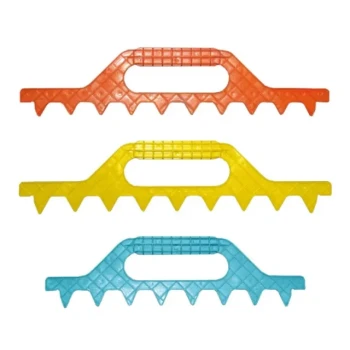
- Professional Grade Foldable Beehive Handles
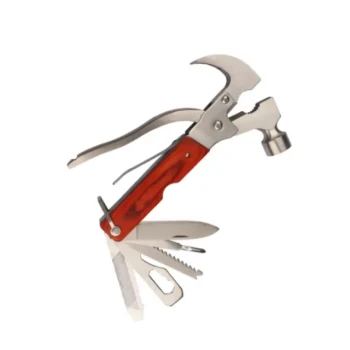
- HONESTBEE 15-in-1 Beekeeper Multi-Tool with Hammer and Pliers for Beekeeping
- Professional Rechargeable Beekeeping Headlamp Flashlight with Red Light Mode and Type-C Charging
- HONESTBEE Professional Long Handled Hive Tool with Precision Cutting Blade
- Heavy-Duty Ergonomic Grip Galvanized Pollen Shovel
People Also Ask
- How do bee hive handles facilitate the evaluation of food stores? Use the Lift Test for Winter Survival
- How do hive handling tools and propolis management affect bee colony behavior during routine apiary maintenance? Minimize Disturbance with Precise Techniques
- How do the geometry and dimensions of hive handles influence operational safety and control? Expert Design Insights
- What is a bee hive tool? Discover Why It’s the Most Essential Hand Tool for Every Beekeeper
- What are the common sizes and features of bee hive tools? Choose the Right Tools for Your Apiary