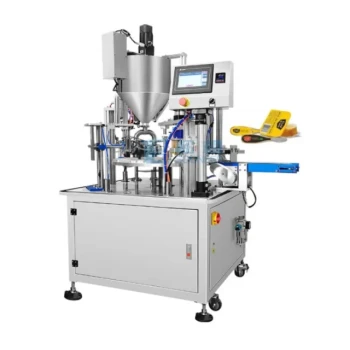
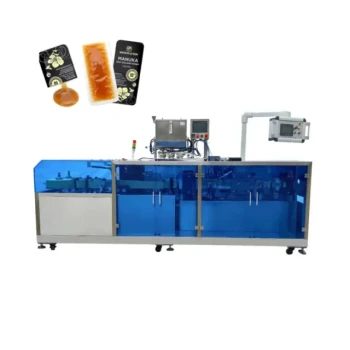
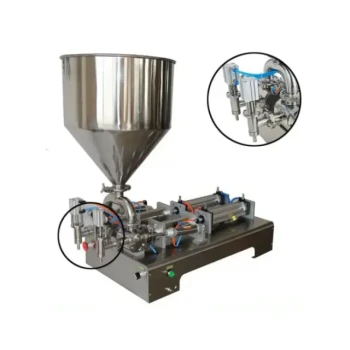
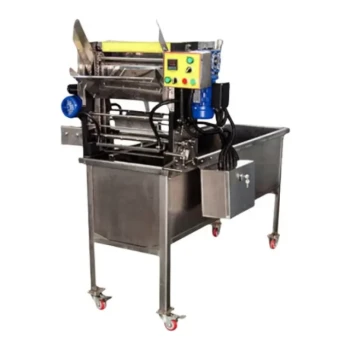
Automated honey filling machines contribute to quality stability primarily by creating a controlled, enclosed environment that isolates the honey from external contaminants while strictly regulating physical volume. By removing human handling and exposure to open air, these systems preserve the honey's delicate bio-chemical structure and ensure every unit meets identical standards.
Core Insight: The stability of honey is defined by its enzymatic activity and moisture content. Automated machines protect these factors by functioning as "closed loops," preventing the oxidation of enzymes and the absorption of atmospheric moisture that typically occurs during manual packaging.
Preserving Bio-Chemical Integrity
Protecting Enzymatic Activity
Honey is a biologically active product containing sensitive enzymes like amylase and catalase.
The primary contribution of automated filling is the isolation of the product within an enclosed system. This design prevents unnecessary air contact, which preserves these enzymes from degradation caused by oxidation.
Retaining Volatile Aromatics
The distinct flavor of specific honey varietals relies on volatile aromatic compounds.
Open-air manual filling allows these delicate compounds to evaporate, leading to a flatter taste profile. Automated, closed-system filling locks these aromatics inside the container, ensuring the flavor profile remains stable from the tank to the consumer.
Eliminating Environmental Contamination
preventing Microbial Introduction
Manual handling is the leading cause of secondary contamination in food packaging.
Automated machines operate in a sterile environment, utilizing enclosed pathways that physically separate the honey from operators. This significantly reduces the risk of introducing yeast or bacteria that could lead to fermentation or spoilage.
Controlling Moisture Absorption
Honey is naturally hygroscopic, meaning it rapidly absorbs moisture from the surrounding air.
Excess moisture can destabilize honey and lead to fermentation. By minimizing the time the product is exposed to the atmosphere, automated fillers prevent moisture uptake, maintaining the precise water content required for long-term stability.
Physical Standardization and Consistency
High-Precision Volumetric Control
Stability is also a matter of physical consistency across a production batch.
Automated systems use high-precision pumps (volumetric or mass-based) to dispense exact amounts regardless of the honey's viscosity. This ensures that every jar contains the exact same mass, preventing the variations inherent in manual pouring.
Handling High Viscosity
Honey's thickness changes with temperature, making it difficult to package consistently.
Professional filling machines are engineered to manage high-viscosity fluids without compromising speed or accuracy. They maintain the stability of the product components during the transfer, avoiding the physical separation or aeration that can occur with improper handling.
Understanding the Trade-offs
The Risk of Thermal Damage
While machines handle viscosity well, they often rely on heated hoppers or lines to facilitate flow.
Honey is extremely heat-sensitive. If the machine's temperature controls are not calibrated correctly, the heat meant to aid filling can denature the very enzymes (amylase) the machine is meant to protect.
Cleaning and Cross-Contamination
An enclosed system is excellent for hygiene, provided it is cleaned perfectly.
Unlike simple manual tools, automated machines have complex internal pathways. If not subjected to rigorous Clean-In-Place (CIP) protocols, these hidden areas can become reservoirs for old product, leading to cross-contamination between batches.
Making the Right Choice for Your Goal
To select the right approach for your production line, consider your primary objective:
- If your primary focus is Flavor and Enzyme Preservation: Prioritize machines with fully enclosed, vacuum-assisted filling systems to eliminate air contact and prevent aromatic volatilization.
- If your primary focus is Commercial Standardization: Select equipment with mass-flow metering systems to ensure identical weight and compliance with strict retail labeling standards.
Summary: Automated filling is not just about speed; it is a quality control strategy that safeguards the biological life of the honey by mechanically excluding the destructive forces of air, moisture, and microbes.
Summary Table:
| Feature | Quality Benefit | Mechanism |
|---|---|---|
| Enclosed System | Enzyme & Aroma Protection | Prevents oxidation and evaporation of volatile aromatics. |
| Hygroscopic Control | Moisture Stability | Minimizes air exposure to prevent water absorption and fermentation. |
| Sterile Pathways | Microbial Safety | Eliminates human contact to prevent secondary contamination from yeast or bacteria. |
| Precision Pumps | Physical Consistency | Delivers exact volumetric or mass-based doses regardless of viscosity. |
| Temperature Control | Viscosity Management | Maintains flowability while protecting heat-sensitive compounds. |
Scale Your Apiary Operations with HONESTBEE
At HONESTBEE, we specialize in empowering commercial apiaries and distributors with the high-precision equipment needed to maintain honey integrity at scale. From automated honey-filling machines that lock in biological freshness to specialized hive-making hardware and cultural merchandise, we provide a comprehensive wholesale portfolio tailored to the beekeeping industry.
Ready to upgrade your production line? Contact our specialists today to discover how our specialized machinery and consumables can optimize your workflow and safeguard your brand's quality standards.
References
- Roberto Bava, Ernesto Palma. Hive Products: Composition, Pharmacological Properties, and Therapeutic Applications. DOI: 10.3390/ph17050646
This article is also based on technical information from HonestBee Knowledge Base .
Related Products
- Fully Automatic Honey Filling Packaging Machine for Processing Line
- Automatic Honey Filling and Filtering Machine for Beekeeping Bottle Filling
- Precision Durable Efficient HONESTBEE Rotary Honey Filling Machine
- Precision Automated Packaging Turntable Honey Spoon Filling Sealing Packing Machine
- Semi Automatic Small Honey Bottle Filling Machine Honey Filler
People Also Ask
- Why are fully automatic honey filling and packaging lines essential? Boost Your Honey's Market Value and Quality
- What is a fully-automatic honey filler? Streamline Your Production with High-Precision Automation
- How do automated honey filling and packaging machines affect profitability? Boost Margins with HONESTBEE Technology
- How do automated honey filling and packaging machines contribute to the market value of honey products? Maximize Your ROI
- How do industrial-grade automated honey filling and packaging machines mitigate the risk of physical contamination?