Automated honey harvesting systems offer a decisive advantage in space efficiency by completely eliminating the need for secondary processing infrastructure. While traditional centrifugal setups require dedicated extraction rooms, heavy handling machinery, and approximately 3 square feet of processing space per colony, automated systems allow honey to flow directly from the hive into collection vessels, effectively removing the operational footprint from the equation.
Core Takeaway Automated technology transforms beekeeping from an industrial process requiring significant square footage and cleaning facilities into a compact activity. By removing the need for external extractors, it makes apiary management viable in highly constrained environments where traditional equipment simply would not fit.
The Mechanics of Space Reduction
Eliminating the "Extraction Room"
Traditional beekeeping is a two-stage process: hive management and honey extraction. The latter requires a dedicated, sanitary space separate from the apiary.
Automated systems consolidate these stages. The extraction occurs internally within the hive frames, removing the requirement for a separate room to house processing machinery.
Reduction of Heavy Equipment
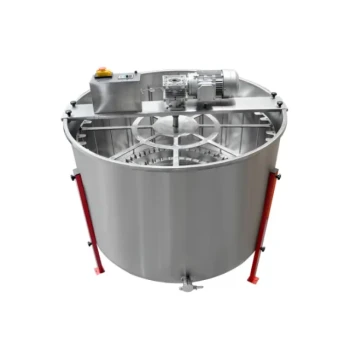
A standard centrifugal setup involves significant hardware. You must accommodate the extractor itself, uncapping tanks, and heavy handling equipment to move supers (hive boxes) back and forth.
Automated systems replace this industrial inventory with simple tapping tubes and jars. There is no heavy machinery to store when the season ends, freeing up valuable storage space in urban apartments or sheds.
The Sanitation Footprint
Traditional extractors require large-scale industrial cleaning equipment to maintain hygiene. This necessitates access to large sinks and water sources near the extraction site.
Automated systems significantly lower the cleaning burden. Because the honey does not pass through large external machinery, the need for bulky washing stations is virtually eliminated.
Operational Viability in Urban Settings
The "Three Square Feet" Metric
According to industry standards for traditional extraction, you must allocate at least 3 square feet of processing space per colony. In a dense urban setting with a small rooftop or balcony, this requirement often makes traditional beekeeping impossible.
Automated systems negate this metric. The "processing space" is the hive itself, meaning if you have space for the colony, you have space for the harvest.
Accessibility on Rooftops and Balconies
Transporting heavy, honey-laden frames from a rooftop to a kitchen or garage for spinning is logically difficult and physically demanding.
By utilizing direct-flow technology, the harvest happens at the point of production. This makes high-rise or balcony beekeeping feasible, as there is no need to move heavy components through elevators or stairwells.
Understanding the Trade-offs
Process Efficiency vs. Space Efficiency
While automated systems win on space, traditional centrifugal extractors are favored in professional settings for speed and scale. As noted in supplementary technical data, centrifugal force rapidly clears combs, allowing for immediate reuse and high-cycle efficiency.
Equipment Complexity
Traditional extractors are mechanical and repairable. Automated systems rely on specialized proprietary frames. While you save space, you increase your reliance on specific manufacturing standards to ensure the internal mechanism functions correctly.
Making the Right Choice for Your Goal
- If your primary focus is maximizing limited urban space: Choose an automated harvesting system. It allows you to keep bees on balconies or rooftops without requiring a garage, shed, or kitchen for processing.
- If your primary focus is high-volume commercial production: Choose traditional centrifugal equipment. The requirement for extra space is justified by the speed of extraction and the ability to process thousands of pounds of honey efficiently.
Ultimately, for the urban hobbyist where every square foot counts, automated systems provide the only practical path to harvesting honey without displacing your living space.
Summary Table:
| Feature | Automated Harvesting Systems | Traditional Centrifugal Equipment |
|---|---|---|
| Space Requirement | Minimal (integrated into the hive) | High (requires dedicated extraction room) |
| Equipment Needed | Tapping tubes and jars | Extractor, uncapping tanks, and supers |
| Handling Effort | Low (direct flow from hive) | High (moving heavy frames to processing) |
| Sanitation Needs | Minimal cleaning required | Industrial-scale washing stations needed |
| Best Suited For | Urban hobbyists & balcony apiaries | Commercial apiaries & high-volume production |
Scaling Your Beekeeping Business? Partner with HONESTBEE
Whether you are an urban distributor looking for space-saving solutions or a commercial apiary needing high-capacity machinery, HONESTBEE is your premier wholesale partner. We provide a comprehensive range of industry-leading tools, from advanced honey-filling and hive-making machines to essential consumables and cultural merchandise.
Unlock wholesale pricing and expert support today:
- For Distributors: Access a diverse portfolio of premium beekeeping hardware and equipment.
- For Commercial Operations: Streamline your production with our heavy-duty industrial machinery.
Contact HONESTBEE Today to discover how our wholesale offerings can optimize your apiary’s efficiency and growth.
References
- Troy Donovan. Harvesting Urban Honey with Modern Technology. DOI: 10.31542/j.ecj.1268
This article is also based on technical information from HonestBee Knowledge Base .
Related Products
- Fully Automatic Honey Filling Packaging Machine for Processing Line
- Automatic Honey Filling and Filtering Machine for Beekeeping Bottle Filling
- 32 Frame Commercial Electric Honey Extractor for Beekeeping and Honey Production
- HONESTBEE 72 Frame Industrial Electric Honey Extractor for Beekeeping
- Automatic Single-Dose Snap & Squeeze Honey Sachets Packing Machine
People Also Ask
- Why are fully automatic honey filling and packaging lines essential? Boost Your Honey's Market Value and Quality
- What is a fully-automatic honey filler? Streamline Your Production with High-Precision Automation
- How do automated honey filling and packaging machines affect profitability? Boost Margins with HONESTBEE Technology
- How do automated honey filling and packaging machines contribute to the market value of honey products? Maximize Your ROI
- How do industrial-grade automated honey filling and packaging machines mitigate the risk of physical contamination?