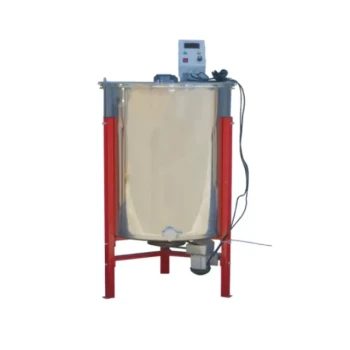
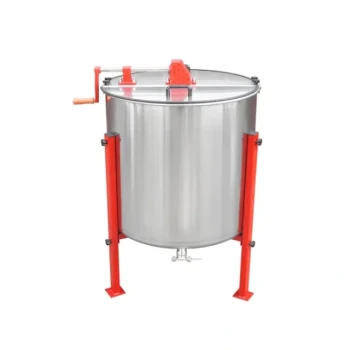
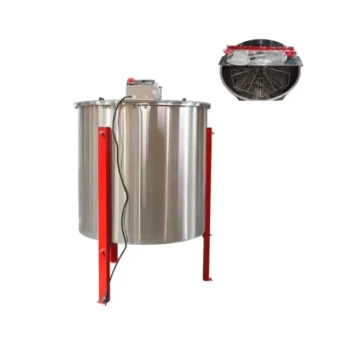
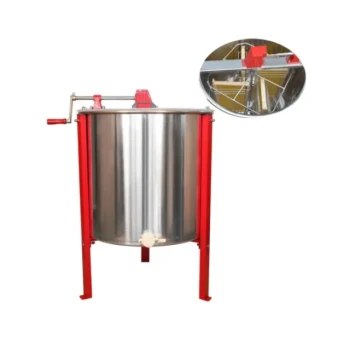
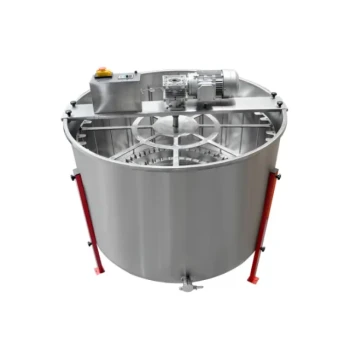
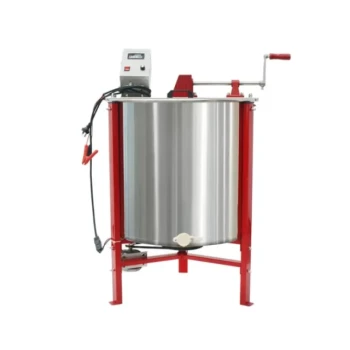
Centrifugal honey extractors optimize reuse by employing physical centrifugal force to separate liquid honey from the frame without damaging the delicate beeswax structure. Unlike traditional crushing or squeezing methods, this mechanical process maintains the structural integrity of the comb, allowing the biological asset to be immediately returned to the hive for the next production cycle.
The core efficiency lies in energy conservation: by preserving the honeycomb, the colony avoids the metabolic cost of secreting new wax. This allows bees to redirect their energy entirely toward nectar collection, significantly shortening production cycles and increasing overall yield.
The Mechanics of Preservation
Non-Destructive Separation
The primary function of a centrifugal extractor is to apply rotational force to the frames. This force pulls the mature honey out of the cells while leaving the wax infrastructure intact. This ensures the comb is not physically destroyed during the harvest, a critical differentiation from manual squeezing methods.
Eliminating Reconstruction Downtime
Because the structural integrity of the comb is preserved, the frames require no repair or rebuilding by the bees. Beekeepers can return the empty combs to the hive immediately. This eliminates the lag time typically associated with bees reconstructing their storage space before they can begin filling it again.
Biological and Economic Advantages
Conserving Metabolic Energy
Beeswax is a "biological consumable" that requires significant energy to produce. When bees must rebuild combs, they consume vast amounts of honey and nectar to fuel wax secretion. By reusing existing combs, the extractor effectively saves the energy equivalent of that wax production.
Redirecting Colony Focus
When the burden of construction is removed, the colony can shift its labor force. The energy and time that would have been spent on hive building are redirected toward nectar collection and honey maturation. This results in significantly higher yields and potentially improved honey purity.
Reducing Turnover Costs
For the apiary manager, the beeswax comb is an asset with a replacement cost. Preserving combs lowers the turnover costs associated with consumable materials. It allows for a more sustainable production model where the infrastructure is recycled rather than consumed and replaced.
Understanding the Trade-offs
Equipment Dependency
While centrifugal extractors optimize biological efficiency, they introduce a reliance on mechanical infrastructure. Apiaries must invest in industrial-grade equipment and maintain it to ensure consistent operation, moving away from low-cost, low-efficiency manual tools.
Operational Precision
The "optimization" is dependent on correct operation. If the rotational speed is too high or the equipment is unbalanced, the centrifugal force can damage the very combs you intend to save. Operators must balance speed with the structural limits of the wax to ensure the frames remain reusable.
Maximizing Apiary Efficiency
To fully leverage centrifugal extraction for your specific goals, consider the following:
- If your primary focus is Maximum Yield: Prioritize the immediate return of wet, empty combs to the hive to stimulate rapid refilling by the colony.
- If your primary focus is Cost Reduction: Focus on the longevity of your frames, ensuring the extraction speed is regulated to extend the lifespan of your beeswax assets.
By mechanically safeguarding the beeswax comb, you transform honey extraction from a destructive harvest into a continuous, energy-efficient cycle.
Summary Table:
| Optimization Factor | Impact on Apiary Efficiency | Benefit to the Colony |
|---|---|---|
| Structural Integrity | Preserves wax comb for immediate reuse | No energy spent on rebuilding cells |
| Energy Conservation | Reduces metabolic honey consumption | Bees focus entirely on nectar foraging |
| Production Cycle | Eliminates reconstruction downtime | Faster turnaround between harvests |
| Asset Management | Lowers replacement costs of consumables | Sustainable use of biological infrastructure |
Maximize Your Honey Production Efficiency with HONESTBEE
At HONESTBEE, we understand that for commercial apiaries and distributors, every drop of honey and every gram of wax matters. Our professional-grade centrifugal honey extractors are engineered to protect your biological assets, ensuring your colonies spend their energy on production rather than reconstruction.
From advanced honey-filling machines and specialized hive-making equipment to a comprehensive range of beekeeping tools and industry consumables, we provide the hardware and support you need to scale your operations.
Ready to upgrade your apiary's output? Contact HONESTBEE today to explore our wholesale solutions and discover how our expertise can drive your business growth.
References
- Michaela Fenske. The Urban Beekeeper. DOI: 10.1002/germ.201970206
This article is also based on technical information from HonestBee Knowledge Base .
Related Products
- electric honey extractor honey centrifuge 3 frame honey extractor stainless steel honey frame extractor
- Manual Hand Crank 4 Frame Honey Extractor Centrifuge for Beekeeping
- Professional 4 Frame Self Reversing Electric Honey Extractor for Beekeeping
- 24 Frame Honey Extractor Commercial Radial Honey Frame Extraction Machine
- Electric 4 Frame Tangential Honey Extractor
People Also Ask
- What are the characteristics of electric honey extractors? Boost Your Apiary Efficiency with Automated Technology
- What are the disadvantages of using an electric honey extractor? Weighing Cost, Power, and Comb Safety
- What are the advantages of an electric honey extractor? Boost Efficiency and Scale Your Honey Production
- What are the technical advantages of electric honey extractors? Maximize Yield and Protect Your Bee Colony
- How does an electric honey extractor affect the quality of honey? Preserve Flavor & Purity with Precision Extraction