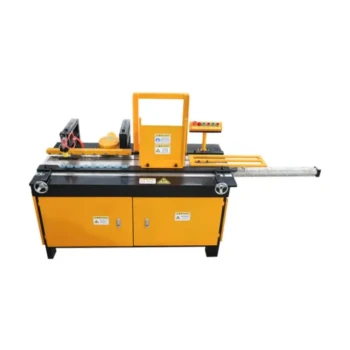
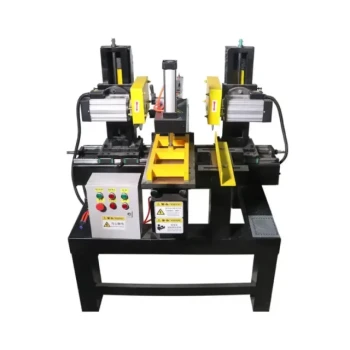
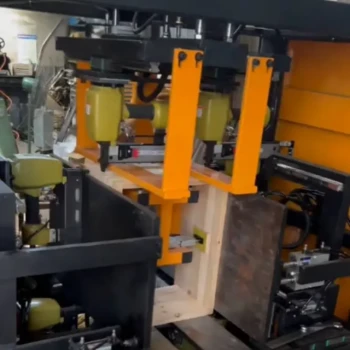
Industrial-grade hive-making machines revolutionize stingless bee farming by enabling the mass production of standardized, species-specific hive structures. Instead of relying on inconsistent manual craftsmanship, these machines ensure every hive possesses the exact internal geometry required for optimal colony health. This mechanization significantly reduces labor costs and facilitates the critical transition from fragmented, traditional methods to modernized, industrial-scale beekeeping clusters.
True efficiency in commercial stingless beekeeping is not just about manufacturing speed; it is about biological precision at scale. Industrial machinery ensures that every hive mimics the natural micro-environment needed for thriving colonies, optimizing reproduction rates and simplifying harvest workflows for large-scale apiary management.
The Impact of Standardization on Scalability
Uniformity Drives Operational Efficiency
In a manual setup, slight variations in hive size or shape can create bottlenecks during inspection and harvesting. Industrial machines guarantee structural uniformity and consistent volume across thousands of units. This consistency allows commercial operations to standardize their maintenance protocols, making the management of large-scale apiaries predictable and efficient.
Transitioning to Industrial Clusters
Moving from small-scale setups to commercial farming requires a shift in infrastructure. Industrial machines support the creation of modernized beekeeping clusters by providing the sheer volume of equipment needed rapidly. This scalability is essential for transforming scattered, traditional operations into cohesive, high-output commercial enterprises.
Reducing Reliance on Manual Labor
Traditional hive construction is labor-intensive and slow. By automating the manufacturing process, operations can significantly lower labor costs. This allows capital and human resources to be redirected toward colony health management and product expansion rather than carpentry.
Engineering for Biological Performance
Mimicking Natural Habitats
Efficiency in beekeeping is futile if the bees do not thrive. Specialized machinery allows for the creation of internal structures that mimic natural tree trunks and multi-layered nesting habits. These precise wooden partitions and functional designs provide the familiarity bees need to settle and produce quickly.
Accelerating Colony Reproduction
Commercial expansion relies on increasing the number of active colonies. The specialized internal designs produced by these machines facilitate rapid colony reproduction. Furthermore, the standardized modularity of these hives simplifies the complex process of colony splitting (dividing), which is the primary method for growing stock and restoring indigenous bee populations.
Enhancing Environmental Control
Stabilizing the Micro-Environment
Stingless bees are sensitive to temperature changes. Machine-optimized box structures are designed to maintain constant thermal performance, shielding the colony from extreme external fluctuations. This stability ensures that the bees expend less energy on climate control and more on breeding and honey production.
Integrated Pest Defense systems
Efficiency is often lost to colony collapse caused by predators. Industrial designs frequently incorporate built-in physical barriers, such as bottom water-control features. These engineered defenses automatically prevent invasions by ants and lizards, reducing the need for manual pest monitoring and intervention.
Understanding the Trade-offs
The Cost of Specialization
While efficiency increases, industrial machines are often tailored to the specific biological characteristics of certain stingless bee species. This means a lack of flexibility; machinery calibrated for one species' nesting habit may not be immediately adaptable to another without significant retooling.
Upfront Capital Investment
Transitioning to industrial-grade machinery represents a significant capital expenditure compared to traditional manual tools. The return on investment relies heavily on the operation's ability to scale quickly enough to utilize the mass-produced hives effectively.
Making the Right Choice for Your Goal
To leverage industrial hive-making technology effectively, align your equipment choice with your specific operational focus:
- If your primary focus is rapid colony expansion: Prioritize machinery that creates multi-layered internal structures designed to simplify and speed up the colony splitting process.
- If your primary focus is reducing operational overhead: Select machines that produce hives with integrated pest control features and standardized dimensions for automated harvesting.
Success in commercial stingless beekeeping comes from using industrial precision to replicate the wisdom of nature at scale.
Summary Table:
| Feature | Impact on Efficiency | Commercial Benefit |
|---|---|---|
| Structural Uniformity | Standardizes maintenance and harvest protocols | Lower operational bottlenecks |
| Automated Construction | Replaces slow, inconsistent manual carpentry | Significant reduction in labor costs |
| Biological Mimicry | Creates optimal internal micro-environments | Faster colony growth and higher yields |
| Integrated Pest Defense | Built-in barriers against ants and lizards | Reduced manual monitoring and colony loss |
| Modular Design | Simplifies the colony splitting process | Rapid expansion of bee stock |
Scale Your Commercial Apiary with HONESTBEE Precision
Transitioning from traditional methods to industrial-scale production requires more than just tools—it requires high-performance engineering. HONESTBEE specializes in empowering commercial apiaries and distributors with the specialized machinery and equipment needed to dominate the market.
Our value to your business:
- Industrial Hive-Making Machines: Produce standardized, species-specific hives at scale to reduce labor and maximize colony health.
- Full-Spectrum Equipment: From honey-filling machines to specialized hardware, we provide the complete infrastructure for modern beekeeping.
- Wholesale Support: We supply essential industry consumables and cultural merchandise tailored for high-volume distributors.
Ready to modernize your production and achieve biological precision at scale? Contact HONESTBEE today to discuss our comprehensive wholesale offerings and how we can accelerate your commercial growth.
References
- Hearty Salatnaya, A. M. Fuah. Potential growth of meliponiculture in West Halmahera, Indonesia. DOI: 10.1088/1755-1315/399/1/012046
This article is also based on technical information from HonestBee Knowledge Base .
Related Products
- High-Efficiency Pneumatic Bee Hive Making Machine for Rapid Box Assembly
- Beehive Handle and Frame Rest Cutting Machine: Your Specialized Hive Machine
- Beehive Machine Double End Saw for Precision Hive Component Manufacturing
- Mini Desktop Bee Hive Frame Forming Making Machine
- Automatic High-Speed Bee Hive Box Stapling Machine
People Also Ask
- How does the introduction of professional beehive-making machinery benefit sustainable beekeeping? Scale Your Apiary
- Why is specialized beehive-making machinery critical for low-defense breeding? Enhance Selection with Precision Tools
- How does the introduction of specialized beehive making machinery contribute to increasing the scale of regional beekeeping industries?
- What is the importance of specialized beehive making machinery in a circular bio-economy? Build Local Sustainability
- Why is specialized beehive-making machinery essential? Scale Your Apiary with Precision Industrial Standards