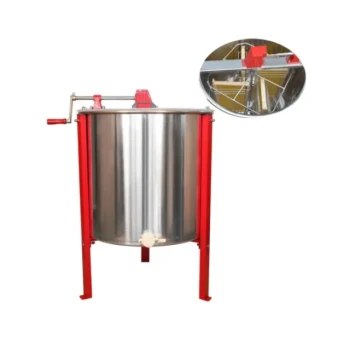
Industrial-grade honey extractors and automated bottling lines fundamentally shift apiary management from manual labor to standardized mass production. By utilizing high-speed centrifugation and temperature-controlled filtration, professional operations can process harvest volumes that would be impossible manually, all while freeing up critical labor resources for precise pest screening and nutritional management.
The core advantage of industrial automation is the ability to apply "hobbyist-level" care to thousands of colonies simultaneously. By standardizing extraction and bottling, professional apiaries can maintain low overwintering loss rates comparable to smaller operations while drastically increasing profitability per labor hour.
Scaling Operations Through Standardization
The Power of High-Speed Centrifugation
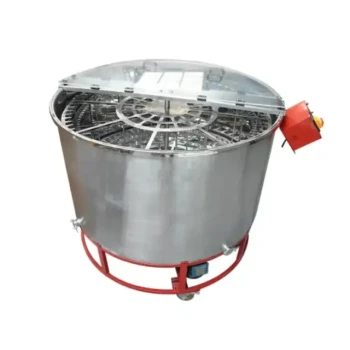
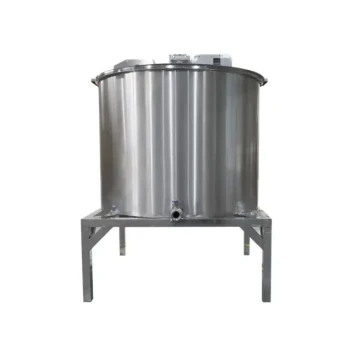
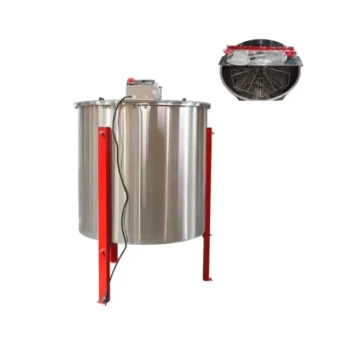
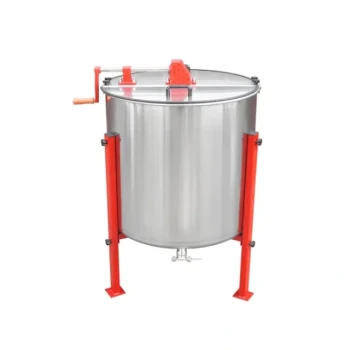
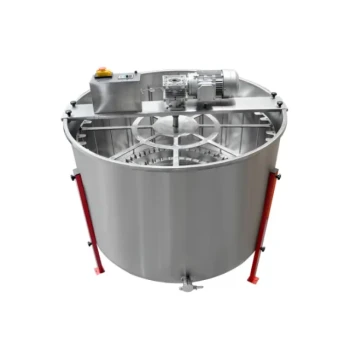
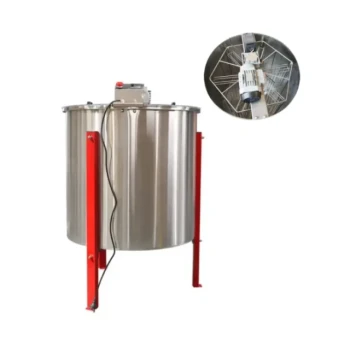
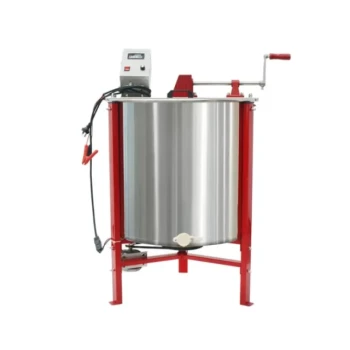
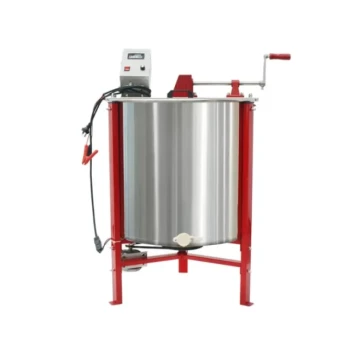
In professional apiaries, time is the scarcest resource. Automated honey extraction equipment utilizes high-speed centrifugation to rapidly separate honey from wax combs.
This industrial process is significantly faster than manual extraction. It allows operators to process massive harvests quickly, ensuring that honey is removed before it can crystallize or degrade in the frame.
Preserving Comb Integrity
A critical efficiency factor in large-scale operations is the reuse of resources. High-efficiency extractors are designed to maximize yield while protecting the structural integrity of the honeycombs.
By preventing damage to the wax foundation, beekeepers can return the empty combs to the hives immediately. This allows the bees to focus on refilling the combs with nectar rather than expending energy rebuilding wax, directly boosting future productivity.
Streamlining the Bottling Process
Automated bottling production lines integrate temperature-controlled filtration to remove impurities without overheating the product.
This ensures the preservation of natural flavor profiles while standardizing the final product for sale. Automation at this stage eliminates the bottleneck of manual packaging, a common efficiency killer in growing operations.
Improving Colony Management and Health
Reallocating Labor to Health Monitoring
The time saved by automating extraction and bottling is reinvested into high-precision monitoring. Large-scale operations use this efficiency dividend to focus on standardized pest screening and disease prevention.
This shift in focus is essential for survival. It allows professional apiaries to implement precise nutritional supplementation strategies across thousands of colonies.
Matching Hobbyist Survival Rates
Historically, scaling up often meant a drop in individual colony care. However, modern industrial-grade machinery has reversed this trend.
By integrating these efficient management tools, large-scale operations can now keep overwintering loss rates at levels comparable to small, hobbyist-managed apiaries. The improved efficiency ensures that no colony is neglected due to a lack of time.
Safety and Operational Confidence
The Role of Industrial Safety Gear
Efficiency is impossible without safety. Industrial-grade bee smokers provide a steady, reliable output to calm bees, while professional protective clothing reduces the risk of stings.
This equipment significantly increases operator confidence. When fear of injury is removed, beekeepers perform more frequent and detailed inspections, leading to earlier detection of issues.
Reducing Mortality Through Better Inspections
With comprehensive safety protection, staff can engage in scientific harvesting practices rather than rushing through hives to avoid stings.
Detailed colony health monitoring becomes routine rather than exceptional. This proactive approach directly lowers bee mortality rates and enhances the overall productivity of the apiary.
Understanding the Trade-offs
Capital Investment vs. Labor Cost
The primary trade-off in adopting this technology is the high upfront capital cost. Industrial extractors and automated lines require significant financial planning compared to the low-cost tools used by hobbyists.
However, for professional operations, this cost is offset by the dramatic increase in output per labor hour. The machinery replaces the need for a massive seasonal workforce, stabilizing long-term operational costs.
Standardization vs. Individual Variation
Industrialization requires treating colonies as units within a system rather than unique entities.
While this ensures consistency, it relies heavily on the high-precision monitoring tools mentioned earlier to catch outliers. Without rigorous data monitoring, the standardized approach can miss specific issues in individual hives that a hobbyist might catch intuitively.
Making the Right Choice for Your Goal
- If your primary focus is Commercial Profitability: Prioritize automated extraction and bottling lines to maximize throughput and reduce the labor cost per jar of honey produced.
- If your primary focus is Colony Longevity: Leverage the time saved by automation to implement standardized pest screening and nutritional programs, ensuring your large-scale operation mimics the low loss rates of smaller apiaries.
True efficiency in professional beekeeping is not just about speed; it is about using automation to buy the time necessary for precise biological management.
Summary Table:
| Feature | Hobbyist Beekeeping | Professional Apiaries (Industrial) |
|---|---|---|
| Extraction Method | Manual / Small Crank | High-Speed Centrifugation |
| Processing Speed | Low (Labor Intensive) | High (Automated Throughput) |
| Comb Preservation | Variable Integrity | High-Efficiency Preservation |
| Packaging | Manual Bottling | Automated Filtration & Filling |
| Labor Focus | Physical Harvesting | Colony Health & Pest Screening |
| Profitability | Low Scale | High (Optimized Labor Hours) |
Elevate Your Commercial Honey Production with HONESTBEE
Maximize your apiary's potential and achieve industrial-level efficiency without sacrificing colony care. HONESTBEE specializes in empowering commercial apiaries and distributors with high-performance beekeeping solutions. From high-speed honey extractors and precision honey-filling machines to durable hive-making equipment, we provide the full spectrum of tools required for professional scaling.
Why partner with HONESTBEE?
- Comprehensive Wholesale Offering: A one-stop shop for all machinery and essential consumables.
- Operational Excellence: Reduce labor costs and increase honey yield with our automated production lines.
- Targeted Expertise: We cater specifically to the needs of large-scale beekeeping operations and global distributors.
Ready to transform your operation into a high-yield enterprise? Contact HONESTBEE today to discuss our tailored equipment packages and start scaling your success!
References
- Carlos Aurelio Medina-Flores, Marco Antonio López-Carlos. Pérdida de colonias de abejas melíferas y factores asociados en el centro-occidente de México en los inviernos del 2016 al 2019. DOI: 10.15741/revbio.08.e1095
This article is also based on technical information from HonestBee Knowledge Base .
Related Products
- HONESTBEE 72 Frame Industrial Electric Honey Extractor for Beekeeping
- 32 Frame Commercial Electric Honey Extractor for Beekeeping and Honey Production
- Commercial Electric 12 Frame Honey Extractor Spinner Motorized Honey Extractor
- HONESTBEE 3-Frame Manual Acrylic Honey Extractor
- Commercial 48-Frame Stainless Steel Honey Extractor
People Also Ask
- What is the importance of balancing honeycomb frames within a honey extractor? Ensure Stability and Protect Machinery
- How is honey separated from the frames after they are uncapped? Efficient Extraction Methods for High Yields
- What are the main benefits of using a honey extractor? Maximize Yields and Protect Your Honeycomb
- What are the recommended methods for removing honey from the honeycomb? Top Extraction Techniques for Maximum Efficiency
- How do manual honey extractors compare to electric honey extractors? Choosing the Right Tool for Your Apiary Growth