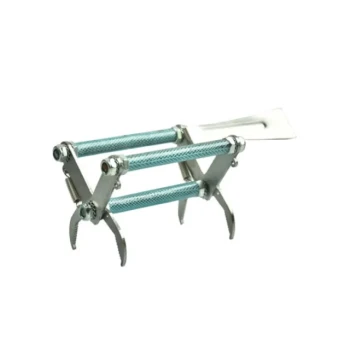
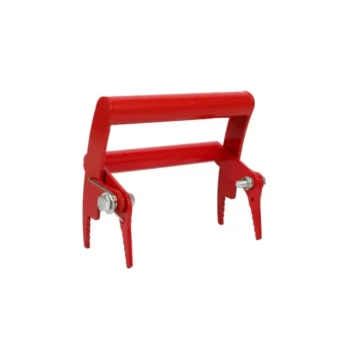
Lightweight and high-rigidity levers serve as the primary force transmission medium in modern beehive weighing, fundamentally changing how apiarists interact with their colonies. By combining these two properties, the tool allows for the slight lifting of heavy hives with minimal physical exertion, ensuring that the act of weighing does not become a bottleneck in daily operations. This efficiency is driven by the lever’s ability to maintain structural integrity under load while remaining portable enough for extensive field use.
In the context of large-scale apiary management, the efficiency of a weighing tool is defined by the balance between user endurance and data precision. High-rigidity levers prevent measurement errors caused by material bending, while lightweight construction transforms the tool from a cumbersome burden into a seamless part of the daily inspection routine.
The Role of Rigidity in Measurement Accuracy
Preventing Structural Deformation
When lifting a heavy beehive, the lever is subjected to significant stress. High rigidity is critical because it ensures the lever does not deform or bend under this load.
If a lever flexes during the lift, energy is absorbed by the material rather than being used to lift the hive. This deformation compromises the mechanical advantage and can lead to inconsistent operation.
Ensuring Linear Force Transmission
Accuracy in weighing relies on linear force transmission. The force applied by the user must translate directly and predictably to the load cell or measuring component.
A rigid lever guarantees that the relationship between the applied force and the lifted weight remains constant. This linearity is essential for obtaining precise weight data without the variance introduced by flexible materials.
Impact on Operational Workflow
Reducing Operator Fatigue
The physical demand of inspecting hundreds of hives can be substantial. Lightweight materials reduce the overall mass of the tool, minimizing the physical toll on the apiarist.
This reduction in weight allows the operator to perform repetitive lifting motions with significantly less fatigue.
Scalability for Commercial Apiaries
For large-scale commercial operations, equipment must be portable. A lightweight lever enhances portability, making it feasible to carry the tool across vast distances or between multiple apiary sites.
This portability ensures the weighing tool can be fully integrated into daily inspection routines rather than being left behind due to inconvenience.
Understanding the Design Trade-offs
Material Selection Challenges
Achieving high rigidity without adding significant weight often requires advanced materials. Standard materials that are rigid, such as steel, are often too heavy for portable field use.
Conversely, very light materials like standard aluminum or plastic may lack the necessary stiffness to prevent deformation under heavy loads.
Cost Implications
To satisfy both requirements—extreme lightness and high stiffness—manufacturers often turn to high-grade alloys or composites. These materials generally increase the cost of the tool compared to simpler, heavier alternatives.
Making the Right Choice for Your Goal
When selecting a weighing tool for your apiary, consider how the balance of weight and rigidity aligns with your specific operational needs.
- If your primary focus is Data Precision: Prioritize maximum rigidity to ensure linear force transmission and eliminate errors caused by lever deformation.
- If your primary focus is Speed and Scale: Prioritize lightweight construction to maximize portability and reduce fatigue during inspections of large commercial yards.
By prioritizing a lever that maintains stiffness without sacrificing portability, you ensure that your data collection is both accurate and sustainable over the long term.
Summary Table:
| Feature | Impact on Weighing Efficiency | Key Benefit |
|---|---|---|
| High Rigidity | Prevents material deformation and energy loss | Ensures linear force transmission and data precision |
| Lightweight Build | Reduces physical mass and exertion | Minimizes operator fatigue and enables easy portability |
| Linear Force | Translates applied force directly to load cells | Eliminates measurement variance for consistent data |
| Advanced Alloys | Balances strength-to-weight ratio | Provides industrial-grade durability for field use |
Scaling Your Commercial Apiary?
At HONESTBEE, we understand that efficiency is the backbone of a profitable beekeeping operation. Our comprehensive wholesale catalog is designed specifically for commercial apiaries and distributors, offering more than just tools—we provide solutions. From specialized beekeeping machinery and hive-making equipment to essential consumables and honey-themed cultural merchandise, we supply everything your business needs to thrive.
Looking for high-performance weighing components or a full spectrum of professional beekeeping hardware? Contact us today to learn how our premium equipment can streamline your operations and enhance your market value.
References
- John B. McMullan. Weighing beehives: a simple lever method. DOI: 10.1080/0005772x.2000.11099463
This article is also based on technical information from HonestBee Knowledge Base .
Related Products
- Premium Comfort Grip Spring-Loaded Hive Handles
- Professional Grade Foldable Beehive Handles
- Heavy-Duty Lever-Action Frame Grip with Hive Tool
- Professional Multi-Function Stainless Steel Hive Tool
- Ergonomic Two Person Foldable Hive Lifter
People Also Ask
- How do the geometry and dimensions of hive handles influence operational safety and control? Expert Design Insights
- How do bee hive handles facilitate the evaluation of food stores? Use the Lift Test for Winter Survival
- What are the different types of hive tools available? Choose the Right Tool for Your Apiary
- How do hive tools and queen rearing equipment facilitate the bee colony splitting process? Restore Your Apiary Faster
- Why are professional hive tools & observation equipment necessary for queen rearing evaluation? Master Your Quality