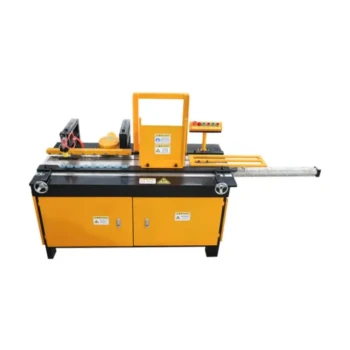
Professional beekeeping tools and machinery facilitate the transition to commercial operations by reducing the variability of manual work and maximizing the efficiency of natural resource utilization. This hardware allows beekeepers to standardize production, precisely track plant life cycles to optimize harvest timing, and significantly scale operations without a proportional increase in labor intensity.
The shift from traditional to commercial beekeeping relies on replacing manual inconsistency with industrial precision. Modern equipment does not just increase volume; it establishes a controlled environment that balances high-yield production with the preservation of forest resources and honey quality.
Establishing a Foundation of Precision
The Critical Role of Standardization
In traditional beekeeping, equipment is often handmade and variable. Industrial hive-making machinery transforms this by ensuring high-precision cutting and standardized assembly.
This mechanization guarantees the uniformity of beehive structures. It ensures the maintenance of critical "bee space," which is vital for colony health and ease of management.
Enhancing Interchangeability and Maintenance
Standardization allows for the seamless interchangeability of frames and boxes across the entire operation. This eliminates the logistical nightmare of mismatched components common in manual setups.
By reducing maintenance difficulties and equipment replacement costs, standardized hardware provides the stability required for large-scale apiary management.
Optimizing Ecological and Economic Resources
Reducing Operational Uncertainty
Manual operations are inherently inconsistent. Professional machinery reduces this uncertainty, allowing producers to rely on predictable outcomes rather than guesswork.
Advanced apiary management tools enable beekeepers to track the phenological periods (seasonal cycles) of melliferous plants. This data ensures that colony activity aligns perfectly with local blooming cycles.
Improving Extraction Efficiency
Modern honey extraction equipment, such as centrifugal extractors, allows for high-volume processing without destroying the honeycomb. By using centrifugal force, honey is removed efficiently while preserving the comb structure for reuse.
This transition shifts the focus from simple ecological observation to an industry with significant economic scale. It also ensures high hygiene standards are maintained throughout the harvest.
Protecting Natural Resources
By precisely tracking plant resources and automating extraction, commercial operations minimize damage to forest resources. This approach improves the economic well-being of producers while maintaining ecological sustainability.
Managing Labor and Safety at Scale
Counteracting Rising Labor Costs
As operations expand, labor becomes a primary bottleneck. Specialized tools and machinery significantly reduce labor intensity, allowing a smaller team to manage a larger number of colonies.
This efficiency is essential for achieving "increasing returns to scale," where the output grows faster than the input costs.
Ensuring Operator Safety
To run a business efficiently, safety is non-negotiable. Specialized protective clothing and tools like bee smokers ensure the safety of beekeepers during inspections and transfers.
This gear allows for rapid, confident hive assessments, which serves as the physical foundation for moving from dispersed management to centralized industrial production.
Understanding the Trade-offs
The Cost of Capitalization
Transitioning to a commercial operation requires significant upfront investment in machinery, such as wax processors and industrial extractors. While this creates long-term efficiency, it raises the initial barrier to entry compared to traditional methods.
Supply Chain Dependencies
Adopting specialized machinery forces the apiary to align with commercial supply chains for parts and maintenance. The operation becomes dependent on the availability of standardized components, reducing the self-sufficiency often found in smaller, traditional setups.
Making the Right Choice for Your Goal
To successfully professionalize your apiary, align your equipment choices with your specific operational targets:
- If your primary focus is rapid expansion: Prioritize industrial hive-making machinery to automate the production of standardized hive components, enabling you to quickly increase colony capacity.
- If your primary focus is product quality and volume: Invest in centrifugal honey extraction machinery to maximize hygiene and yield while preserving your honeycombs for future seasons.
- If your primary focus is resource management: Utilize apiary management tools to track plant phenology, ensuring your harvest cycles align perfectly with local flowering events to minimize ecological stress.
True commercialization is achieved not just by acquiring tools, but by using them to create a predictable, standardized, and scalable system.
Summary Table:
| Transition Factor | Traditional Beekeeping | Commercial Operations (HONESTBEE) |
|---|---|---|
| Equipment | Handmade, variable sizes | Standardized, high-precision machinery |
| Labor Intensity | High manual labor per hive | Low labor intensity via automation |
| Production Goal | Ecological observation | Economic scale and consistent yield |
| Resource Use | Inconsistent harvest timing | Data-driven tracking of plant cycles |
| Comb Management | Often destroyed during harvest | Preserved via centrifugal extraction |
Elevate Your Apiary to Commercial Excellence with HONESTBEE
Transitioning from traditional beekeeping to a specialized commercial operation requires more than just passion—it requires industrial-grade precision. HONESTBEE empowers commercial apiaries and distributors with a comprehensive wholesale suite of beekeeping tools and machinery.
From high-precision hive-making machines that ensure perfect bee space to industrial honey-filling lines and specialized consumables, we provide the hardware necessary to reduce labor costs and maximize your return on investment. Whether you are scaling a local operation or supplying a regional market, our portfolio of beekeeping equipment and honey-themed cultural merchandise is designed to drive your success.
Ready to professionalize your production? Contact us today to explore our wholesale solutions and see how we can streamline your path to large-scale honey production.
References
- S.I. Andriamanalina, Romaine Ramananarivo. Phytogenetic resources with beekeeping potential: beekeepers’ dynamics. DOI: 10.17660/actahortic.2020.1267.17
This article is also based on technical information from HonestBee Knowledge Base .
Related Products
- Professional Bee Smoker with Elongated Spout and Durable Bellows for Beekeeping
- HONESTBEE Professional Mini J-Hook Hive Tool for Beekeeping
- Professional Bee Frame Machine for Side Bar Shaping
- Stainless Steel J Hook Hive Tool for Beekeeping
- Professional 600D Oxford Cloth Beekeeping Tool Bag with 8 Pockets and Elastic Loops
People Also Ask
- What roles do bee smokers and precision tools play in honey harvesting? Master Safety and Quality Control
- Why is the use of professional bee smokers and specialized fuel essential? Protect Honey Purity & Colony Safety
- Why is a professional bee smoker considered an essential tool for hive management and safety? Master Colony Control.
- Why is a professional bee smoker essential for hive maintenance? Master Colony Control & Safety
- Why is a professional Smoker essential during routine apiary inspections? Enhance Safety and Operational Efficiency