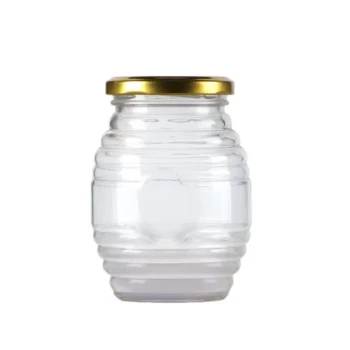
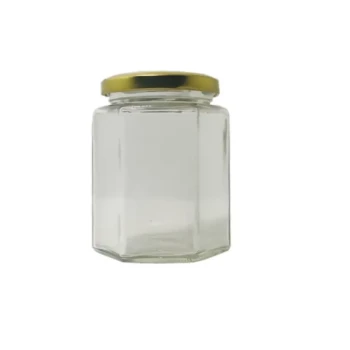
Standardized honey jar lids, specifically the TO 83 specification, act as precise volumetric gauges that allow for rapid, consistent field measurements without the need for scales. By filling a lid of this specification level to the brim, researchers collect a fixed volume that corresponds to approximately 20 grams of pollen, which represents roughly 2,300 individual pollen loads.
Using the TO 83 lid as a fixed unit of measure ensures that every sample collected meets the minimum threshold required for valid data analysis. This simple method guarantees statistical significance in diversity studies by eliminating variable sample sizes.
The Mechanics of Volumetric Standardization
Converting Volume to Data
The TO 83 lid serves as a calibrated vessel. Rather than weighing samples in the field—which can be difficult due to wind or lack of equipment—collectors simply fill the lid's volume.
This physical volume acts as a reliable proxy for mass and quantity. It consistently yields a sample size of approximately 20 grams.
Estimating Pollen Loads
Beyond weight, this standardized volume provides a crucial count estimation. The 20-gram sample contained within a TO 83 lid translates to roughly 2,300 individual pollen loads.
This specific quantity is not arbitrary; it is the calculated baseline needed for robust analysis.
Ensuring Statistical Significance
The primary function of this standardization is to support color diversity assessments.
To achieve a 95% confidence level in these assessments, the sample size must be sufficient to capture the full range of variance. The volume held by a TO 83 lid meets this minimum requirement, ensuring the data is statistically valid.
Understanding the Limitations
Volumetric vs. Gravimetric Precision
While the TO 83 lid offers excellent consistency for field work, it is a volumetric tool, not a gravimetric one.
Different pollen types may have varying densities. Therefore, while the volume is constant, the actual weight may fluctuate slightly around the 20-gram mark depending on the specific flora collected.
Context-Specific Application
It is critical to distinguish between physical diversity sampling and chemical monitoring.
While jar lids are ideal for diversity counts, they may not be suitable for chemical analysis (such as pesticide monitoring). For those applications, sealed containers like sterile centrifuge tubes are preferred to prevent cross-contamination or volatilization.
Making the Right Choice for Your Goal
Standardization is the key to comparable data. Depending on your specific analytical needs, you should apply this tool differently.
- If your primary focus is Color Diversity Assessment: Rely on the TO 83 lid fill method to guarantee you have met the minimum sample size for a 95% confidence level.
- If your primary focus is Field Efficiency: Use the lid as a "go/no-go" gauge to instantly verify if a collected sample is large enough for processing without setting up a scale.
By utilizing the fixed geometry of the TO 83 lid, you transform a common packaging component into a rigorous scientific standard.
Summary Table:
| Metric | Specification / Value | Scientific Purpose |
|---|---|---|
| Standardized Lid Type | TO 83 (Twist-Off) | Ensures uniform volumetric measurement |
| Sample Volume Proxy | ~20 Grams | Reliable mass estimation without scales |
| Pollen Load Count | ~2,300 Loads | Baseline quantity for robust data analysis |
| Confidence Level | 95% | Validates color diversity and variance studies |
| Primary Application | Diversity Assessment | Guarantees statistical significance in the field |
Streamline Your Apiary Operations with HONESTBEE
Precision matters whether you are conducting field research or scaling commercial honey production. HONESTBEE empowers commercial apiaries and distributors with a comprehensive range of professional-grade beekeeping tools and industrial machinery.
From specialized hive-making and honey-filling machines to essential consumables and standardized packaging, we provide the hardware you need to maintain quality and efficiency.
Ready to upgrade your equipment? Contact us today to discuss your wholesale needs and discover how our specialized industry solutions can drive your success.
References
- Robert Brodschneider, J.J.M. van der Steen. CSI Pollen: Diversity of Honey Bee Collected Pollen Studied by Citizen Scientists. DOI: 10.3390/insects12110987
This article is also based on technical information from HonestBee Knowledge Base .
Related Products
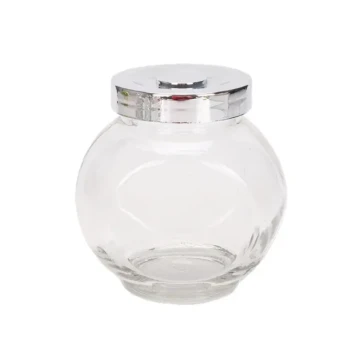
- Classic Drum Shaped Glass Honey Jar with Airtight Lid
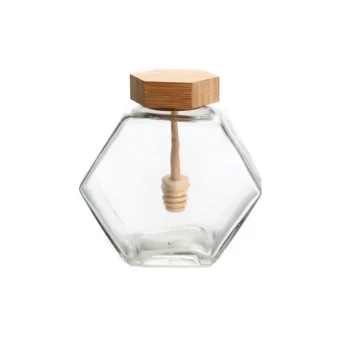
- Hexagonal Glass Honey Jar with Wooden Lid Integrated Dipper Elegant Functional Storage
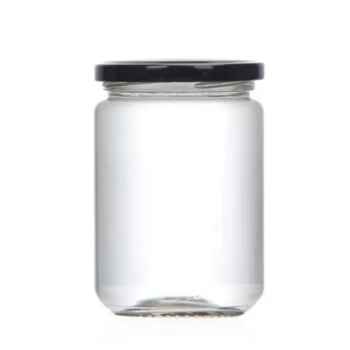
- Classic Round Glass Honey Jar with Lid
- Classic Beehive Honey Bottle Jar with Squeeze Dispenser Lid
- Stainless Steel Beekeeping Honey Extractor Lid
People Also Ask
- What is the best utensil to store honey? Preserve Purity with the Right Container
- How does the appearance of glass jar packaging affect the sales and perception of honey? Boost Your Premium Brand Value
- Why is a glass jar preferred for packaging honey? Ultimate Protection for Purity & Flavor
- What is the aesthetic appeal of using glass jars for honey? Elevate Your Brand with Premium Packaging
- What are the advantages of glass containers for honey? Elevate Quality and Market Value with Premium Packaging