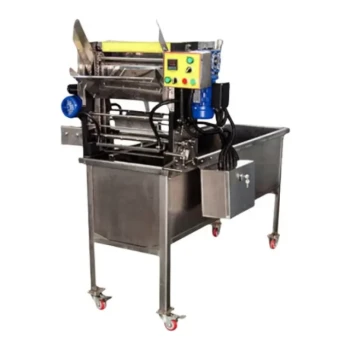
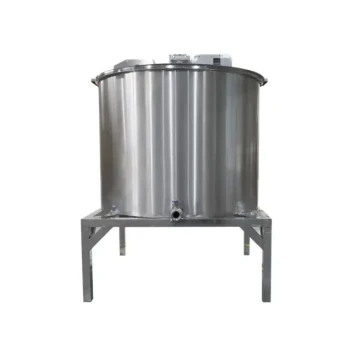
Standardized honey processing relies on a delicate balance of mechanical precision and environmental control to stabilize the product without degrading it. These machines ensure quality and shelf life by employing controlled physical filtration to remove impurities and automated moisture regulation to prevent fermentation, all within a sealed environment that protects the honey from external contaminants.
Core Takeaway Industrial processing equipment does not merely package honey; it acts as a preservation system. By removing the catalysts for spoilage—specifically excess moisture and physical debris—while maintaining a closed loop to prevent secondary contamination, these machines extend shelf life and clarify the product while retaining the critical bio-active enzymes that define honey’s value.
The Mechanics of Stabilization
Regulating Moisture Content
The primary threat to honey's shelf life is fermentation caused by yeast interacting with high water content. Industrial machines utilize controlled heat and mechanical force to dehydrate honey.
This process reduces moisture levels in both mature and immature honey to meet strict food safety standards. By stabilizing the water activity, the machinery effectively inhibits yeast growth, ensuring the honey remains shelf-stable for extended periods.
Precision Physical Filtration
Raw honey often contains wax debris, larval fragments, and other particulate matter from the hive. Specialized filtration devices and settling tanks systematically remove these physical impurities.
This clarification process significantly improves the transparency and purity of the final output. Furthermore, by removing these particulates, the machinery removes the "nucleation points" that accelerate solidification, effectively delaying the natural crystallization process.
Preserving Chemical and Biological Integrity
Protecting Bio-active Components
High-quality honey is defined by its chemical complexity, including enzymes and phenolic compounds. Standardized machines are designed to operate within specific physical parameters to preserve these natural elements.
Unlike aggressive traditional heating, modern controlled processing ensures that these heat-sensitive bio-actives are not denatured. This retains the nutritional profile that commands a premium price in the market.
Retaining Volatile Aromatics
The sensory profile of honey depends on volatile aromatic compounds derived from the original nectar source. Specialized extraction and bottling machinery are engineered to prevent these compounds from evaporating.
By maintaining the chemical indicators consistent with the raw material, the machinery ensures the final product delivers the expected flavor profile and sensory experience.
The Closed-Loop Hygiene Advantage
Preventing Secondary Contamination
Traditional extraction methods often expose honey to open air, increasing the risk of bacterial introduction. Industrial lines utilize sealed operations and sterile filling machines.
This closed-loop system spans from extraction to final packaging. It minimizes the risk of external pollen contamination or environmental dust, ensuring the product inside the bottle is exactly what came out of the hive.
Traceability and Authenticity
Closed production cycles provide a hardware foundation for quality assurance compliance. By preventing the unauthorized introduction of adulterants like cane sugar or caramel, the machinery protects the product's integrity.
The pollen fingerprint of the final bottled product remains consistent with the original apiary samples. This technical consistency is essential for establishing a reliable traceability system and building consumer trust.
Understanding the Trade-offs
The Heat Management Balance
While heat is necessary for dehydration and flow, it is a double-edged sword. If the machinery is not calibrated correctly, excessive heat will destroy the enzymes (diastase) and darken the honey.
The equipment must be operated with precise temperature controls. The goal is to facilitate filtration and moisture reduction without crossing the thermal threshold that turns raw honey into a simple syrup.
Filtration vs. Ultra-Filtration
Standard filtration removes debris, but excessive "ultra-filtration" can remove all pollen, rendering the honey unidentifiable by source.
Quality assurance relies on configuring the mesh size of filters to remove visible impurities (wax, larvae) while allowing microscopic pollen grains—which certify the honey's botanical origin—to pass through.
Making the Right Choice for Your Goal
To maximize the value of your honey processing line, align your equipment settings with your end-market strategy:
- If your primary focus is Mass Market Retail: Prioritize advanced filtration and moisture reduction to ensure maximum shelf life, clarity, and resistance to crystallization on the shelf.
- If your primary focus is Premium/Raw Honey: Prioritize low-temperature processing and coarser filtration to maximize enzyme retention and pollen integrity, even if it shortens shelf stability slightly.
Ultimately, the machine is a tool for consistency; its value lies in its ability to scale purity without sacrificing the biological richness that makes honey unique.
Summary Table:
| Feature | Mechanism | Benefit for Honey Quality |
|---|---|---|
| Moisture Control | Dehydration & Heat Regulation | Prevents fermentation; ensures shelf stability |
| Precision Filtration | Physical Mesh & Settling Tanks | Improves clarity; delays natural crystallization |
| Bio-active Preservation | Controlled Low-Heat Processing | Retains nutritional enzymes and phenolic compounds |
| Closed-Loop System | Sealed Extraction & Filling | Eliminates secondary contamination and dust |
| Volatile Retention | Specialized Bottling Hardware | Preserves natural nectar aromatics and flavor profile |
Elevate Your Honey Production with HONESTBEE
Maximize your apiary's value with professional-grade equipment. HONESTBEE provides commercial apiaries and distributors with high-performance honey-making machinery, specialized filling tools, and a full spectrum of beekeeping consumables. Whether you are scaling up to mass retail or focusing on premium raw honey, our solutions ensure consistency, purity, and technical excellence.
Ready to optimize your production line? Contact our experts today to discover how our wholesale machinery can transform your honey business.
References
- Knowledge, attitude, and practice of northern Thai honey producers on good agricultural practice standard in honeybee farms. DOI: 10.12982/vis.2026.021
This article is also based on technical information from HonestBee Knowledge Base .
Related Products
- Fully Automatic Honey Filling Packaging Machine for Processing Line
- Automatic Single-Dose Snap & Squeeze Honey Sachets Packing Machine
- Automatic Honey Filling and Filtering Machine for Beekeeping Bottle Filling
- Semi Automatic Small Honey Bottle Filling Machine Honey Filler
- Precision Durable Efficient HONESTBEE Rotary Honey Filling Machine
People Also Ask
- Why are fully automatic honey filling and packaging lines essential? Boost Your Honey's Market Value and Quality
- What is a fully-automatic honey filler? Streamline Your Production with High-Precision Automation
- How do automated honey filling and packaging machines affect profitability? Boost Margins with HONESTBEE Technology
- How do automated honey filling and packaging machines contribute to the market value of honey products? Maximize Your ROI
- How do industrial-grade automated honey filling and packaging machines mitigate the risk of physical contamination?