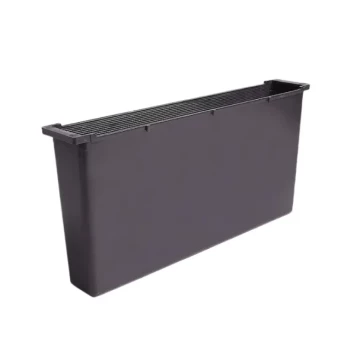
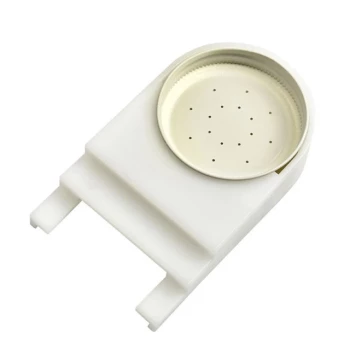
A baggie feeder functions as a top-mounted feeding system that utilizes a standard plastic zipper bag filled with sugar syrup to provide supplemental nutrition to a colony. To operate effectively within a Langstroth hive, the bag is placed inside a specially designed rim—typically similar to a 3-inch deep super—which creates the necessary vertical space above the frames for the bag to sit without being compressed by the hive cover.
Core Takeaway The baggie feeder is a safety-oriented method that leverages the hive's internal thermal dynamics to keep syrup accessible in cold weather. While it virtually eliminates the risk of bees drowning, it trades operator convenience for bee safety, as the system is single-use and difficult to relocate once installed.
The Mechanics of Operation
The Structural Setup
A standard Langstroth configuration leaves little headspace between the top bars of the frames and the inner cover. Therefore, a baggie feeder requires a spacer or rim to function.
This rim, often resembling a 3-inch deep super, is placed on top of the brood box. The syrup-filled bag rests on the top bars within this protected void, allowing the hive roof to close securely.
Access and Safety
Unlike open containers where bees risk falling in, the baggie feeder relies on a precision slit cut into the plastic.
Bees feed directly through this slit. Because the liquid is contained and the opening is narrow, this design prevents the drowning that is common with other feeder types.
Thermal Regulation
One of the distinct functional advantages of this setup is its interaction with hive thermodynamics.
Heat generated by the colony cluster rises to the top of the hive. Because the baggie sits directly above the cluster, this ambient heat prevents the syrup from freezing, keeping the feed liquid and accessible even when outside temperatures drop.
Understanding the Trade-offs
The Mobility Constraint
Once the bag is placed and the slit is cut, the feeder becomes effectively immobile.
Because the bag loses structural integrity once opened, you cannot easily pick it up to inspect the frames underneath without risking significant spillage. This makes it a poor choice if you require frequent access to the brood nest.
Sustainability and Maintenance
The system utilizes single-use plastics.
Unlike durable plastic or wooden feeders that are cleaned and refilled, baggie feeders generate waste after every feeding cycle. This requires constant restocking of supplies rather than simple maintenance of existing equipment.
Making the Right Choice for Your Goal
To determine if a baggie feeder fits your management strategy, consider the following specific scenarios:
- If your primary focus is winter feeding: This is an ideal choice because the rising hive heat keeps the syrup from freezing, ensuring access during cold snaps.
- If your primary focus is colony safety: The slit design makes this the superior option for preventing bee drowning, which is critical for preserving population numbers in weak colonies.
- If your primary focus is frequent inspection: You should avoid this method, as the inability to move the open bag makes accessing frames difficult and messy.
Select the baggie feeder when the safety of the bees and thermal regulation outweigh the need for reusable equipment or ease of inspection.
Summary Table:
| Feature | Baggie Feeder Specification |
|---|---|
| Placement | Top-mounted on frames within a 3-inch spacer rim |
| Mechanism | Precision slit in a plastic zipper bag |
| Drowning Risk | Virtually zero (contained system) |
| Thermal Advantage | Leverages rising colony heat to keep syrup liquid |
| Best Use Case | Winter feeding and emergency supplemental nutrition |
| Mobility | Low (difficult to move once slit is cut) |
Scaling Your Apiary Operations with Professional Equipment
At HONESTBEE, we understand the critical balance between colony health and operational efficiency. Whether you are a commercial apiary manager or a wholesale distributor, we provide the industrial-grade tools you need to succeed. Our comprehensive portfolio includes:
- Beekeeping Machinery: From hive-making equipment to precision honey-filling machines.
- Professional Tools: A full spectrum of durable hardware and hive components.
- Consumables & Merchandise: Essential industry supplies and honey-themed cultural goods.
Ready to upgrade your beekeeping infrastructure? Contact us today to discuss our wholesale offerings and discover how our specialized machinery can streamline your production.
Related Products
- Professional Hive Top Bee Feeder for Beekeeping
- Professional In-Hive Bee Feeder HONESTBEE Frame for Beekeeping
- High-Performance Langstroth Bee Hives for Global Professional Beekeeping
- Australian Langstroth Beehive Boxes for Beekeeping Wholesales
- Professional Hive Front Entrance Bee Feeder
People Also Ask
- What is a hive top feeder? A Guide to Efficient, Low-Stress Beekeeping
- Do I need an inner cover with a hive top feeder? Optimize Your Hive Setup for Healthy Bees
- What is a hive top feeder, and how does it work? A Complete Guide to Efficient In-Hive Feeding
- What are the characteristics, advantages, and disadvantages of hive top feeders? Optimize Your High-Volume Feeding
- How does a hive top feeder work? Optimize Your Apiary's Nutrition and Security