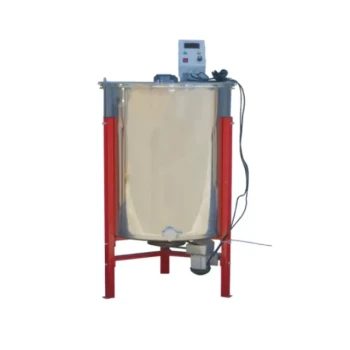
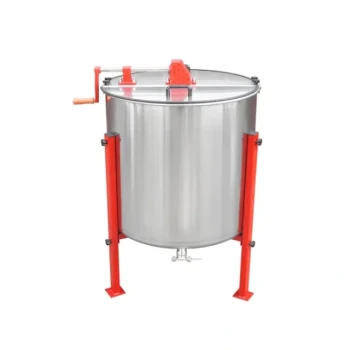
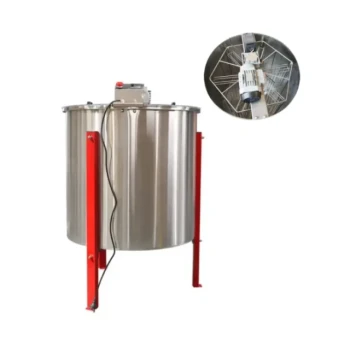
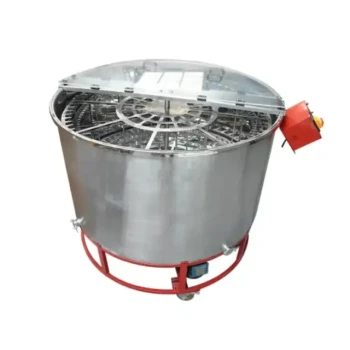
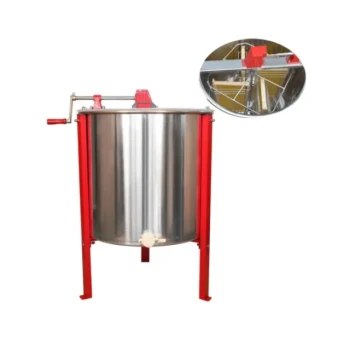
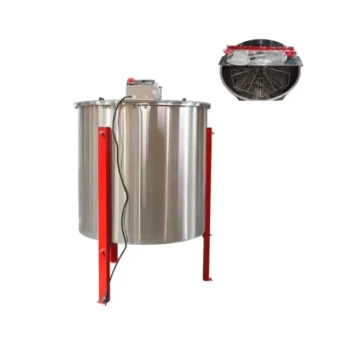
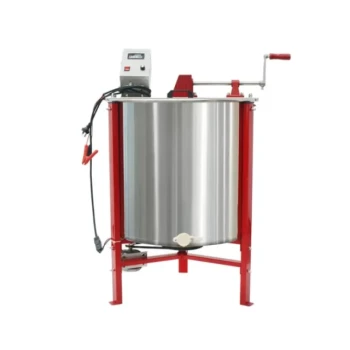
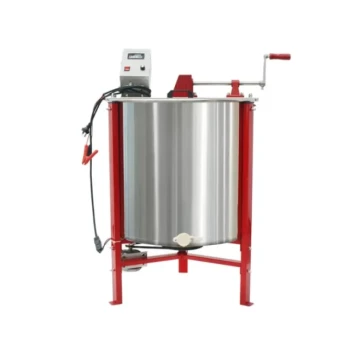
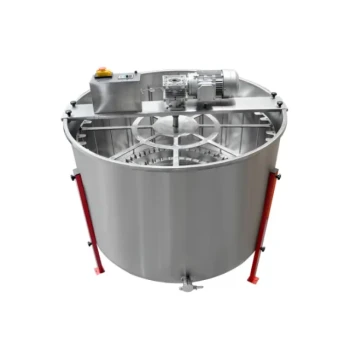
A centrifugal honey extractor acts as the primary instrument for quantifying colony productivity by utilizing high-speed rotation to separate mature honey from standardized frames. This mechanical process allows for the precise isolation and weighing of the commercial honey harvest without destroying the underlying honeycomb structure.
Core Takeaway The extractor does more than harvest; it standardizes the data collection process. By preserving the wax comb, it ensures that measured yield differences reflect the colony's actual foraging and nectar collection efficiency, rather than the energy expended on rebuilding infrastructure.
The Mechanism of Precise Extraction
Separation via Centrifugal Force
The extractor operates by spinning frames at high speeds. This generates centrifugal force, which pulls the fluid honey out of the cells and onto the extractor walls.
Preservation of Infrastructure
Unlike crush-and-strain methods, this technique leaves the honeycomb structure intact. This is critical for scientific measurement because it allows the exact same standardized frames to be weighed before and after extraction.
From Extraction to Data Analysis
Calculating Commercial Yield
The extractor is the central equipment for determining commercial honey yield. By measuring the net weight of the extracted honey, beekeepers generate hard data points that represent the colony's output during a specific flow.
Evaluating Management Techniques
This quantitative data allows for objective comparison. Beekeepers can compare the weight of honey from experimental groups against control groups.
This helps evaluate the success of specific interventions, such as the timely provision of nectar sources or techniques used to inhibit swarming.
The Significance of Non-Destructive Harvest
Isolating True Performance
Because the extractor does not damage the wax, the combs can be reused immediately.
If combs were destroyed, the colony would have to expend significant energy resources to rebuild them. By removing this variable, the yield data more accurately reflects the breeding stock’s true production performance.
Determining Gross Yield
While the extractor measures the harvested honey, accurate efficiency statistics often require a broader view.
To calculate gross honey yield, the extracted weight is combined with quantitative calculations of remaining feed honey (winter stores) inside the hive. This total figure serves as the primary indicator for measuring foraging efficiency.
Understanding the Trade-offs
The Scope of Measurement
The extractor specifically measures harvestable commercial yield. It does not account for the honey consumed by the bees during the season or the stores left behind for winter unless combined with total hive weighing.
Equipment Calibration
For the data to be valid for scientific comparison (e.g., testing antioxidant biological agents), the extraction process must be consistent. Variations in spin time or speed could leave different amounts of honey behind, potentially skewing the yield statistics.
Making the Right Choice for Your Goal
To effectively measure efficiency, you must define which metric matters most to your operation.
- If your primary focus is Commercial Productivity: Rely on the net weight derived strictly from the extractor to determine market viability.
- If your primary focus is Biological Efficiency: Combine the extractor's output data with in-hive weight estimates of winter stores to calculate the gross yield.
The centrifugal extractor transforms honey production from a biological process into a measurable data point, enabling evidence-based management decisions.
Summary Table:
| Metric Type | Measurement Method | Key Significance |
|---|---|---|
| Commercial Yield | Net weight of honey from extractor | Measures market viability and harvestable output. |
| Biological Efficiency | Extracted honey + remaining winter stores | Reflects total foraging performance of the breeding stock. |
| Infrastructure Cost | Non-destructive extraction (intact comb) | Ensures energy is spent on foraging, not rebuilding wax. |
| Comparative Analysis | Control vs. Experimental groups | Evaluates management techniques and nectar source timing. |
Scale Your Apiary Operations with HONESTBEE
As a professional distributor or commercial apiary, maximizing your honey yield data starts with the right infrastructure. HONESTBEE provides the industry-leading equipment you need to transform biological processes into measurable profits.
From high-capacity centrifugal honey extractors and honey-filling machines to advanced hive-making machinery, our comprehensive wholesale catalog covers every aspect of modern beekeeping. We empower our partners with durable hardware and essential consumables designed for high-volume production and scientific precision.
Ready to optimize your harvest efficiency? Contact us today to discuss our volume pricing and custom equipment solutions—let’s build a more productive future for your beekeeping business together.
References
- O. Mishchenko, K. Afara. Рroviding bees with honey collection as a way to prevent the swarm state of bee colonies. DOI: 10.33245/2310-9289-2025-194-1-55-61
This article is also based on technical information from HonestBee Knowledge Base .
Related Products
- electric honey extractor honey centrifuge 3 frame honey extractor stainless steel honey frame extractor
- Manual Hand Crank 4 Frame Honey Extractor Centrifuge for Beekeeping
- Professional 4 Frame Self Reversing Electric Honey Extractor for Beekeeping
- Electric 4 Frame Tangential Honey Extractor
- 24 Frame Honey Extractor Commercial Radial Honey Frame Extraction Machine
People Also Ask
- What are the characteristics of electric honey extractors? Boost Your Apiary Efficiency with Automated Technology
- What are the disadvantages of using an electric honey extractor? Weighing Cost, Power, and Comb Safety
- What are the advantages of an electric honey extractor? Boost Efficiency and Scale Your Honey Production
- What are the technical advantages of electric honey extractors? Maximize Yield and Protect Your Bee Colony
- How does an electric honey extractor affect the quality of honey? Preserve Flavor & Purity with Precision Extraction