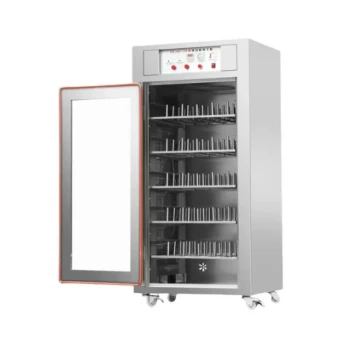
The choice between air circulation drying and vacuum freeze drying fundamentally balances cost efficiency against nutrient retention. While vacuum freeze drying represents the premium standard for preserving heat-sensitive bioactives through low-temperature sublimation, air circulation drying provides a practical, lower-cost alternative that successfully reduces moisture to safe levels. Your decision depends on whether your process prioritizes pharmaceutical-grade quality or economic feasibility for primary processing.
While vacuum freeze drying is the superior method for maximizing biological activity and long-term stability, air circulation drying offers a cost-effective solution that secures a viable 7-month shelf life suitable for general processing needs.
Impact on Nutritional Quality
Retention of Heat-Sensitive Actives
Vacuum freeze drying is specifically designed to protect the delicate chemical structure of drone larvae. By operating at extremely low temperatures, this method maximizes the retention of unsaturated fatty acids, vitamins, and male hormones.
Thermal Impact of Air Circulation
In contrast, air circulation dryers utilize heat to drive evaporation. While the temperature is controlled, the introduction of heat makes this method slightly less effective at preserving the most fragile active substances found in the larvae compared to the freeze-drying process.
Prevention of Degradation
The freeze-drying process excels at halting biological activity immediately. It effectively prevents enzymatic reactions that typically cause quality degradation during the drying phase, ensuring the final powder retains its original potency.
Mechanism and Product Stability
The Sublimation Process
Vacuum freeze dryers remove moisture through sublimation, bypassing the liquid phase entirely. This converts the Apilarnil (drone larvae contents) into a stable amorphous powder, which is structurally optimized for longevity.
Controlled Hot Air Dehydration
Air circulation dryers rely on the continuous movement of controlled hot air. This method successfully lowers the moisture content of the larvae to safe levels, stabilizing the product effectively for standard storage conditions.
Shelf Life Capabilities
The processing method directly dictates how long the product remains viable. Air circulation drying achieves a shelf life of approximately 7 months when the powder is stored at room temperature and protected from light.
Understanding the Trade-offs
Cost vs. Preservation
The most significant trade-off is economic. Air circulation drying is a lower-cost alternative, making it highly suitable for cost-sensitive primary processing stages where maximum bioactive retention is not the sole priority.
"Good Enough" vs. "Best Possible"
If your application requires the absolute highest concentration of bioactives, the air circulation dryer has limitations. It provides a stable product, but it cannot match the extended preservation and quality assurance provided by the industrial vacuum freeze-drying method.
Making the Right Choice for Your Goal
Selecting the right equipment depends on the specific requirements of your end product and your budget constraints.
- If your primary focus is maximizing nutritional potency: Choose the vacuum freeze dryer to retain heat-sensitive unsaturated fatty acids and hormones through low-temperature sublimation.
- If your primary focus is cost-efficiency: Select the air circulation dryer to achieve a viable 7-month shelf life with significantly lower operational and capital costs.
Align your drying method with the market positioning of your final product to ensure viability.
Summary Table:
| Feature | Air Circulation Drying | Vacuum Freeze Drying |
|---|---|---|
| Mechanism | Controlled Hot Air Dehydration | Low-Temperature Sublimation |
| Nutrient Retention | Moderate (Thermal impact on actives) | High (Preserves heat-sensitive bioactives) |
| Shelf Life | Approx. 7 Months (Room temp) | Extended Stability (Amorphous powder) |
| Biological Quality | Safe for general processing | Pharmaceutical-grade potency |
| Cost Profile | Lower operational & capital costs | Premium investment for max quality |
Elevate Your Bee Product Processing with HONESTBEE
Whether you are scaling a commercial apiary or supplying the global beekeeping market, choosing the right processing equipment is critical to your success. HONESTBEE specializes in providing commercial-grade beekeeping tools, machinery, and essential consumables designed for efficiency and quality.
From high-performance drying and honey-filling machines to specialized hive-making hardware, we empower distributors and large-scale beekeepers with the industrial solutions needed to produce premium hive products like drone larvae powder.
Ready to optimize your production line? Contact us today to discuss our comprehensive wholesale offerings and find the perfect equipment to match your quality and budget goals!
References
- Sibel Sılıcı. Drone Larvae Homogenate (Apilarnil) as Natural Remedy: Scientific Review. DOI: 10.15832/ankutbd.1293015
This article is also based on technical information from HonestBee Knowledge Base .
Related Products
- HONESTBEE Professional Cabinet Bottle Dryer
- 0.5T Capacity Honey Dehumidifier Dryer with Vacuum Heating and Thickening Filtering Machine
- Economy Small Scale Honey Dryer Dehumidifier Thickening Machine
- High Quality Honey Dehumidifier Dryer Thickening Machine for Beekeeping
People Also Ask
- Why use a Cabinet Drier for pollen at 38–41°С? Protect Sample Integrity and Heavy Metal Data Accuracy
- What is the role of an industrial forced-air drying oven in bee bread fermentation? Optimize Moisture and Nutrients
- What is the primary purpose of a constant temperature drying oven in bee bread production? Achieve Perfect Fermentation
- How do forced circulation drying ovens sterilize beekeeping tools? Efficient Oxidation for Metal Equipment Safety
- What are the technical requirements for using a constant temperature drying oven for raw propolis? Expert Guide