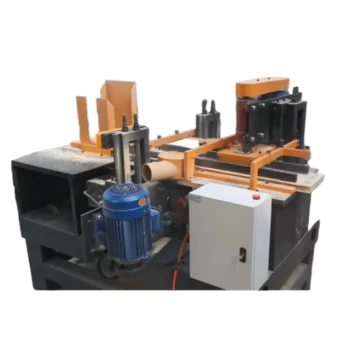
High-precision woodworking machinery drives cost reduction primarily through the rigorous standardization of beehive components. By enabling the mass production of uniform, interchangeable parts, this technology shifts beekeeping from artisanal craft to industrial efficiency, directly lowering maintenance expenses and streamlining colony management.
Core Takeaway The transition to high-precision manufacturing transforms beehives from variable consumables into standardized assets. This uniformity reduces labor costs by ensuring component interchangeability, extends equipment lifespan through structural durability, and enables accurate financial tracking of asset depreciation across large-scale operations.
The Economic Impact of Standardization
Achieving True Interchangeability
In commercial operations, time spent adjusting ill-fitting equipment is money lost. High-precision machinery ensures that every frame and box is identical, allowing for complete interchangeability across thousands of colonies. Beekeepers can swap components instantly without manual modification, significantly reducing the labor hours required for routine inspections and hive manipulations.
Reducing Maintenance and Replacement Costs
Standardized production facilitates a modular approach to maintenance. When a specific component fails, it can be replaced with a stock part rather than requiring the reconstruction of an entire hive. This extends the operational lifespan of the equipment and minimizes the frequency of complete hive replacements, directly lowering long-term capital expenditures.
Enabling Automated Processing
Modern honey extraction lines rely on uniform inputs to function without jamming or damaging combs. Precision-manufactured hives ensure that frames fit perfectly into de-capping and extraction machinery. This compatibility eliminates manual bottlenecks during harvest, which is often the most labor-intensive and costly phase of the beekeeping season.
Operational Efficiency in Large-Scale Systems
Optimizing Migratory Logistics
For commercial beekeepers who transport hives for pollination services, structural uniformity is critical. Precision-cut hives stack securely and compactly, maximizing truckload efficiency and ensuring stability during transport. This structural integrity reduces equipment breakage and colony stress during transit, protecting both the hardware and the livestock.
Improved Environmental Control
Machined hives offer superior sealing and thermal insulation compared to manually constructed alternatives. Tighter tolerances reduce gaps, allowing colonies to maintain internal temperatures with less energy expenditure. This indirectly reduces costs by improving colony health and survival rates, thereby protecting the revenue-generating potential of the apiary.
Understanding the Trade-offs
High Initial Capital Investment
While unit costs decrease over time, acquiring industrial-grade CNC or automated woodworking machinery requires significant upfront capital. Operations must have sufficient scale to amortize this cost effectively; for smaller apiaries, the ROI may not justify the initial expense compared to purchasing pre-made standard equipment.
Rigidity in Design Specs
High-precision manufacturing relies on set specifications. Once a production line is tooled for a specific dimension (such as a standard Langstroth configuration), altering the design to accommodate new experimental methods or non-standard equipment becomes difficult and costly. You gain efficiency but lose flexibility.
Financial and Strategic Implications
Accurate Financial Tracking
Standardization allows for better financial visibility. As noted in the primary reference, uniform hardware allows for the accurate calculation of depreciation. When every hive is a standardized asset with a predictable lifespan, businesses can better allocate production costs and forecast future capital needs.
Foundation for Rapid Scalability
Automated manufacturing significantly lowers the unit production cost of infrastructure. This cost efficiency provides the physical foundation necessary for rapid expansion. Projects can scale from hundreds to thousands of colonies without the linear increase in hardware costs associated with manual or non-standardized production methods.
Making the Right Choice for Your Goal
To maximize the return on high-precision manufacturing, align your machinery choice with your operational targets:
- If your primary focus is Labor Reduction: Prioritize machinery that guarantees tight tolerances for frame interchangeability to minimize field manipulation time.
- If your primary focus is Asset Longevity: Focus on equipment capable of processing durable materials or composites that withstand migratory stress and weather.
- If your primary focus is Financial Planning: Utilize the standardized production data to establish clear depreciation schedules and precise cost-per-unit analysis.
True cost reduction in beekeeping comes not just from cheaper wood, but from the systemic efficiency that precision engineering creates across the entire operation.
Summary Table:
| Cost-Saving Factor | Description | Primary Economic Benefit |
|---|---|---|
| Component Interchangeability | Uniform frames and boxes fit perfectly across all colonies. | Significant reduction in labor hours and manual adjustments. |
| Modular Maintenance | Standardized parts allow for targeted replacement of failed components. | Extends equipment lifespan and lowers capital expenditure. |
| Automation Compatibility | Precision frames prevent jams in de-capping and extraction lines. | Eliminates manual bottlenecks during high-volume harvests. |
| Logistical Efficiency | Uniform structural dimensions ensure secure, compact stacking for transport. | Maximizes truckload capacity and reduces breakage during transit. |
| Climate Regulation | Tighter tolerances provide superior sealing and thermal insulation. | Improves colony survival rates and protects livestock assets. |
Scale Your Beekeeping Operation with HONESTBEE Precision
Transitioning from manual crafts to industrial efficiency is the key to commercial success. At HONESTBEE, we specialize in empowering commercial apiaries and distributors with the tools needed for rapid growth.
Why partner with us?
- Comprehensive Wholesale Offering: Access a full spectrum of precision-engineered beekeeping tools, machinery, and consumables.
- Industrial-Grade Machinery: From automated hive-making to honey-filling machines, we provide the hardware that ensures component interchangeability and operational standardization.
- Strategic Value: Our solutions are designed to lower your labor costs, extend equipment lifespan, and provide the predictable asset tracking necessary for large-scale financial planning.
Ready to transform your apiary into a high-efficiency industrial powerhouse?
Contact HONESTBEE Today to explore our specialized machinery and wholesale opportunities.
References
- Mariia Shulhan. ACCOUNTING OF COSTS AND CALCULATION OF THE COST OF BEEKEEPING PRODUCTS. DOI: 10.32782/2304-0920/4-102-4
This article is also based on technical information from HonestBee Knowledge Base .
Related Products
- HONESTBEE Bee Frame Side Bar Forming Machine Precision Engineered for High-Volume Production Bee Frame Machine
- Beehive Machine Double End Saw for Precision Hive Component Manufacturing
- Automatic High-Speed Bee Hive Box Stapling Machine
- High-Efficiency Pneumatic Bee Hive Making Machine for Rapid Box Assembly
- HONESTBEE Top Bar & Bottom Bar Forming Machine | Bee Frame Machine
People Also Ask
- What are the qualities of the bee frame forming machine? Durable, Efficient, and Built to Last
- How does a bee frame making machine work? A Guide to Automated Metal Frame Production
- Why is professional beehive frame-making machinery required for large-scale apiary operations? Scale with Precision
- How do professional beehive and frame manufacturing machines contribute to commercial apiary management? Boost Efficiency
- What should be done to the sidebars if wiring the frames? A Guide to Drilling Holes for Maximum Frame Strength