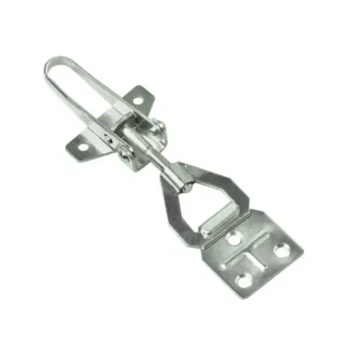
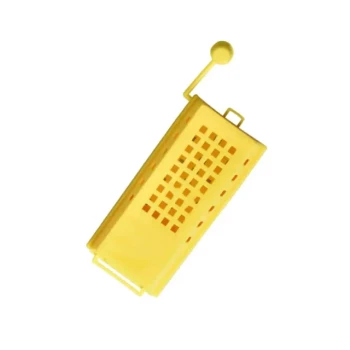
Honeybee hive transport equipment is the primary tool for breaking the spatial "lock" field bees have on their home location during a colony split. By enabling the physical relocation of the mother colony to a distance of at least 500 meters, this equipment prevents foragers from tracking the hive to its new spot, ensuring they return to the original site instead.
Core Takeaway Transport equipment facilitates moving the mother colony outside the immediate orientation zone of its foragers. This spatial shift forces field bees to return to their original geographic coordinates—now occupied by the daughter colony—ensuring the new split retains a critical workforce.
The Mechanics of Displacement
The 500-Meter Threshold
The primary function of the transport equipment is to achieve a specific geographic separation.
You must move the mother colony at least 500 meters away from the original site.
If the hive is moved a shorter distance, field bees may recognize landmarks and return to the mother hive, defeating the purpose of the split.
Redirecting the Field Force
By changing the spatial position of the mother colony, you exploit the natural homing instinct of the bees.
Field bees are programmed to return to a specific location, not necessarily a specific box.
When the mother hive is moved away, these foragers return to the old site, where the daughter colony has been placed to receive them.
Population Balance
This process is essential for maintaining the population of the new daughter colony.
Without this separation, the daughter colony would lose its experienced foragers to the mother hive.
The equipment ensures the daughter colony inherits a sufficient population of field bees to continue resource gathering immediately.
The Role of Professional Equipment
Minimizing Relocation Stress
Moving a hive is inherently disruptive, but the quality of the transport equipment mitigates this risk.
Professional equipment is designed to ensure the smooth relocation of the hive structure.
This stability is crucial to prevent structural damage to the comb or injury to the queen during transit.
Reducing Colony Disturbance
Beyond physical stability, professional gear reduces the overall agitation of the colony.
Keeping the colony calm during the move is vital for their quick adaptation to the new location.
Minimal disturbance ensures the mother colony settles into its new environment faster, resuming normal brood rearing and foraging duties.
Understanding the Trade-offs
The Risk of Insufficient Distance
The most common failure point is not utilizing the equipment to move the hive far enough.
If the transport distance is less than 500 meters, the equipment fails to prevent the return of field bees.
This results in a depopulated daughter colony and an overcrowded mother colony.
Stress Management vs. Efficiency
While transport equipment enables necessary distance, the act of moving is still a stressor.
You must balance the need for distance with the need for a gentle transition.
Using improvised or poor-quality transport methods can lead to excessive vibration, which may agitate the bees or collapse heavy honey frames.
Ensuring a Successful Colony Split
To maximize the success of your split, align your equipment use with your specific management goals:
- If your primary focus is Workforce Retention: Prioritize moving the mother colony well beyond the 500-meter minimum to guarantee field bees return to the daughter colony at the old site.
- If your primary focus is Colony Health: Utilize professional-grade transport equipment to minimize vibration and shock, ensuring the mother colony remains calm and intact during the move.
By controlling the physical location of the hive, you effectively dictate the distribution of the colony's workforce.
Summary Table:
| Feature | Function in Colony Splitting | Benefit |
|---|---|---|
| 500m+ Relocation | Moves mother colony beyond orientation zone | Prevents foragers from finding the mother hive |
| Spatial Displacement | Exploits homing instincts to original site | Forces field bees to join the new daughter colony |
| Stability Design | Minimizes vibrations and structural shocks | Protects the queen and prevents comb collapse |
| Stress Mitigation | Keeps colony calm during transit | Ensures faster recovery and resumption of brood rearing |
Scaling Your Apiary Operations with HONESTBEE
Successful colony splits require more than just technique—they demand reliable, professional-grade equipment. At HONESTBEE, we specialize in supporting commercial apiaries and distributors with a comprehensive range of beekeeping tools, hive-making machinery, and essential industry consumables.
Whether you need robust transport solutions to minimize colony stress or advanced honey-filling machines to streamline your production, our wholesale portfolio is designed to enhance your efficiency and yield. Partner with us to access high-quality hardware and honey-themed cultural merchandise tailored for the global beekeeping market.
Ready to upgrade your commercial beekeeping toolkit?
References
- Tesfaye Bekele, Dadi Genet. On-farm participatory Evaluation of Splitting Queen Rearing Technique (SQRT) at Ginnir District, Bale Zone, South-eastern Ethiopia. DOI: 10.5897/jaerd2016.0790
This article is also based on technical information from HonestBee Knowledge Base .
Related Products
- Plastic Transporting Bee Packages and Nuc Boxes for Beekeeping
- HONESTBEE Square Top Hive Bee Feeder Top Bee Feeder
- HONESTBEE Professional Mini J-Hook Hive Tool for Beekeeping
- HONESTBEE Professional Hive Top Bee Feeder Feeding Solution
- HONESTBEE Premium Italian Style Hive Tool with Hardwood Handle
People Also Ask
- What role do bee package boxes play in the commercial transport and expansion of honeybee colonies? - Logistic Essentials
- What are beekeeping boxes called? A Guide to Hive Bodies and Box Types
- How do standardized bee packages serve as a recovery mechanism for commercial beekeeping? Ensure Business Continuity
- What is the commercial value of using standardized bee packages? Drive Scalability in Large-Scale Apiaries
- Why is the timely introduction of high-quality bee packages critical? Save Your Apiary from Asian Hornet Invasions