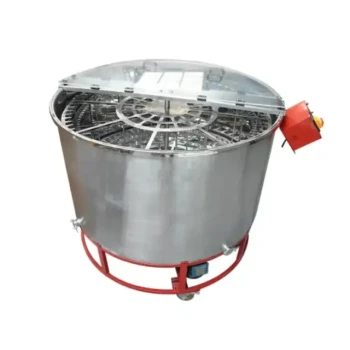
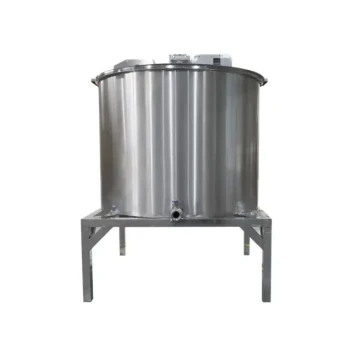
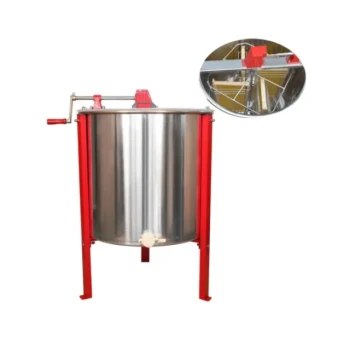
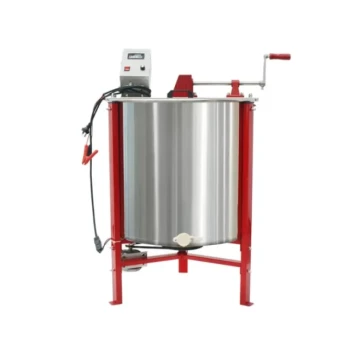
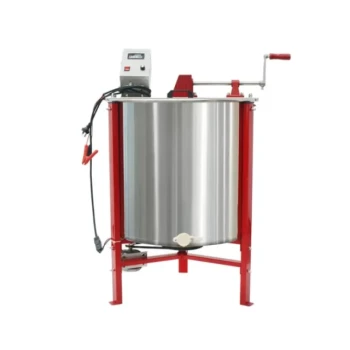
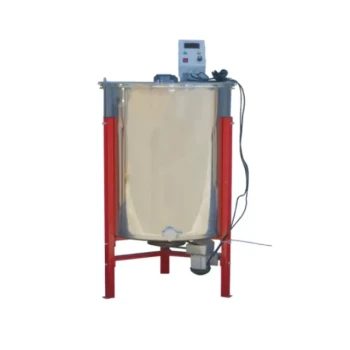
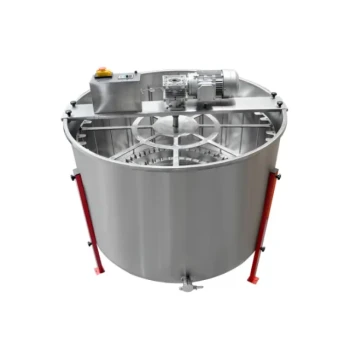
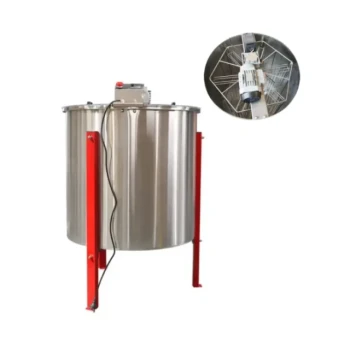
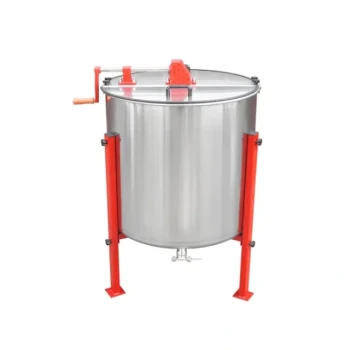
Industrial-grade automation fundamentally transforms apiary economics by shifting the production model from labor-intensive to capital-efficient. By integrating automated extractors and honey-filling machines, beekeepers significantly reduce reliance on expensive manual labor while simultaneously increasing processing speed and precision. This dual impact lowers operational costs and maximizes per-capita labor productivity, directly improving the bottom line.
Core Takeaway: Automation does not merely speed up production; it unlocks higher profitability by enabling premium product standardization, reducing material waste, and stimulating biological yields through more frequent harvesting cycles.
Optimizing Labor and Operational Efficiency
Breaking the Labor Bottleneck
Manual processing is historically the primary constraint on scaling an apiary operation due to its high labor intensity. Automated equipment decouples production volume from labor hours. This increases per-capita productivity, allowing fewer staff to process significantly more honey in less time.
Accelerating Speed to Market
Honey production is often the primary economic driver that sustains other apiary operations, such as pollination services. High-speed automated filling ensures products are processed and ready for retail quickly. This rapid turnaround generates the essential cash flow needed to support long-term business sustainability.
Maximizing Yield Through Biological Feedback
Stimulating Colony Foraging
The efficiency of automated extractors allows for more frequent harvesting, such as twice in a single season. Promptly emptying hives releases storage space and prevents the colony from becoming "idle" due to a full hive. This triggers a biological response where bees increase their collecting efforts, resulting in a higher total honey yield per colony.
Non-Destructive Extraction
Modern extractors utilize centrifugal force to remove honey without damaging the honeycomb structure. This preservation allows beekeepers to return intact combs to the hive for immediate reuse. Bees can then focus on foraging rather than expending energy and resources rebuilding wax, further boosting production efficiency.
Elevating Product Value and Market Access
Precision and Waste Reduction
Professional-grade filling machines deliver high-precision dosing, ensuring consistent net weights for every unit. This exact control significantly reduces material waste, which is critical when handling high-value honey varietals. eliminating overfilling protects profit margins on a per-unit basis.
Ensuring Hygiene and Standardization
Industrial machinery minimizes human contact, significantly reducing the risk of secondary contamination. Integrated filtration and automated sealing ensure the product meets rigorous food safety and export standards. This quality assurance allows producers to transition from selling low-margin raw material to marketing high-value, branded consumer products.
Understanding the Trade-offs
Capital Intensity vs. Scale
While automation improves margins, it requires a significant upfront capital investment that must be justified by volume. Investing in industrial-grade capacity for a small-scale operation can lead to a negative Return on Investment (ROI) if the equipment sits idle.
Maintenance and Technical Overhead
Moving away from manual tools introduces a new requirement for technical maintenance and repair. The "hidden cost" of automation is the need for skilled operators or technicians to ensure the machinery functions correctly. Downtime due to mechanical failure in a fully automated line can halt production entirely, unlike manual methods where labor is flexible.
Making the Right Choice for Your Goal
To determine if industrial automation is the right step for your apiary, consider your primary operational objective:
- If your primary focus is scaling volume: Prioritize automated extractors to maximize per-capita labor productivity and stimulate higher biological yields from your colonies.
- If your primary focus is brand value: Prioritize high-precision filling and filtration systems to ensure export-grade hygiene and consistent packaging for the retail market.
- If your primary focus is cash flow: Focus on high-speed processing equipment to reduce the time between harvest and sale, ensuring liquidity for pollination operations.
Strategic automation turns honey processing from a bottleneck into a competitive advantage, enabling consistent quality and scalable growth.
Summary Table:
| Feature | Impact on Profitability | Key Benefit |
|---|---|---|
| Automated Extraction | Increases per-capita labor productivity | Reduces labor costs and speeds up harvest cycles |
| High-Precision Filling | Minimizes product waste and overfilling | Protects margins and ensures consistent unit weight |
| Non-Destructive Design | Preserves honeycomb structures | Bees spend less energy on wax and more on foraging |
| Automated Filtration | Ensures export-grade hygiene standards | Enables access to high-margin retail and global markets |
| High-Speed Processing | Accelerates speed to market | Improves cash flow to support pollination services |
Maximize Your Apiary's ROI with HONESTBEE
Transitioning from manual labor to industrial-grade efficiency is the key to scaling your honey production. HONESTBEE specializes in supporting commercial apiaries and distributors with a complete suite of professional beekeeping solutions. From high-capacity automated extractors and precision honey-filling machines to specialized hive-making hardware and honey-themed merchandise, we provide the tools you need to build a more profitable brand.
Ready to transform your operations? Contact us today to discover how our wholesale machinery and industry consumables can drive your business growth.
References
- O.D. Djurabaev, Jaloliddin Rashidov. The main directions of effective management and development of the beekeeping industry. DOI: 10.1051/e3sconf/202128202002
This article is also based on technical information from HonestBee Knowledge Base .
Related Products
- HONESTBEE 72 Frame Industrial Electric Honey Extractor for Beekeeping
- 32 Frame Commercial Electric Honey Extractor for Beekeeping and Honey Production
- Commercial Electric 12 Frame Honey Extractor Spinner Motorized Honey Extractor
- HONESTBEE 4 Frame Manual Self Reversing Honey Extractor for Beekeeping
- Stainless Steel Manual 8 Frame Radial Honey Extractor Machine for Beehives
People Also Ask
- What is the importance of balancing honeycomb frames within a honey extractor? Ensure Stability and Protect Machinery
- How is honey separated from the frames after they are uncapped? Efficient Extraction Methods for High Yields
- What are the main benefits of using a honey extractor? Maximize Yields and Protect Your Honeycomb
- What are the recommended methods for removing honey from the honeycomb? Top Extraction Techniques for Maximum Efficiency
- How do manual honey extractors compare to electric honey extractors? Choosing the Right Tool for Your Apiary Growth