Apis cerana’s natural comb architecture directly determines the dimensions, internal layout, and operating features required in a commercial movable-frame hive. Because Eastern honeybees build multiple parallel combs inside enclosed cavities and maintain a consistent bee-space around them, suitable equipment must provide precise frame spacing, compatible cavity volume, stable support, and correct access for inspections and harvesting. Hive systems designed around Apis mellifera dimensions may be too large or poorly matched for the smaller colonies and combs of Apis cerana.
Commercial Apis cerana hives should reproduce the bee’s natural cavity environment while preserving accurate bee-space and species-appropriate frame dimensions. This reduces brace comb, excessive propolis, comb damage, and bee mortality while making inspections and honey extraction commercially practical.
Why Natural Comb Architecture Matters
Parallel combs require controlled frame alignment
Apis cerana naturally constructs several combs in parallel, usually within a dark, sheltered cavity. Movable-frame equipment must replicate this arrangement by keeping frames correctly aligned and preventing combs from drifting into one another.
Frame rails, side clearances, frame rests, and internal hive dimensions therefore need to be manufactured to consistent tolerances. Poor alignment can cause comb attachment to neighboring frames, making routine removal difficult and increasing the risk of crushing bees or damaging brood.
Bee-space governs hive functionality
Bees maintain a narrow passage between comb surfaces and surrounding hive structures, commonly described as approximately 3/8 inch, or 9.5 mm. Commercial hive designers use this principle to determine the spacing between frames, walls, covers, floors, and hive bodies.
A gap that is too narrow is likely to be sealed with propolis or other adhesive material. A gap that is too wide may be filled with unwanted burr or brace comb, defeating the purpose of movable frames.
Natural cell patterns affect frame selection
Apis cerana builds different cell sizes for worker and drone brood. It also constructs queen cells characteristically along the lower edge of the comb.
Commercial frames must provide enough usable comb area and structural support for these patterns without imposing unsuitable foundation dimensions. Equipment suppliers should therefore distinguish between frames and foundation intended for Apis cerana and standard larger equipment commonly used for Apis mellifera.
How Architecture Shapes Hive Design
Smaller colonies need proportionate hive volume
Apis cerana generally forms smaller colonies than Apis mellifera and produces less honey per colony. A hive that is excessively large can make it harder for the colony to regulate temperature, defend the entrance, and maintain an efficient brood nest.
Commercial equipment should offer appropriately sized boxes, frames, and supers rather than simply applying high-capacity Apis mellifera configurations. Modular boxes are useful because beekeepers can expand the hive as colony strength and nectar flow increase.
Enclosed cavities require environmental protection
Wild colonies typically select sheltered cavities with limited entrances and protection from direct sun, wind, and rain. Commercial hive bodies should reproduce these conditions through a well-fitted roof, stable walls, a manageable entrance, and adequate ventilation without exposing the colony to drafts.
Entrance-control accessories are particularly important for Apis cerana because colony defense, robbing pressure, swarming, and absconding behavior can affect management decisions. Suppliers should treat entrance reducers and related hardware as part of the core hive system rather than optional accessories.
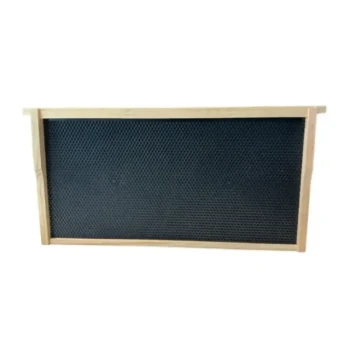
Frames provide the artificial comb support
In a natural cavity, surrounding walls help stabilize comb and maintain the nest’s internal structure. In a movable-frame hive, the frame itself becomes the primary support for comb during inspections, transport, and extraction.
Frames must therefore be rigid enough for repeated handling but proportioned to the smaller comb dimensions and colony scale of Apis cerana. Accurate frame construction also helps maintain the spacing that guides bees to build orderly, removable comb.
Implications for Commercial Equipment Selection
Select species-specific frames and foundation
The most important purchasing decision is whether the frame dimensions match Apis cerana rather than assuming that a general-purpose frame will perform equally well.
Wholesalers and distributors should stock compatible frame sizes, foundation options, frame rests, and replacement parts as a coordinated product range. This reduces field failures caused by mixing incompatible components from different hive standards.
Match box capacity to the production model
Apis cerana equipment should support gradual expansion, manageable colony density, and local nectar conditions. Smaller hive bodies or appropriately sized supers may be more practical than large-volume boxes designed for the population and yield potential of Apis mellifera.
For commercial buyers, the correct choice depends on whether the operation prioritizes honey production, colony multiplication, pollination, nucleus sales, or comb-honey presentation. Product portfolios should make these use cases clear.
Use precise manufacturing tolerances
Bee-space performance depends on dimensional accuracy across the entire hive, not only on the nominal frame width. Inconsistent woodwork, warped parts, oversized joints, or poorly positioned frame rests can create both propolis-bound components and unwanted comb.
Quality control should cover frame spacing, internal box dimensions, cover fit, floor alignment, and compatibility between replacement parts. Consistent tolerances are especially valuable for distributors serving professional apiaries that need interchangeable equipment.
Consider inspection and extraction workflows
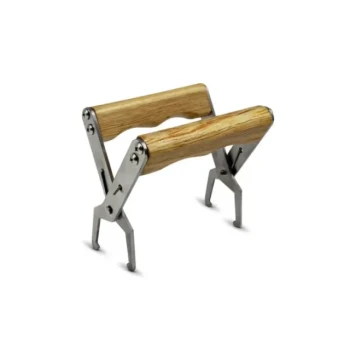
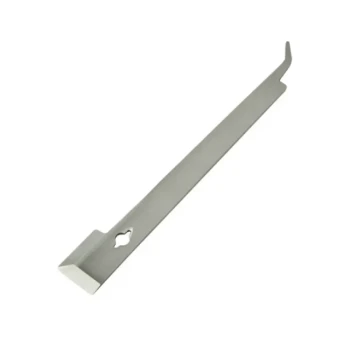
Movable frames are valuable because they allow beekeepers to inspect brood, monitor queen cells, manage swarming, and harvest honey without destroying the entire comb structure. Equipment should support these tasks with secure frame grips, stable frame rests, appropriate protective gear, and extraction machinery sized to the selected frames.
Operations producing premium comb honey require additional care. Comb-cutting, handling, filling, and packaging equipment should preserve the clean appearance and structural quality of delicate Apis cerana comb.
Understanding the Trade-offs
Standardization improves efficiency but can reduce suitability
Standardized hive components simplify purchasing, replacement, training, logistics, and honey processing. However, standards developed for Apis mellifera may not provide the right internal volume, frame dimensions, or handling characteristics for Apis cerana.
The practical solution is controlled standardization within an Apis cerana equipment platform, not indiscriminate use of the most common commercial hive standard.
Tight sealing must be balanced with ventilation
Apis cerana’s reduced or inconsistent use of propolis for sealing hive gaps, as described in the supplied references, makes accurate frame and wall fit especially important. At the same time, sealing a hive too aggressively without appropriate ventilation can contribute to moisture and temperature problems.
Hive design should combine close-fitting components with deliberate ventilation features and an entrance arrangement suited to the local climate. The exact balance should be validated in regional operating conditions.
Higher capacity does not guarantee higher returns
Apis mellifera can produce substantially more honey per colony and is generally better suited to high-volume commercial production. Apis cerana, however, offers adaptation to Asian environments and local microclimates that may make it valuable despite lower average yield.
Buyers should evaluate total operating value, including colony survival, local adaptation, labor, replacement rates, market price, and product type rather than comparing hive capacity or honey yield alone.
Poor fit increases labor and colony risk
Brace comb, excessive propolis, attached frames, and damaged brood all increase handling time. Repeatedly forcing unsuitable frames apart can injure bees, disrupt the brood nest, and reduce the efficiency of inspections.
For commercial users, the cost of precise equipment is therefore connected to labor productivity and colony health, not merely to initial purchase price.
Making the Right Choice for Your Goal
Select the hive, frames, and accessories as one compatible system, with Apis cerana’s colony scale, comb dimensions, climate, and production objective established before ordering.
- If your primary focus is colony health: Choose accurately dimensioned frames, well-fitted hive components, controlled entrances, and ventilation suited to the local environment.
- If your primary focus is honey production: Use modular hive bodies and supers sized for Apis cerana colonies, with extraction equipment calibrated to the selected frames.
- If your primary focus is operational efficiency: Source standardized, interchangeable components from a supplier that can provide frames, boxes, tools, protective equipment, and replacement parts through one coordinated product range.
- If your primary focus is premium comb honey: Select rigid, well-supported frames and gentle cutting, handling, filling, and packaging equipment that protects comb appearance.
- If your primary focus is distribution or resale: Build an Apis cerana-specific product offering with clear dimensional compatibility, rapid fulfillment, technical support, and dependable replacement-part availability.
The right commercial hive is not simply a smaller version of an Apis mellifera hive; it is a precise artificial cavity designed around how Apis cerana builds, occupies, and manages its natural nest.
Summary Table:
| Aspect | Impact on Hive Design | Commercial Implication |
|---|---|---|
| Parallel combs | Requires precise frame alignment | Frames must be manufactured to tight tolerances to prevent cross-attachment |
| Bee-space (~9.5 mm) | Governs spacing between frames and hive parts | Correct gaps prevent propolis build-up and brace comb |
| Smaller colony size | Needs proportionate hive volume | Use smaller boxes and supers to support thermoregulation and defense |
| Cell patterns | Frames must accommodate species-specific cell sizes | Choose frames and foundation designed for Apis cerana |
| Enclosed cavity preference | Hive should provide shelter and controlled entrance | Include fitted roof, ventilation, and entrance reducers |
| Frame support | Frames are primary comb support during handling | Use rigid, accurate frames for safe inspection and extraction |
Optimize your Apis cerana hive management with HONESTBEE's species-specific equipment. We supply commercial apiaries and distributors with a full range of hives, frames, and tools engineered for Eastern honeybees. Our one-stop sourcing, fast delivery, and expert support ensure you get the right products for healthy colonies and efficient honey production. Contact us today to discuss your requirements and benefit from our premium trading services.
Related Products
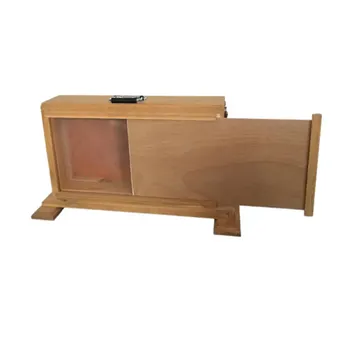
- Professional Observation Hive: The Ultimate Portable Solution for Beekeeping Education, Exhibitions, and Colony Displays
- Professional Grade Foldable Beehive Handles
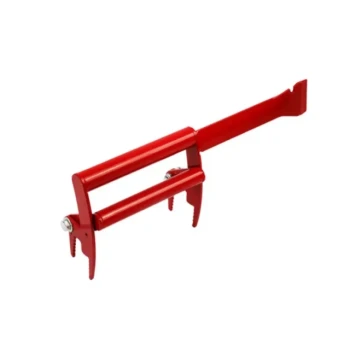
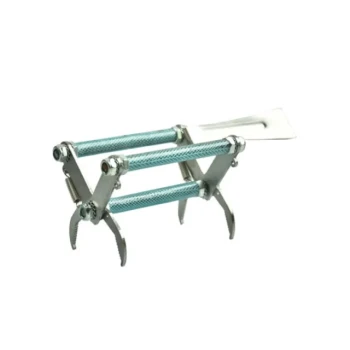
- Heavy-Duty Lever-Action Frame Grip with Hive Tool
- Plastic Bee Frame Beekeeping Hive Frames for Wholesale
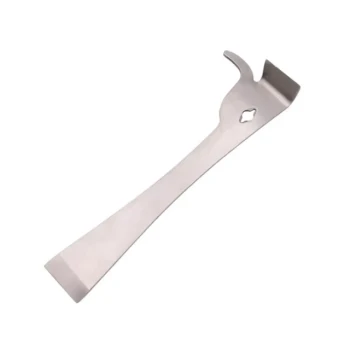
- Professional Multi-Function Stainless Steel Hive Tool
People Also Ask
- How does transitioning to modern hives boost honey yield? Increase production and product quality for your commercial apiary
- How do Langstroth and Dadant standard beehives compare regarding brood chamber management and component compatibility? Find the Perfect Fit for Your Apiary
- What are the key operational differences and structural trade-offs between Langstroth beehives and top-bar beehives for apiary management? Discover which hive system fits your operational needs.
- What are the primary differences between Langstroth, horizontal top bar, and Warré hive box designs when selecting beekeeping equipment? Choose the Right Hive for Your Apiary
- Why do commercial apiary operators transition from traditional hive structures, such as clay cylinders, to standardized Langstroth hive boxes? Discover Scalable Beekeeping Solutions