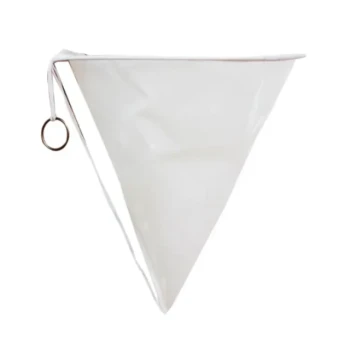
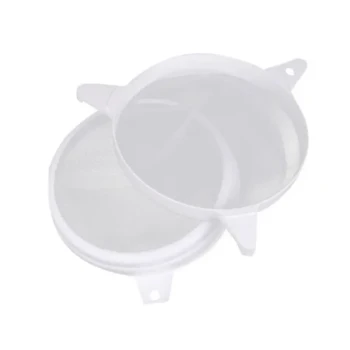
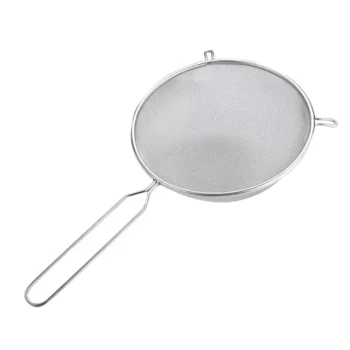
Honey straining is the definitive processing step that transforms raw agricultural yield into a high-value commercial commodity. By utilizing specialized equipment to physically remove impurities such as beeswax, debris, and pollen clumps, this process directly elevates the product's quality to meet strict consumer expectations for "Table Honey."
Core Takeaway Raw honey naturally contains physical contaminants that lower its commercial viability. Straining increases market value by delivering the visual clarity and smooth texture mainstream consumers demand, while simultaneously stabilizing the product for longer shelf life by delaying natural crystallization.
Enhancing Sensory Appeal and Texture
Visual Clarity and Transparency
The primary driver of market value for commercial honey is sensory transparency. Consumers equate clear, golden liquid with purity and high quality.
Straining utilizes physical barriers to remove suspended particles, air bubbles, and wax residues. This results in the "polished" look required for premium retail placement, distinguishing commercial honey from cloudy, unprocessed alternatives.
Improving Mouthfeel and Texture
Raw honey often contains grit, crystallized granules, or bits of comb that negatively impact the eating experience.
Effective straining ensures a smooth, consistent texture that is palatable to the average consumer. By standardizing the physical consistency, producers can position the honey as a premium food product rather than a rough agricultural ingredient.
Standardization and Shelf Life Extension
Meeting "Table Honey" Standards
To command a higher price point, honey must meet specific commercial grading requirements.
International and local markets often designate specific grades (e.g., Grade A) based on the absence of defects and impurities. Professional filtration equipment ensures the honey is free from larvae, large pollen clusters, and bee parts, satisfying the hygiene and quality metrics necessary for formal retail distribution.
Delaying Crystallization
A critical but often overlooked economic benefit of straining is the extension of shelf life.
Particulate matter in honey—such as microscopic wax bits or dust—acts as a "nucleation site" where sugar crystals begin to form. By removing these impurities through high-precision filtration, producers significantly delay the crystallization process, keeping the honey liquid and attractive on the shelf for a longer period.
Hygiene and Consistency
Compared to traditional methods like squeezing, modern mechanical straining drastically improves hygiene levels.
It eliminates potential contaminants introduced during harvesting. This consistency allows producers to build a reliable brand reputation, which is essential for securing long-term contracts with high-end markets.
Understanding the Trade-offs
The Balance of Bio-Activity
While straining adds value for the mass market, it requires a delicate balance.
Aggressive filtration (ultra-filtration) can strip honey of beneficial enzymes and microscopic pollen, which are key selling points for health-conscious consumers. High-precision equipment aims to remove impurities while preserving natural active ingredients, ensuring the product remains nutritious even after processing.
Niche vs. Commercial Value
It is important to recognize that "value" is subjective to the target market.
While strained honey dominates the general retail sector, Honeycomb honey commands a high price specifically because it is not strained. This niche market values the structural integrity and original state of the hive, proving that while straining adds value for the mass market, the absence of processing has its own distinct premium in the artisan sector.
Making the Right Choice for Your Goal
To maximize the economic return on your honey, you must align your processing method with your target consumer.
- If your primary focus is Mass Market Retail: Prioritize high-precision straining to maximize clarity and transparency, as this ensures shelf stability and meets the visual standards of the average grocery shopper.
- If your primary focus is Health/Artisan Markets: Use coarser straining to remove visible debris while retaining pollen and enzymes, marketing the product as "raw" or "minimally processed" to capture the wellness premium.
Ultimately, the value of straining lies in its ability to convert a variable raw material into a consistent, stable, and visually appealing product ready for global trade.
Summary Table:
| Value Factor | Impact of Straining | Commercial Benefit |
|---|---|---|
| Visual Appeal | Removes wax, bubbles, and debris | Achieves "polished" premium retail look |
| Texture | Eliminates grit and granules | Provides smooth mouthfeel for consumers |
| Shelf Life | Removes nucleation sites | Delays crystallization for longer retail display |
| Market Grade | Meets hygiene & purity metrics | Qualifies for Grade A/High-end distribution |
| Standardization | Ensures batch consistency | Builds brand reliability and trust |
Scale Your Honey Production with HONESTBEE
At HONESTBEE, we empower commercial apiaries and honey distributors to maximize their market value through professional-grade equipment. Whether you are aiming for mass-market retail or high-end artisan niches, our comprehensive wholesale solutions cover everything you need:
- High-Precision Machinery: From honey-filling machines to specialized hive-making equipment.
- Quality Processing Tools: Advanced straining and filtration systems that preserve nutritional integrity while ensuring visual clarity.
- Industry Consumables: A full spectrum of beekeeping tools and honey-themed cultural merchandise to diversify your brand.
Ready to elevate your honey quality and streamline your operations? Contact us today to discuss your wholesale needs and see how our expertise can grow your business.
References
- Gaurav Kumar, Nasreen Musheer. A study on honey production and marketing in Behat region of district Saharanpur. DOI: 10.22271/j.ento.2022.v10.i4a.9036
This article is also based on technical information from HonestBee Knowledge Base .
Related Products
- Double Wall Honey Heating Stirring Homogenizer Mixing Machine with Various Capacity
- Stainless Steel Triangle Support Honey Strainer and Filters
- Stainless Steel Double Layer Honey Strainer Sieve Filters
- Professional Cone-Shaped Honey Filter with Reinforced Steel Ring
- Nylon Honey Strainer Square Filter Cloth for Honey Filters
People Also Ask
- What impact do homogenizers or oscillating equipment have on honey microbial detection? Ensure Testing Accuracy
- Why is thorough mechanical stirring and homogenization emphasized in honey processing? Ensure Sample Accuracy
- How do heating equipment and homogenizers liquefy crystallized honey? Expert Guide to Professional Honey Processing
- How does the honey mixer handle different types of honey? Master Viscosity for Perfect Blends
- What are the main components of the honey mixer? Engineered for Gentle, Efficient Honey Processing