Automatic titration significantly enhances process reliability by replacing subjective human observation with objective, electrochemical data. While manual methods rely on visual color changes that are prone to error, an automatic titrator integrates precision sampling with a feedback mechanism to plot neutralization curves, ensuring that even complex chemical reactions are measured with absolute accuracy.
The core value of an automatic titrator lies in eliminating the guesswork of visual endpoints. By removing human subjectivity—especially when analyzing dark honeys or unstable reactions—automation transforms acidity analysis from a qualitative estimate into a rigorous, repeatable quantitative standard.
Overcoming the Limitations of Manual Observation
Eliminating Subjective Visual Errors
The primary process advantage of an automatic titrator is the removal of human error associated with identifying color changes. In manual titration, the operator must visually determine when an indicator changes color to signal the endpoint.
Automatic systems utilize an electrochemical feedback mechanism. This allows the device to detect the endpoint based on precise potential changes rather than variable human perception.
Solving the "Dark Honey" Challenge
Visual indicators are notoriously difficult to read when analyzing dark-colored honey varieties. The natural opacity of the sample can mask the subtle color shift of the chemical indicator.
Automatic titrators bypass this issue entirely by relying on sensor data rather than optics. This ensures that the acidity analysis remains accurate regardless of the honey's physical appearance or color density.
Enhancing Precision in Complex Reactions
Managing Lactone Hydrolysis and Drift
Honey acidity analysis involves managing lactone hydrolysis, a reaction where the titration endpoint can naturally drift. In a manual process, this drift makes it extremely difficult for an operator to identify a stable, final endpoint.
Automatic titrators solve this by automatically plotting neutralization curves. The system adds titrants in extremely small, controlled increments and calculates the exact endpoint mathematically, accounting for the drift that often confuses manual readings.
High-Precision Sampling
Accuracy in honey analysis depends on the precise volume control of the titrant (usually sodium hydroxide). Automatic devices utilize a precision sampling system to control the addition of the base solution.
This micro-control allows for the accurate differentiation of honey varieties. It ensures the measurement of millimoles of base required is exact, which is critical for meeting international standards (typically a limit of 40 meq/kg).
Understanding the Trade-offs: The Risk of Inconsistency
The Pitfall of Manual Endpoint Detection
While manual titration is simpler to set up, it introduces a significant risk of data inconsistency. The "trade-off" of using manual methods is the acceptance of lower repeatability.
Different operators may interpret the "end" of a reaction differently, leading to varied results for the same batch. This inconsistency complicates the assessment of spoilage risks, such as fermentation, which relies on tracking precise acidity trends over time.
Dependency on Instrument Calibration
Implementing automatic titration shifts the burden from operator skill to instrument maintenance. While you gain data consistency, the process requires strict adherence to using standardized solutions.
The system's accuracy is only as good as the calibration of the electrochemical sensors. Unlike manual methods where a fresh indicator is the primary variable, automatic systems require technical diligence to ensure the feedback mechanism remains precise.
Making the Right Choice for Your Goal
To determine if automatic titration is the necessary step for your laboratory, consider your specific analytical requirements.
- If your primary focus is analyzing dark or wild honeys: The automatic titrator is essential to eliminate the visual interference caused by the product's natural opacity.
- If your primary focus is regulatory compliance and standardization: The device ensures your final product strictly meets the international limit (40 meq/kg) by removing operator variability.
- If your primary focus is managing large sample batches: The technology provides the rapid, repeatable micro-control needed to maintain consistency across high-volume testing.
Investing in automation ultimately safeguards product quality by turning acidity testing into a precise science rather than a subjective art.
Summary Table:
| Feature | Manual Titration | Automatic Titrator |
|---|---|---|
| Endpoint Detection | Subjective visual observation | Objective electrochemical sensor |
| Dark Honey Analysis | Difficult (color masks indicator) | Seamless (independent of color) |
| Data Consistency | Low (operator variability) | High (mathematical repeatability) |
| Precision Control | Manual drop-wise addition | Micro-controlled precision sampling |
| Complex Reactions | Hard to track endpoint drift | Plots precise neutralization curves |
| Regulatory Target | Prone to error near 40 meq/kg | Precise compliance with intl. standards |
Elevate Your Honey Production Standards with HONESTBEE
Consistency in honey quality starts with precision analysis and professional-grade infrastructure. At HONESTBEE, we empower commercial apiaries and distributors with the tools they need to lead the industry.
From advanced honey-filling and hive-making machines to essential beekeeping consumables and honey-themed cultural merchandise, we provide a comprehensive wholesale portfolio designed to optimize your operations. Whether you are scaling up production or refining your quality control, our expert team is ready to support your growth.
Ready to upgrade your apiary or distribution network? Contact HONESTBEE Today for Custom Wholesale Solutions
References
- Soraia I. Falcão, Giancarlo Quaglia. Composition and Quality of Honey Bee Feed: The Methodology and Monitoring of Candy Boards. DOI: 10.3390/ani14192836
This article is also based on technical information from HonestBee Knowledge Base .
Related Products
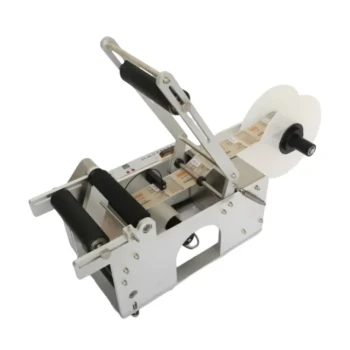
- Semi Automatic Round Bottle Labeling Machine
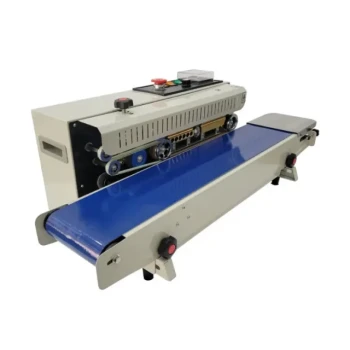
- Automatic Continuous Heat Sealing Machine
- Automatic Single-Dose Snap & Squeeze Honey Sachets Packing Machine
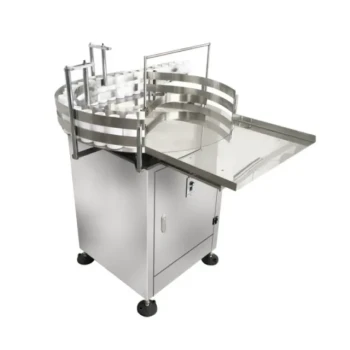
- Automated Rotary Bottle Unscrambler for Honey Production Line
- Semi Automatic Small Honey Bottle Filling Machine Honey Filler
People Also Ask
- What type of machine is recommended for smaller businesses? The Smart Choice for Growing Operations
- What are the key components of an automatic labeling machine? Unlock High-Speed, Precision Labeling
- How does an automatic labeling machine reduce labor costs? Slash Overhead & Boost Productivity
- What are the efficiency benefits of an automatic labeling machine? Boost Speed, Accuracy & Consistency
- How does an automatic labeling machine operate? Achieve High-Speed, Precise Product Labeling