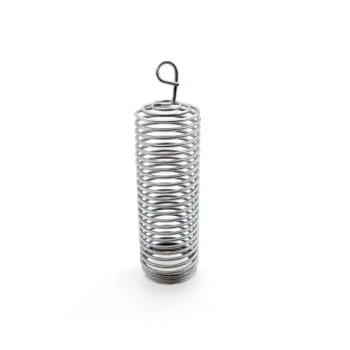
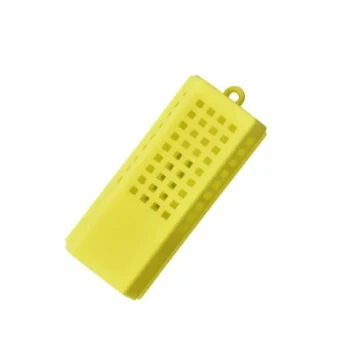
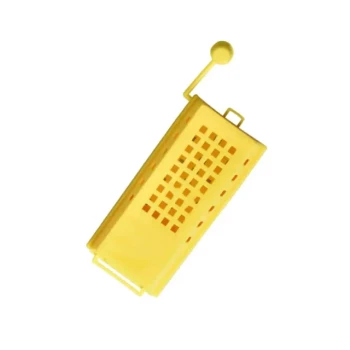
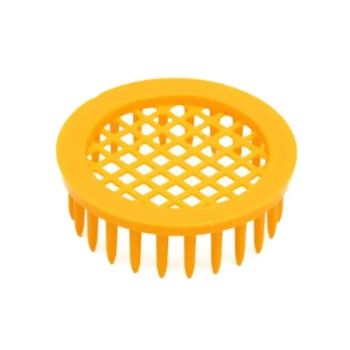
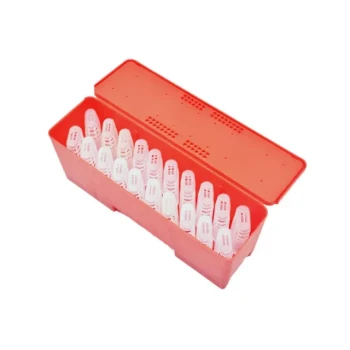
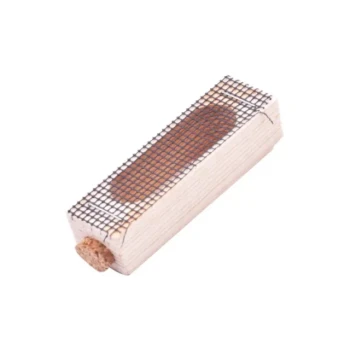
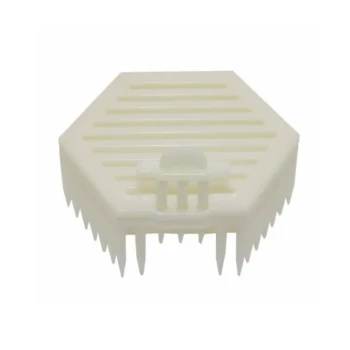
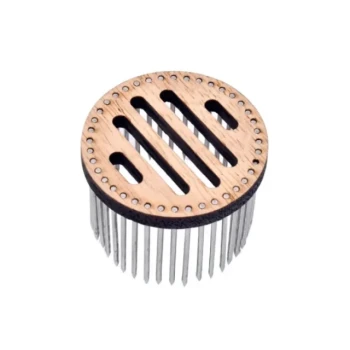
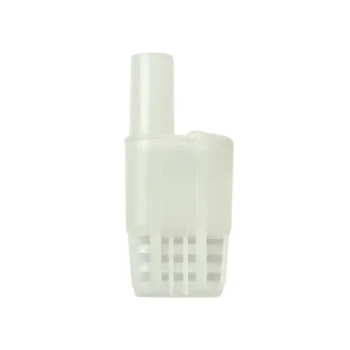
The dual-compartment design in queen bee mailing cages is a specialized structural configuration engineered to physically separate the living quarters from the food source. This architecture features a primary chamber to house the queen and her attendant workers, while a distinct secondary chamber contains solid candy feed, ensuring safe nourishment without contaminating the living space.
By isolating the food source from the living area, this design solves critical transport risks like feed liquefaction and stickiness. It ensures the queen remains fed, clean, and in optimal physiological condition regardless of travel duration or temperature instability.
The Architecture of Safe Transport
The Living Quarters (Main Chamber)
The primary compartment is designed specifically as a habitation zone. It provides sufficient space for the queen bee and her attendant workers to move freely.
This spatial freedom is essential for the bees' comfort and stress reduction during transit. It allows for natural interactions between the queen and her attendants, which is vital for her survival.
The Nutrition Reservoir (Secondary Chamber)
The second compartment acts as a dedicated pantry, housed separately from the bees. This chamber is filled exclusively with solid candy feed.
By confining the food to this specific area, the design ensures a continuous, accessible supply of nutrition throughout the journey.
Functional Benefits of Separation
Mitigating Temperature Risks
A major functional advantage of this design is its ability to withstand temperature fluctuations common in long-distance transport.
If the environment becomes too hot, the physical separation prevents the feed from melting and flowing into the living area. This eliminates the risk of the feed sticking to the bees, which can be fatal.
Maintaining Hygiene and Physiology
The physical barrier between the bees and the bulk of the food creates a hygienic environment.
By preventing sticky residues and contamination in the main chamber, the design ensures the queen arrives at her destination in optimal physiological condition, ready for introduction to a hive.
Critical Design Dependencies
While the dual-compartment system offers robust protection, its success relies heavily on the consistency of the feed.
The design presumes the use of solid candy rather than liquid syrups or soft pastes. The separation mechanism is most effective when the feed maintains its structural integrity; if the feed were to liquefy completely due to extreme heat beyond the candy's melting point, the compartment barrier alone might not suffice. Therefore, the efficacy of this cage is intrinsically linked to the quality and heat-resistance of the candy used.
Making the Right Choice for Your Logistics
When selecting transport equipment for apiary logistics, align the cage design with your specific shipping variables.
- If your primary focus is Long-Distance Transport: Prioritize this dual-compartment design to ensure a continuous food supply that withstands extended travel times.
- If your primary focus is Queen Survival and Quality: Rely on this separated structure to prevent feed contamination and maintain the queen's optimal physiological health upon arrival.
This specialized design turns the complex challenge of live insect transport into a manageable, secure process.
Summary Table:
| Feature | Component | Primary Function |
|---|---|---|
| Living Quarters | Main Chamber | Provides space for the queen and attendants; reduces transport stress. |
| Nutrition Reservoir | Secondary Chamber | Houses solid candy feed; ensures a continuous, accessible supply. |
| Physical Barrier | Internal Divider | Prevents feed liquefaction from contaminating the queen's living area. |
| Thermal Stability | Specialized Layout | Protects bees against temperature-induced feed stickiness during transit. |
Scale Your Apiary Success with HONESTBEE Solutions
For commercial apiaries and global distributors, the safety of your queen bees is the foundation of your business. HONESTBEE specializes in professional-grade beekeeping equipment designed to withstand the rigors of logistics.
Our comprehensive wholesale range includes:
- Advanced Transport Solutions: Including dual-compartment mailing cages and hive-making machinery.
- Precision Equipment: From honey-filling machines to high-durability hardware.
- Industry Consumables: A full spectrum of essentials for large-scale operations.
Ensure your livestock arrives in peak physiological condition. Partner with a supplier that understands the technical demands of the beekeeping industry.
Contact HONESTBEE Today to Discuss Wholesale Opportunities
References
- Ralph Büchler, J. Wilde. Standard methods for rearing and selection of<i>Apis mellifera</i>queens. DOI: 10.3896/ibra.1.52.1.07
This article is also based on technical information from HonestBee Knowledge Base .
Related Products
- Durable Galvanized Steel Spring Queen Bee Cage
- Professional Multi-Compartment Queen Cage with Sliding Lid
- Professional Queen Bee Introduction and Transport Cage
- Professional Queen Cage with Sliding Gate and Feeder Plug
- Professional Multi-Functional Queen Bee Cage
People Also Ask
- Why are specialized queen bee cages used for the banking of mated queen bees? Maximize Commercial Apiary Storage Efficiency
- What is the mechanism of action for using temporary queen bee cages? Master Successful Queen Introduction
- What is the step-by-step process for installing a queen bee's cage onto a frame? Ensure Hive Acceptance Safely
- What is the optimal placement for a queen bee cage? Essential Strategies for Successful Re-queening
- What are the advantages and disadvantages of introducing a queen bee by embedding the cage? Boost Your Queen Acceptance