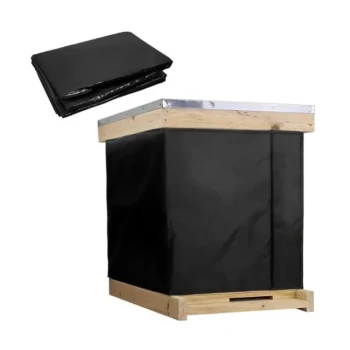
Techno-polymer insulation provides a superior defense against environmental stress through a specialized double-wall construction that creates a stabilizing thermal barrier. Unlike traditional organic materials, this solution offers inherent resistance to rot and includes engineered features to divert moisture, ensuring consistent protection for the colony during winterization.
By leveraging a "dead air" zone within a rot-resistant shell, techno-polymer insulation significantly reduces thermal conductivity. This minimizes the energy bees must expend on heating, preserves vital honey reserves, and actively prevents the moisture accumulation that frequently leads to winter colony collapse.
Thermal Dynamics and Colony Efficiency
The "Dead Air" Zone Principle
The primary technical advantage of techno-polymer units is their double-wall construction. This design deliberately creates a "dead air" zone between the exterior and interior surfaces.
This trapped air acts as a high-resistance thermal barrier. It decouples the internal hive environment from rapid external temperature fluctuations.
Impact on Metabolic Energy
By maintaining a warmer interior via this thermal barrier, the colony faces a reduced metabolic load. Bees do not have to work as aggressively to generate survival heat.
Consequently, the colony consumes significantly less of its stored honey reserves. This not only improves the odds of surviving the winter but leaves a larger quantity of harvestable honey available in the spring.
Year-Round Temperature Regulation
While critical for winterization, this insulation technology functions as a bi-directional buffer. It keeps the hive warmer in winter but also maintains cooler internal temperatures during the summer heat.
Structural Longevity and Moisture Control
Imperviousness to Rot
Traditional wooden hive components are susceptible to decay when exposed to constant moisture. Techno-polymer material is inherently resistant to rot, regardless of humidity levels.
This durability ensures the structural integrity of the hive remains compromised over many seasons, offering a longer service life than organic alternatives.
Active Moisture Diversion
Winter survival is often threatened more by wetness than by cold. Techno-polymer units are frequently engineered with a built-in drip edge.
This feature mechanically guides water away from the hive structure. By preventing moisture ingress, the insulation protects the colony from the damp conditions that cause mold and freezing condensation.
Operational Considerations
Space and Timing Constraints
While effective, internal insulation requires physical space within the hive configuration. Operators must ensure their hive setup accommodates these units without overcrowding the bees.
Additionally, timing is critical. Insulation is generally deployed from late October through February; leaving it in place too long during transitional seasons without monitoring could affect colony expansion.
Making the Right Choice for Your Apiary
To determine if techno-polymer insulation aligns with your management strategy, consider your specific operational goals:
- If your primary focus is colony survival rate: Prioritize this insulation for hives with limited honey reserves, as the thermal barrier directly reduces the caloric intake required for warmth.
- If your primary focus is equipment longevity: Choose techno-polymer for its rot resistance, which eliminates the degradation issues common with wooden components in damp climates.
- If your primary focus is moisture management: Utilize this solution for its integrated drip edge to prevent the "wet hive" syndrome that is often fatal in cold weather.
Techno-polymer insulation shifts winterization from a passive attempt at shelter to an active system of thermal regulation and moisture control.
Summary Table:
| Technical Feature | Mechanism | Benefit to Colony |
|---|---|---|
| Double-Wall Design | Creates a "Dead Air" thermal barrier | Reduces metabolic energy & honey consumption |
| Techno-polymer Material | Inherent rot and decay resistance | Ensures long-term structural integrity & durability |
| Integrated Drip Edge | Mechanical moisture diversion | Prevents dampness, mold, and freezing condensation |
| Bi-directional Buffer | Year-round temperature regulation | Keeps hives warmer in winter and cooler in summer |
Scale Your Apiary Efficiency with HONESTBEE
At HONESTBEE, we understand that commercial success depends on the survival and productivity of your colonies. As a premier provider for commercial apiaries and distributors, we offer a comprehensive wholesale range of professional-grade beekeeping tools, machinery, and essential consumables.
From advanced hive-making technology and high-efficiency honey-filling machines to durable, insulated hive components, our portfolio is designed to maximize your operational longevity and yields. Whether you are looking to source specialized hardware or honey-themed cultural merchandise, our team provides the expert support you need to thrive in the global market.
Ready to upgrade your commercial beekeeping equipment?
Contact HONESTBEE Today for Wholesale Solutions
Related Products
- Professional Insulated Plastic Bee Hives
- Professional Insulated Winter Hive Wrap for Beekeeping
- Inner Beehive Cover for Beekeeping Bee Hive Inner Cover
- Stainless Steel Round Beehive Air Vents for Ventilation
- Durable Plastic Interlocking Hive Connector for Beekeeping
People Also Ask
- What are the advantages of plastic bee hives? Boost Efficiency & Durability for Your Apiary
- Are plastic bee hives any good? Unlock Durability & Efficiency for Your Apiary
- How do plastic bee hives compare to wooden hives in handling? Reduce Strain & Boost Efficiency
- Are plastic bee hives good? Durable, Low-Maintenance Hives for Modern Apiaries
- What are the disadvantages of plastic beehives? Key Operational and Environmental Risks Exposed